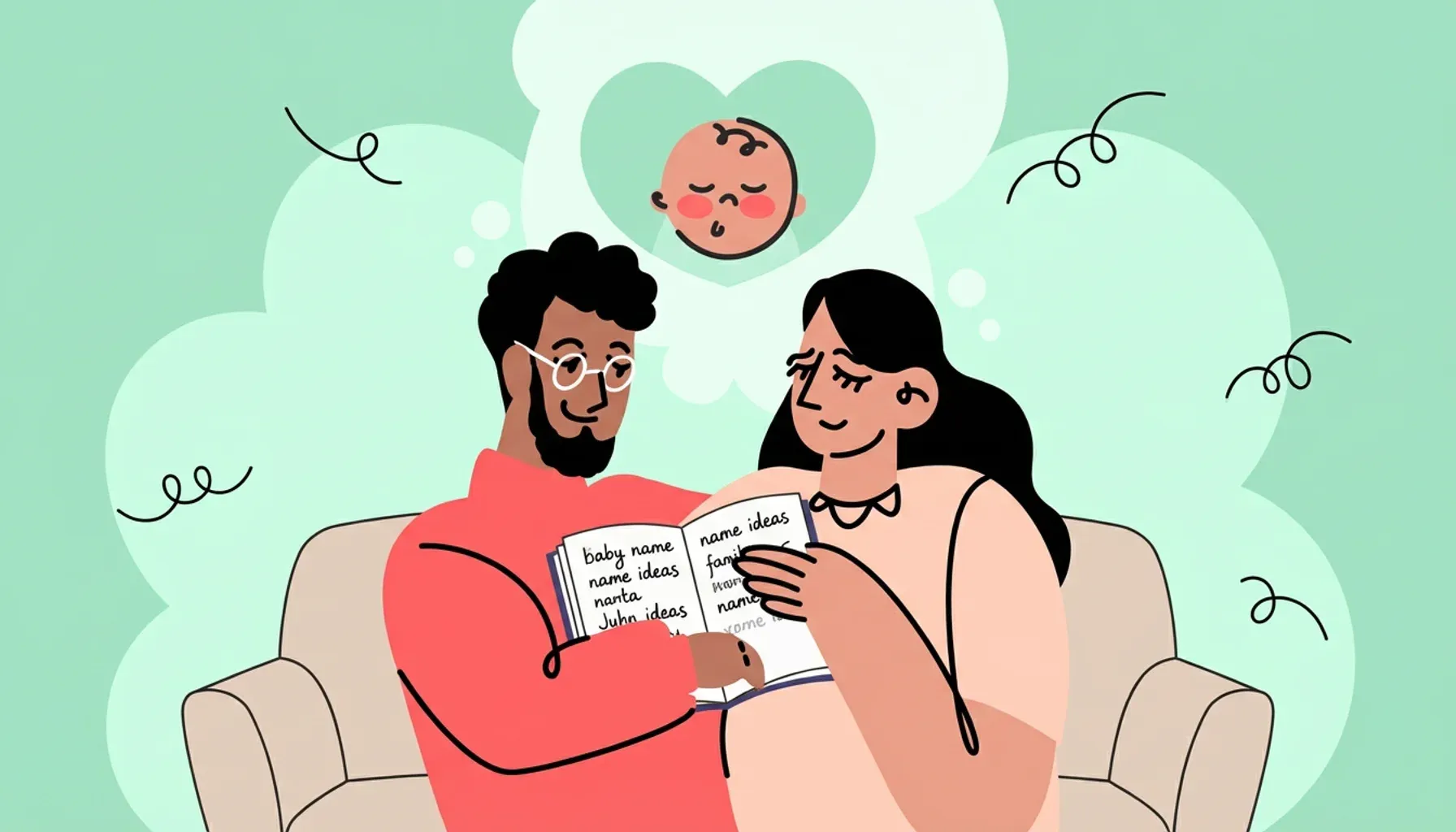

Staring at those endless baby name lists at 2 AM? You're not alone. Choosing your baby's name feels monumental — and honestly, it kind of is. This tiny human will carry whatever you decide for their entire life, introduce themselves with it thousands of times, and possibly pass it down to their own children.
But here's what many expectant parents don't realize: there's actually a strategic way to approach this decision that can save you from second-guessing yourself later. After talking with countless families through their naming journey, we've learned that the parents who feel most confident about their choice follow surprisingly similar steps.
Start with Your Non-Negotiables
Before you dive into any name book or app, sit down with your partner and figure out your deal-breakers. Maybe you absolutely won't use any name that rhymes with a curse word (smart thinking). Perhaps you need something that works in both English and Spanish for your bilingual family. Or you might want to avoid the top 10 most popular names because half your friend group already used them.
Many moms tell us they wished they'd established these ground rules earlier. "We wasted weeks arguing about names that violated rules we didn't even know we had," one mom shared. Save yourself the drama and get clear on what matters most to both of you from the start.
Research from the Social Security Administration shows that 73% of parents say they considered family heritage when choosing names, while 41% prioritized uniqueness over tradition. There's no right answer here — just what feels right for your family.
The Real-World Testing Phase
Here's where it gets fun (and slightly awkward). Once you've narrowed down to your top contenders, you need to test them in real life. And we mean really test them.
Try yelling the name across a playground. Seriously. If you feel embarrassed shouting "Bartholomew, come here!" in public, that might tell you something. Practice introducing your child: "I'd like you to meet my daughter, Khaleesi." Does it roll off your tongue naturally?
Consider the nickname situation too. Every name gets shortened or modified by kids, teachers, and friends. Isabella might become Izzy, Bella, or even Issy-B by the time she hits elementary school. The American Academy of Pediatrics notes that children typically start showing preference for certain versions of their names by age 4, so think about what shortened versions you can live with.
Don't forget the practical stuff either. How many times will your child have to spell this name over the phone? Will baristas at Starbucks even attempt it, or will they just write "Amy" on the cup regardless? One mom we know chose a beautiful Irish name, then realized she'd be spelling it out for her daughter's entire childhood.
Navigating Family Expectations (Without Starting World War III)
Ah, family dynamics. Nothing brings out everyone's opinions quite like announcing you're expecting. Suddenly, your Great Aunt Martha has very strong feelings about the name you've loved since high school.
The key here is setting boundaries early and diplomatically. You might say something like, "We're still exploring options and will definitely consider family suggestions." Translation: thanks for the input, but we're making this decision ourselves.
If there's pressure to use a family name, remember that honoring relatives doesn't have to mean exact replication. You could use a family name as a middle name, choose something with the same first letter, or find a modern version of a traditional family name. James could become Jamie, or Catherine could become Caitlin.
According to research published in the Journal of Family Issues, about 34% of families experience some conflict over baby naming decisions, with grandparents being the most likely to express strong opinions. But here's the thing — you're the ones who will be using this name daily for the next 18+ years. Your vote matters most.
Cultural Considerations That Actually Matter
If you're choosing a name from a culture that isn't your own, pause and do some homework. That beautiful Sanskrit name you found might have deep religious significance you're not aware of. Or that Celtic name could be tied to a historical figure that doesn't represent your values.
For families blending cultures, finding names that work across languages can be tricky but rewarding. Sofia works in both Spanish and English. David translates across dozens of cultures. Maya has beautiful meanings in several different traditions.
One mom from a multicultural family told us, "We chose names that our kids could pronounce in both their father's language and mine. It seemed simple, but it meant the world to both sets of grandparents."
The Sibling Factor
If this isn't your first baby, you've got another layer to consider. Do your children's names need to "match"? Some families love the coordinated approach — think Emma and Ethan, or choosing all names from the same cultural tradition. Others prefer each child to have their own distinct identity.
There's no rule that says siblings' names need to follow a pattern, but there are some practical considerations. Avoid names that sound too similar (goodbye Anna and Hannah) or create unfortunate combinations when said together. And maybe don't give one child a super common name while the other gets something completely unique — it can create weird dynamics later.
Red Flags That Signal Future Regret
After years of hearing naming stories, we've noticed some patterns in the choices parents later wish they could change. Names chosen primarily to be trendy or unique often feel dated quickly. That Game of Thrones reference that felt clever in 2015 might feel awkward now.
Similarly, be cautious about names that require constant explanation. If you find yourself frequently saying, "It's pronounced like..." or "It's spelled differently than you'd think," your child will likely have that same conversation throughout their life.
Research from the University of Pennsylvania found that children with more difficult-to-pronounce names sometimes experience social challenges in school settings, though the effect varies significantly based on cultural context and geographic location.
Making the Final Decision
When you've done your research, tested your options, and navigated the family opinions, trust your instincts. Many parents describe a moment when they just knew — sometimes it happens when they first see their baby, and sometimes it's weeks before birth when they're practicing the name out loud.
Don't overthink it to the point of paralysis. There's no such thing as a perfect name, just a name that feels right for your family. And remember, while this decision is important, it's not necessarily permanent. People change their names for various reasons throughout life, and it's becoming increasingly common and accepted.
The most important thing? Choose a name you can say with love, pride, and joy. Because you'll be saying it thousands of times over the years, and each time should feel like a celebration of this incredible little person you've brought into the world.