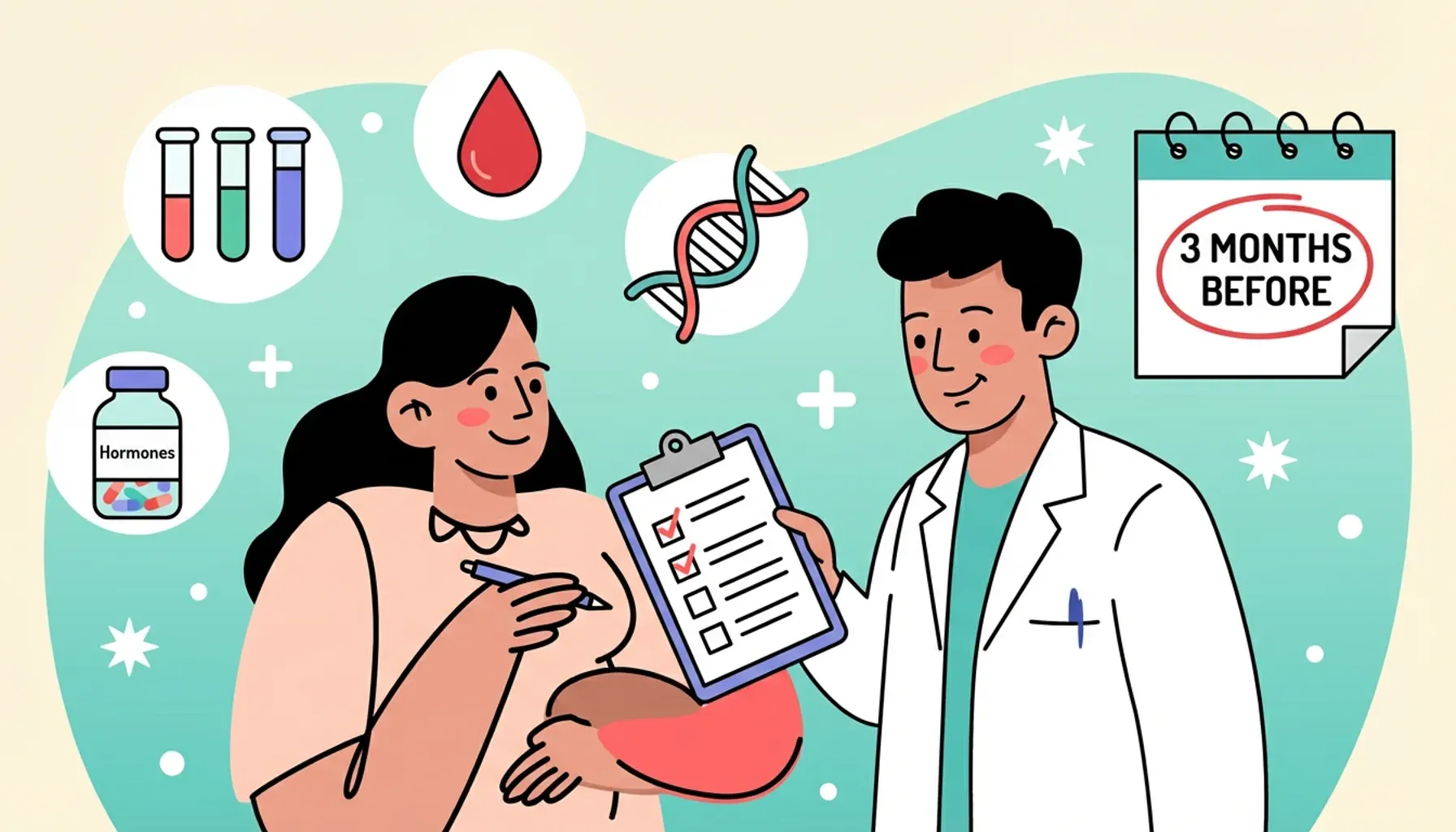

A genetic examination helps determine whether the parents have a genetic disorder or abnormality that may affect the conception and birth of a healthy child.
My partner and I are healthy and probably have good genes. Why would we need genetic testing?
In principle, this screening is not necessary [1]. The problem is that a man and a woman can have a "defective" gene but not know about it, being hidden carriers. They do not get sick themselves (or the symptoms are mild), but under certain circumstances, they may have children with genetic disorders.
This is how it happens: a child inherits two copies of each gene — one from each parent. If both copies (from both mom and dad) turn out to be "defective" and are associated with the same genetic disease, then it will manifest in the baby [2].
Therefore, ideally, it is better to undergo genetic screening before pregnancy and, depending on where you are and your type of insurance coverage, this type of screening may be recommended for most couples [3]. Tests are done on blood, saliva, or cell samples taken from the inner cheek.
When is genetic screening definitely called for?
If a man or woman has a confirmed genetic diseases.
If the couple has had a child with serious or multiple malformations or chromosomal abnormalities.
If close relatives had or have a genetic disorder.
The risk of certain genetic diseases increases if a man or woman belongs to a certain ethnic group or race. For example, sickle cell anemia is common in African Americans. Tay-Sachs disease is often diagnosed in Cajuns, Ashkenazi, and people of Southeast Asia [1].
A genetic examination is also recommended for women who have had two or more successive miscarriages, and diagnosed with infertility [2].
What genetic diseases should we test for?
When choosing a test, the doctor will consider your family history and ethnicity. If you don’t belong to a risk group, you will probably be screened for the most common genetic diseases, such as cystic fibrosis, spinal muscular atrophy (SMA), fragile X chromosome syndrome (Martin-Bell syndrome), sickle cell anemia, thalassemia, Tay-Sachs disease [1].
What are the next steps if one of the results were to be positive?
Consult with a geneticist to assess the risks. If the probability of an anomaly is high, the doctor may suggest IVF with preimplantation diagnosis (when only healthy embryos are transferred to the uterus). This method significantly reduces the likelihood of having a child with genetic diseases.