EN
try amma today
Mom needs to see the doc, too
Getting Pregnant

Mom needs to see the doc, too

2 min readWeek 11
Key takeaways
2 min
  • Schedule a dental appointment within a year postpartum, especially if you had gestational diabetes, as 70% of cavities are linked to high glucose levels.
  • Get a glucose tolerance test if you had gestational diabetes to screen for type 2 diabetes development after pregnancy.
  • Monitor symptoms like heart palpitations, excessive crying, or sleep issues as they may indicate postpartum thyroiditis affecting 5% of new mothers.
  • Request a TSH blood test if experiencing thyroid symptoms, as 90% of postpartum thyroiditis cases resolve naturally within six months.
  • Consult your doctor about contraception and when it's safe to take a pregnancy test if planning future pregnancies.

New mothers should prioritize postpartum health screenings including dental checkups, glucose tolerance tests for diabetes screening, and thyroid function tests. Taking a pregnancy test is safe 2-3 weeks after unprotected intercourse postpartum, though breastfeeding may delay ovulation and affect timing.

amma app

Track your pregnancy in the app

Personalized content for your pregnancy week

Download App

Mom needs to see the doc, too

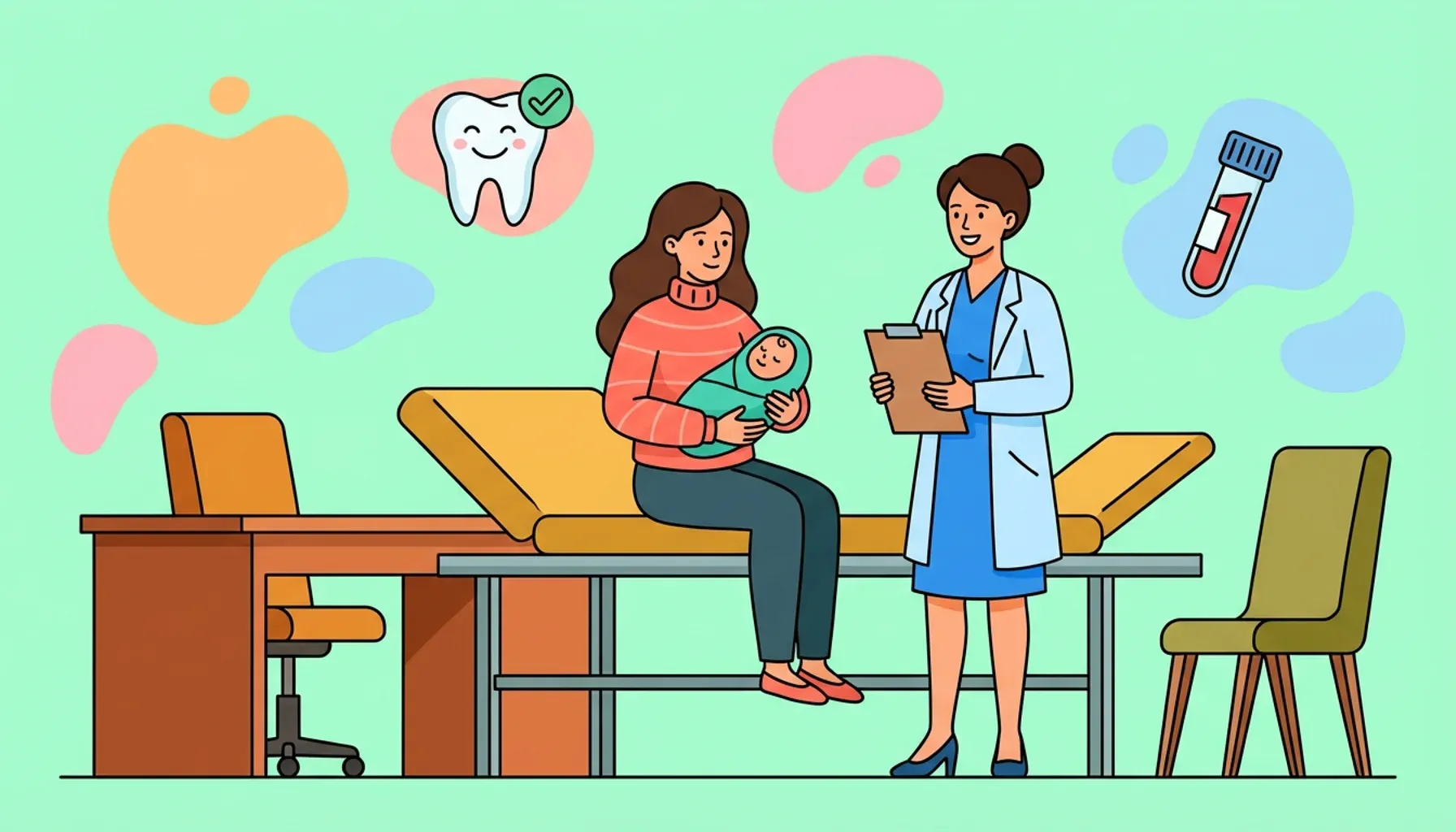
Take a moment and make an appointment with the dentist: most likely, you have not been at least a year. If you have high blood sugar, it’s a good idea to see the dentist as soon as possible: for women who have recently given birth, almost 70% of cavities are associated with high glucose levels [1].

If you have had gestational diabetes, there is a chance that you will develop type 2 diabetes after pregnancy. Right now it makes sense to do a glucose tolerance test. If necessary, the doctor will prescribe treatment or give advice on nutrition [2].

If you are stuffy and hot all the time, you have heart palpitations, you cry over trifles or are afraid for your baby so much that you cannot sleep—these are not just signs of fatigue. Be sure to tell your therapist or gynecologist about them. Every twentieth mother develops postpartum thyroiditis one to three months after childbirth [3]. This condition is attributed to the over-activation of the thyroid gland after pregnancy. You can take a blood test for TSH. If it is low, you may be given additional tests to distinguish postpartum thyroiditis from more serious thyroid problems.

In 90% of cases, by six months, the thyroid gland itself returns to normal [2]. In the meantime, it’s important to understand that your worries have more internal reasons than external ones.



  1. Hyperglycaemia and factors associated with dental caries in immediate postpartum women. Anna Clara Fontes Vieira, Cláudia Maria Coelho Alves, et al. Acta Odontol Scand., 2020 Mar.

  2. Normal and Abnormal Puerperium. Christine Kansky. Medscape, Jul 22 2016.

  3. Postpartum thyroiditis. Riley Epp, Janine Malcolm, et al. BMJ, 2021. 372 doi:

Frequently asked questions

You can take a pregnancy test as early as 2-3 weeks after unprotected intercourse postpartum. However, breastfeeding can delay ovulation, making timing variable for each woman.

Essential postpartum screenings include dental checkups, glucose tolerance tests if you had gestational diabetes, and thyroid function tests. Your doctor may also recommend blood pressure and mental health screenings.

Pregnancy hormones typically return to pre-pregnancy levels within 6-8 weeks after delivery. However, breastfeeding can extend this timeline due to elevated prolactin levels.

Common symptoms include heart palpitations, excessive sweating, feeling hot, anxiety, difficulty sleeping, and mood changes. These symptoms typically appear 1-3 months after delivery and affect about 5% of new mothers.

Medical Disclaimer

This article is for informational purposes only and is not a substitute for professional medical advice, diagnosis, or treatment. Always seek the advice of your physician or qualified health provider with any questions you may have regarding a medical condition.

Meet our medical experts

Medically reviewed content

Reviewed by healthcare professionals · Updated September 8, 2024

Track your pregnancy on the go

Rated 4.8417,594 reviews