EN
try amma today
5 interesting facts about twins
New Parent

5 interesting facts about twins

2 min read
Key takeaways
2 min
  • Expect twins to develop their own secret language called cryptophasia, which may delay normal speech development requiring extra communication efforts from parents.
  • Monitor identical twins for similar health conditions as they typically share the same illnesses, while fraternal twins only match 50% of the time.
  • Encourage individual development by separating twins into different school classes to help each child discover their unique talents and preferences.
  • Know that twin pregnancies occur in 1 out of 250 natural pregnancies, increasing to 30% with fertility treatments.
  • Celebrate your twins' uniqueness while understanding they may adapt to each other from infancy despite having different personalities.

Twin pregnancies occur in 1 out of 250 natural births, rising to 30% with fertility treatments. Twins often develop cryptophasia (their own language), may share health conditions if identical, and benefit from individual development through separate schooling to establish unique identities.

amma app

Track your pregnancy in the app

Personalized content for your pregnancy week

Download App

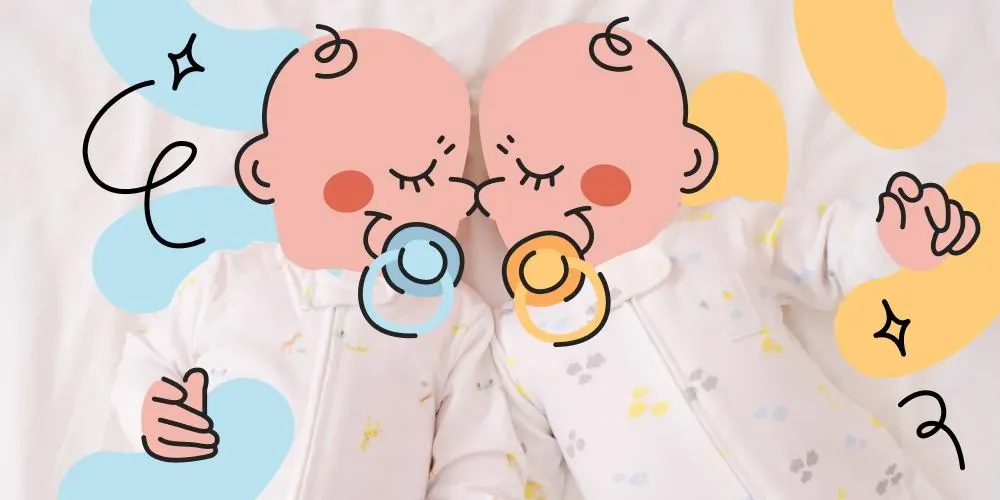
If you don't have twins, this article can simply be an interesting read. But if you are the parent of a new pair of babies, these are just a few of the things you’ll want to know about raising your twins.

  1. First of all, twins are not that rare of a phenomenon nowadays. One pregnancy out of 250 results in twins. And if there is a fertility treatment involved, then the chance of having twins increases to almost 30% [1].
  2. Twins often create their own language, which only they can understand. This phenomenon even has a name, it’s called "twin language" or "cryptophasia". It‘s cute and funny, but it may lead to delayed speech development because the children don’t find it necessary to learn the language of adults. Therefore, persistently talking to twins becomes more important than with single children [2].
  3. Identical (monozygotic) twins usually may present the same illnesses, so if you find it in one, look for it in the other. But for dizygotic (non-identical) twins, this is true only half of the time [3].
  4. Twins’ external similarity does not mean they have the same preferences and talents, though it may seem that way because twins adapt to each other from infancy. Psychologists recommend separating them into different classes at school so that each can develop their own abilities [4].
  5. National Twin Day has been celebrated annually in Twinsburg, Ohio since 1976 on the first weekend in August. Since 2019, the holiday has been recognized internationally and is now celebrated separately on December 18th [5].

Frequently asked questions

Choose names that complement each other without being too matchy or rhyming. Consider names with different lengths, sounds, and meanings to help establish each twin's individual identity from birth.

Twins occur naturally in about 1 out of 250 pregnancies. With fertility treatments, the chances increase dramatically to nearly 30%.

Yes, this phenomenon called cryptophasia or twin language is real. While adorable, it can delay normal speech development, so parents should actively encourage regular language learning.

Experts recommend avoiding overly similar names to help each twin develop their individual identity. Choose names that sound good together but aren't rhyming or too matchy.

Medical Disclaimer

This article is for informational purposes only and is not a substitute for professional medical advice, diagnosis, or treatment. Always seek the advice of your physician or qualified health provider with any questions you may have regarding a medical condition.

Meet our medical experts

Medically reviewed content

Reviewed by healthcare professionals · Updated September 7, 2024

Track your pregnancy on the go

Rated 4.8417,594 reviews