EN
try amma today
8 facts for parents regarding teething
New Parent

8 facts for parents regarding teething

2 min read
Key takeaways
2 min
  • Expect your baby's first tooth around 6 months, though timing varies from 4 months to 1 year.
  • Watch for swollen gums, crankiness, and excessive drooling as common teething signs.
  • Consult your pediatrician if teeth are 6+ months behind schedule or grow asymmetrically.
  • Start cleaning baby's teeth twice daily with appropriate toothpaste as soon as the first tooth appears.
  • Don't blame all symptoms on teething - fever above 100°F, diarrhea, or rashes need medical attention.

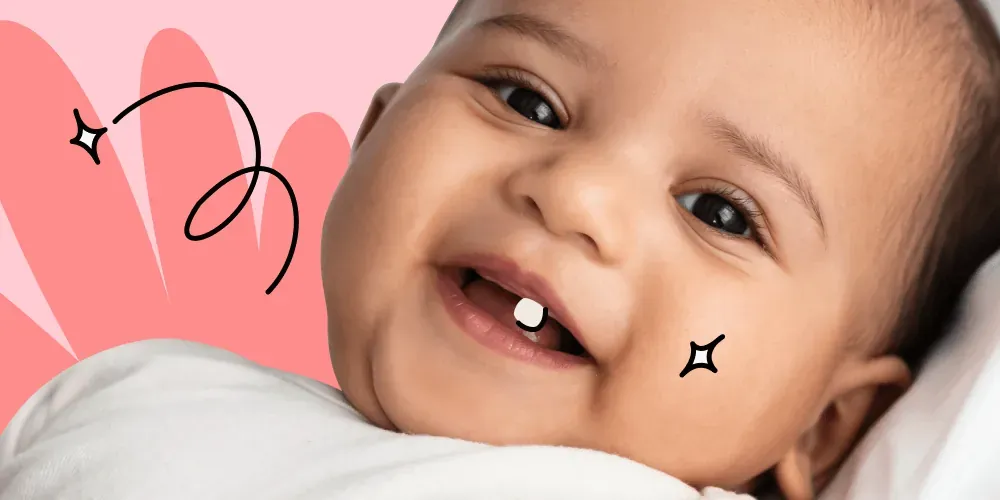
Babies typically start teething around 6 months, though it can begin anywhere from 4 months to 1 year. Common signs include swollen gums, crankiness, and excessive drooling. All 20 baby teeth usually erupt by age 3.

amma app

Track your pregnancy in the app

Personalized content for your pregnancy week

Download App

At birth, a baby has 20 teeth, which are neatly tucked under their gums. Gradually, as the jaws grow, they will start to erupt.

  1. Usually, the first teeth appear at around six months. But there is no rule; in some babies, the process begins a couple of months earlier, in others later, sometimes closer to a year [1].

  2. Almost always, the lower front incisors appear first [2], then the upper incisors. Next come the lateral incisors, and so on. By the age of three, all 20 baby teeth will have erupted.

  3. Teeth don't erupt on a schedule. There is an estimated timeline, but it can change from child to child (see the table here); teeth can grow slower, faster, or in an atypical order [3].

  4. If a tooth is six months or more behind schedule, make sure to have it checked. Another red flag is asymmetrical growth. For example, the right lower incisor has appeared, but the left has not, even after six months. Talk about any of these issues with your doctor [3].

  5. If the child is born prematurely, their teeth will begin to erupt at the adjusted time. For example, if your baby was born six weeks early, they may start teething a month and a half later than the typical child [4].

  6. You can recognize teething by the following signs:

  • swollen gums;
  • the child is cranky;
  • drooling profusely.

These symptoms occur in most children [5], although some may skip them entirely.

  1. You can not write off all of your baby’s ailments to teething. If they develop diarrhea, rashes, and/or fever (especially one above 100 F), consult your pediatrician [2].

  2. Babies get cavities, too, so as soon as the first tooth erupts, clean your baby’s teeth with adequate oral hygiene utensils and baby toothpaste twice a day.


Frequently asked questions

Most babies start teething around 6 months of age, but it can begin anywhere from 4 months to 1 year. Lower front incisors typically appear first, followed by upper incisors.

Common teething symptoms include swollen gums, increased crankiness, and excessive drooling. However, fever above 100°F, diarrhea, or rashes are not normal teething symptoms and require medical attention.

Babies are born with 20 teeth under their gums, and all 20 baby teeth typically erupt by age 3. The teething process follows a general timeline but varies for each child.

Consult your pediatrician if a tooth is 6+ months behind the typical schedule or if there's asymmetrical growth. Premature babies may teeth later based on their adjusted age.

Begin cleaning your baby's teeth twice daily as soon as the first tooth erupts. Use appropriate baby toothpaste and oral hygiene tools to prevent cavities.

Medical Disclaimer

This article is for informational purposes only and is not a substitute for professional medical advice, diagnosis, or treatment. Always seek the advice of your physician or qualified health provider with any questions you may have regarding a medical condition.

Meet our medical experts

Medically reviewed content

Reviewed by healthcare professionals · Updated September 4, 2024

Track your pregnancy on the go

Rated 4.8417,594 reviews