
Sometimes you need to bottle-feed your baby with expressed milk or formula. First-time bottle feeding raises new questions.
How do you choose a bottle and a nipple?
Make sure the bottle has anti-vacuum nipples (also known as vented bottles). They have tiny holes that allow air into the bottle and keep the nipple from collapsing. This simulates breastfeeding and keeps the baby from choking on an excess of formula. Everything else, including the material, size, shape, and brand of nipple and bottle, has not been shown to influence bottle feeding success [1].
How do you give a bottle to a baby correctly?
If you have exclusively breastfed until now, your baby may struggle to transition to bottle feeding quickly. They might find it difficult to synchronize sucking, swallowing, and breathing [1]. Be patient.
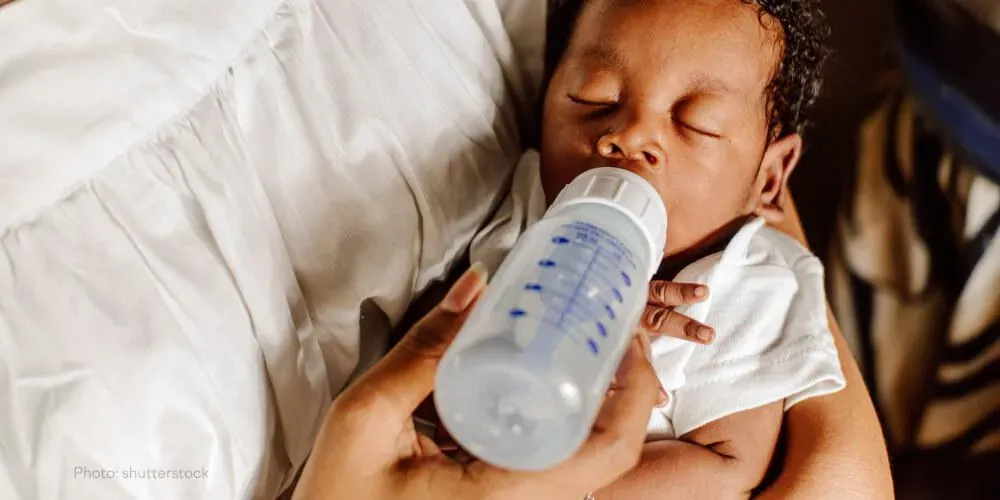
Place the bottle at an angle instead of straight up so that milk doesn't flow into your baby's mouth when they're not sucking.
If the baby has stopped feeding, don't put the bottle away; they might just be tired but not yet full.
If the baby no longer wants to be fed, do not force them to.
Do you need to boil bottles and nipples?
They become sanitized if you wash them in a hot water dishwasher. If you wash by hand, you have to boil everything that is needed for feeding—including the nipple brushes—for five minutes at least once a day. Remove everything with tongs and allow to cool [2].
Can formula be fed on-demand?
Yes. However, it is more difficult than breastfeeding because you will need time to prepare the formula, so many people opt to feed by the hour. Most newborns will consume approximately one ounce (30 grams) of formula every two hours. After a month, both portion sizes and feeding intervals will increase. Up to three to four months old, the baby should be fed every three to four hours, including at night [3].
How soon should you give your baby the milk you pump at work so it doesn't go bad?
The maximum amount of time expressed milk can be kept without refrigeration is four hours. It is essential that you feed the infant and bring the container home during this time. Milk will last up to four days in the refrigerator. Make sure to keep it on a shelf inside the fridge rather than in the door. The temperature changes when you open and close the door, causing the milk to spoil faster [4].
How to get milk from the fridge to warm up?
Most doctors think that babies can be fed room temperature, cold milk. Should you choose to warm it, never do so in the microwave or on the stove. This will heat the milk unevenly and, with the microwaves or high heat of the stove, may destroy the nutrients. Instead, put the bottle in a container filled with warm (not hot!) water. Use breast milk within two hours after bringing it to room temperature or warming it [4].
Photo: shutterstock