EN
try amma today
How to play with your two-month-old baby
New Parent

How to play with your two-month-old baby

3 min read
Key takeaways
3 min
  • Play visual tracking games by moving colorful objects or flashlight beams 15 inches from your baby's face to develop eye coordination.
  • Create sound exploration activities using household items like foil, bells, and squeaky toys to develop hearing and cause-and-effect understanding.
  • Introduce different textures through safe objects like feathers, sponges, and rubber toys to stimulate your baby's natural curiosity through touch.
  • Practice finger dancing at eye level with music to provide entertainment without needing any special props or toys.
  • Perform gentle bicycle leg movements while saying 'stop' and 'go' to develop gross motor skills and coordination.

Play with your 2-month-old using five simple games: visual tracking with moving objects, sound exploration with different textured items, touch-and-feel activities, finger dancing to music, and gentle bicycle leg movements. Always supervise play and keep objects 15 inches from baby's face for optimal engagement.

amma app

Track your pregnancy in the app

Personalized content for your pregnancy week

Download App

Here are five exciting and educational games.

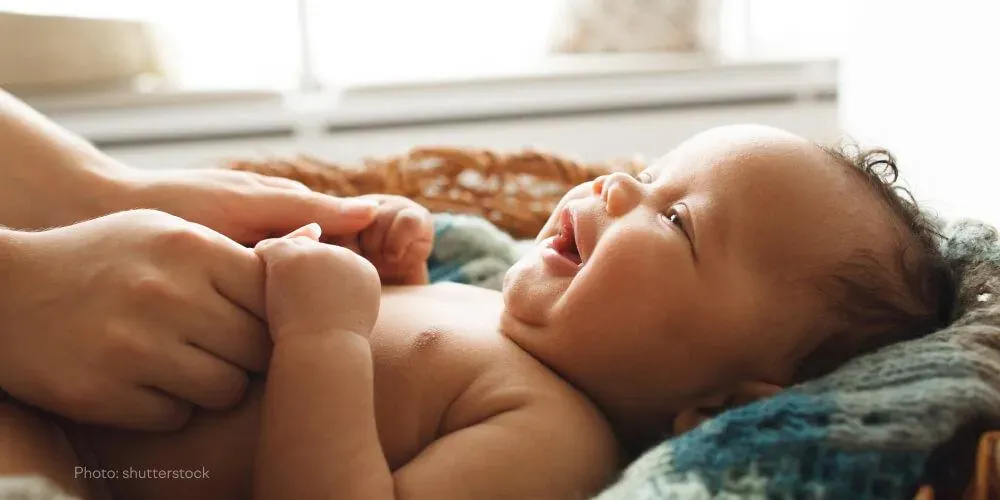
By the age of two months, babies can distinguish objects, follow them with their eyes, turn their heads in response to sounds, and actively move their arms and legs [1].

These games will help use these skills and provide great bonding time.

Always play these games with an adult present. Do not leave your baby alone while playing.

Peepers

In this game, your baby will look at different objects and follow them with their eyes.

How to Play:

  • Hold a rattle, toy, or bright object about 15 inches away from your baby.

  • Slowly move it up and down, and left and right.

  • Watch as your baby follows it with their eyes. It's fun for them!

To mix it up, use a flashlight:

  • Turn off the lights and sit your baby on your lap.

  • Point the flashlight at the wall and slowly move the beam of light.

  • This makes a great relaxing game for bedtime!

Rustlers and Whistles

This game helps develop hearing and understanding cause-and-effect relationships.

How to Play:

  • Take a box and put in objects that make different sounds, such as a squeaker toy, foil, wrapping paper, bubble wrap, a bell, a maraca, and a tambourine.

  • Sit next to your baby and take turns making sounds with the objects. Change the order to keep it interesting.

  • Then, give one of the items to your baby. Eventually, they'll realize they are making the sounds themselves. A big discovery!

Touch-and-Feel

Babies explore the world through touch. Help nurture this natural curiosity.

How to Play:

  • Collect items with different materials and textures, such as a feather, sponge, rubber duck, piece of apple, and kitchen spatula.

  • Give the items to your baby to hold or place them on their stomach.

Watch their joy as they explore these new textures!

Dancing fingers

For this game, you don't need any props at all. You can arrange an exciting show for the baby with one hand!

How to play:

Put the baby on her stomach and place your fingers at eye level at a distance of about 15 inches.

Turn on the music and start moving your fingers to the rhythm. Change the direction of movement (up-down, right-left) and speed. How fun! 

 Bicycle

It's time to move! This game develops coordination and expectations.

How to Play:

  • Lay your baby on their back and hold their ankles.

  • Move one leg towards you and the other away, as if your baby is riding a bicycle.

  • Say "stop" and pause the movement.

  • Then say "let's go" and continue moving their legs.

Even though your baby doesn't know what a bicycle is, this game helps develop their gross motor skills.

Photo: shutterstock

Frequently asked questions

At 2 months, babies enjoy visual tracking games, sound exploration, texture play, finger dancing, and gentle leg movements. These activities help develop their emerging abilities to follow objects with their eyes and respond to sounds.

Hold toys and objects about 15 inches away from your baby's face. This is the optimal distance for their developing vision and allows them to focus and track moving objects effectively.

By 2 months, babies can distinguish between objects, follow them with their eyes, turn their heads toward sounds, and actively move their arms and legs. They're also beginning to understand cause-and-effect relationships.

Yes, when supervised by an adult at all times. Never leave your baby alone during play, ensure all objects are safe for babies, and use gentle movements during physical activities like the bicycle game.

These games enhance visual tracking, auditory processing, tactile exploration, and gross motor skills. They also strengthen the parent-child bond and help babies understand cause-and-effect relationships through interactive play.

Medical Disclaimer

This article is for informational purposes only and is not a substitute for professional medical advice, diagnosis, or treatment. Always seek the advice of your physician or qualified health provider with any questions you may have regarding a medical condition.

Meet our medical experts

Medically reviewed content

Reviewed by healthcare professionals · Updated September 4, 2024

This article is based on peer-reviewed research and trusted medical sources.

  1. Important Milestones: Your Baby By Two Months. CDC.

Track your pregnancy on the go

Rated 4.8417,594 reviews