EN
try amma today
My period's isn’t back yet. Is that normal?
New Parent

My period's isn’t back yet. Is that normal?

1 min read
Key takeaways
1 min
  • Expect postpartum amenorrhea to last anywhere from a few months to several years, depending on individual factors like breastfeeding frequency.
  • Understand that prolactin hormone from breastfeeding blocks ovulation, but timing varies greatly between women.
  • Remember that ovulation typically returns before your first period, so consider contraception even without menstruation.
  • Use the Lactational Amenorrhea Method (LAM) for pregnancy prevention only during the first six months postpartum.
  • Track your returning cycle with an ovulation calculator once menstruation resumes to predict fertile windows.

It's perfectly normal for periods to take months or even years to return after childbirth. This condition, called postpartum amenorrhea, depends on breastfeeding habits since prolactin hormone suppresses ovulation while nursing.

amma app

Track your pregnancy in the app

Personalized content for your pregnancy week

Download App

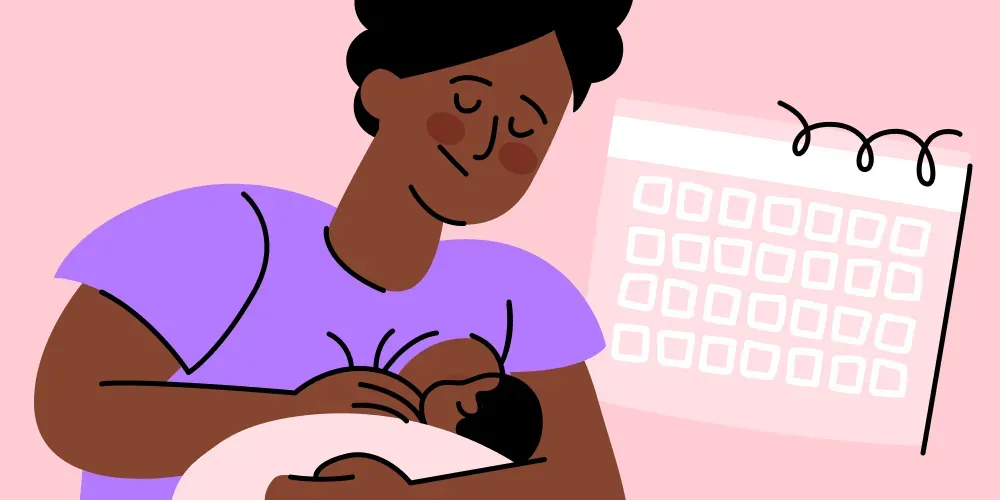
It is perfectly normal for your period to take its time coming back. The medical term is postpartum or lactational amenorrhea.

The duration of the amenorrhea is individualized and depends on whether you continue to breastfeed. The hormone prolactin, which stimulates milk production, is thought to block ovulation [1].

Amenorrhea can last from a few months to several years [2], so there is no sense in comparing yourself to other moms. Timing also depends on other factors, including breastfeeding frequency and night feedings, age, and even the woman’s socioeconomic status [3].

It's important to remember that the Lactational Amenorrhea Method (LAM) for pregnancy prevention is only considered effective for the first six months [4]. You may start ovulation before your period starts [3], so you need to consider other contraceptive methods. We have some suggestions for you here.

Frequently asked questions

Ovulation typically returns 2-8 weeks after birth for non-breastfeeding mothers, but can take months to years for breastfeeding mothers. The hormone prolactin suppresses ovulation while nursing.

Yes, you can get pregnant before your first postpartum period because ovulation occurs before menstruation. Consider contraception even if you haven't had a period yet.

Start using an ovulation calculator once your regular menstrual cycle returns. This helps predict fertile windows for conception or contraception planning.

Breastfeeding suppresses but doesn't completely prevent ovulation. The Lactational Amenorrhea Method is only 98% effective for the first six months under specific conditions.

Breastfeeding frequency, night feedings, maternal age, and socioeconomic factors all influence when ovulation returns. Every woman's timeline is different.

Medical Disclaimer

This article is for informational purposes only and is not a substitute for professional medical advice, diagnosis, or treatment. Always seek the advice of your physician or qualified health provider with any questions you may have regarding a medical condition.

Meet our medical experts

Medically reviewed content

Reviewed by healthcare professionals · Updated September 8, 2024

Track your pregnancy on the go

Rated 4.8417,594 reviews