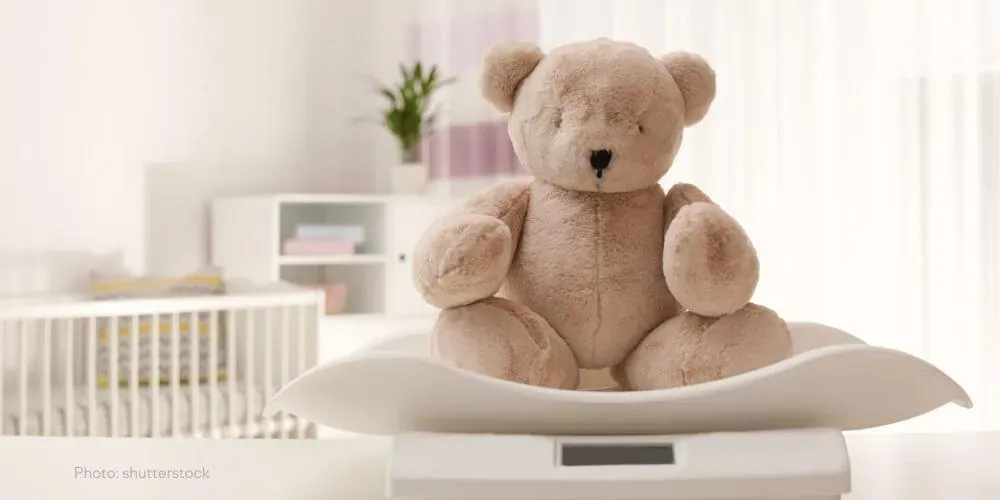

Did you know that when you and your baby are discharged from the hospital, the baby will weigh a little less than when they were born? This is common and nothing to be concerned about.
How much weight do newborns lose?
Two days after birth, babies tend to weigh 6-7% less than at birth. On the third day, it’s 7-8% less than at birth. Baby’s weight is usually at its lowest on the fourth day, and then increases again when she is 10-14 days old [1].
Babies who are exclusively breastfed tend to lose more weight than those exclusively bottle-fed, but the differences disappear after about three weeks [2].
Why do newborns lose weight?
There are three common reasons:
The removal of meconium, the baby’s first poop, from their digestive system.
Fluid The loss of lung fluid as she transitions to breathing air outside the womb.
Inadequate intake at the breast. The baby has not yet adapted to breastfeeding, so they are not eating quite as much as they should. Mama’s breastmilk might also not be flowing normally yet [2].
All of these conditions usually go away on their own, causing the baby to gain weight again.
How often should the baby be weighed?
The baby will be weighed throughout your hospital stay. Weigh them again two to three days after their birth, then about once a week after that [3]. Your doctor may recommend more frequent weighing if any health concerns develop.
Along with weight, you can keep an eye on your baby's well-being by counting the number of diapers you change each day (an average of 5-7 wet and 3–4 dirty) [3].
When should I call my doctor?
If, after two weeks, the baby is still losing weight or hasn't begun to gain it back, call your doctor. The doctor needs to make sure that the baby isn’t dehydrated o malnourished [4]. You may also need to see a lactation consultant to discuss the possible introduction of formula feeding.
Photo: shutterstock