EN
try amma today
Why do babies all over the world say similar first words?
New Parent

Why do babies all over the world say similar first words?

2 min read
Key takeaways
2 min
  • Recognize that babbling sounds like 'mamama' and 'dadada' are universal across all cultures and continents before becoming actual words.
  • Respond frequently to your baby's babbling to help them develop their accent and speaking patterns faster.
  • Understand that baby talk with elongated vowels and high tones is used worldwide, creating similar first word patterns.
  • Expect your baby's first meaningful words to emerge around their first birthday after months of babbling practice.
  • Know that early babbling sounds have no meaning initially but help babies develop the motor skills needed for speech.

Babies worldwide say similar first words like 'mama' and 'dada' because these sounds are easiest to produce with developing vocal abilities. Parents universally use baby talk with elongated vowels and repetitive sounds, creating consistent speech patterns that babies naturally absorb and imitate across all cultures.

amma app

Track your pregnancy in the app

Personalized content for your pregnancy week

Download App

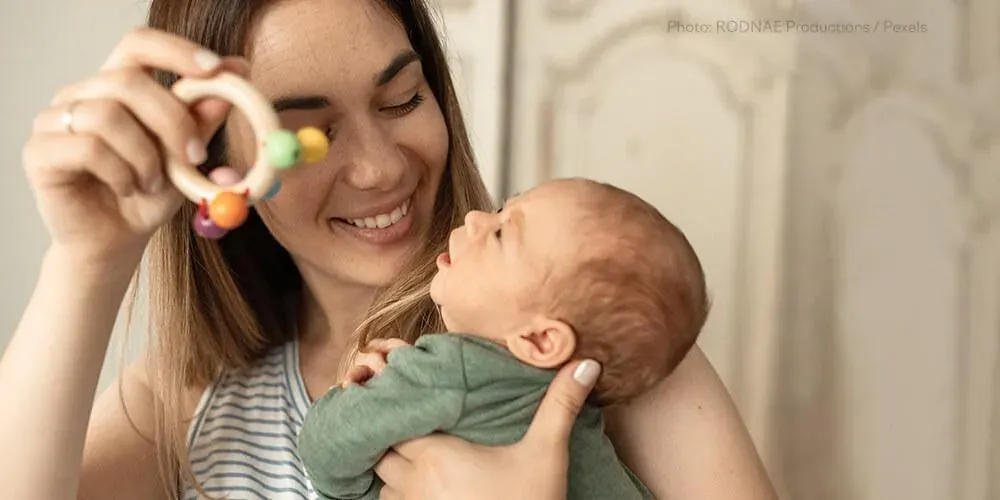
A look at how babies learn language.

Babbling sounds the same on every Continent

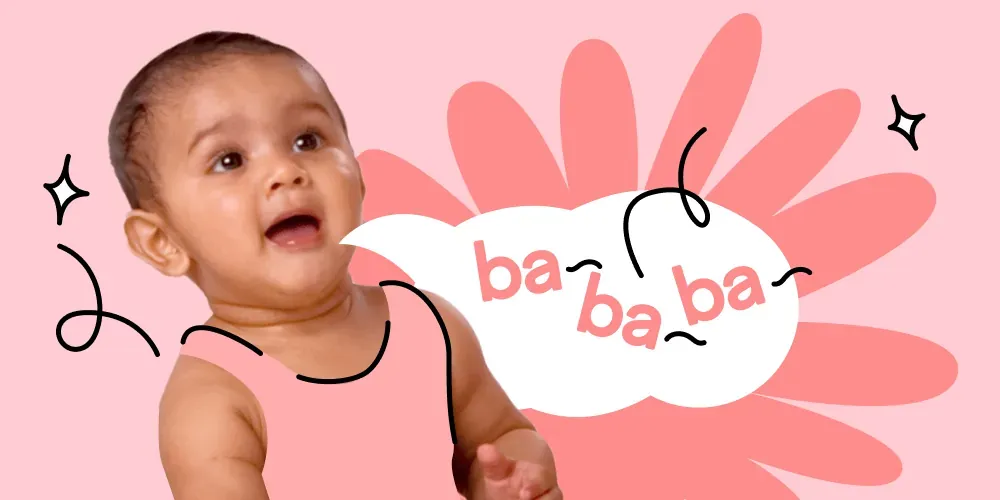
You’ve probably noticed that your baby’s formerly unintelligible sounds are starting to sound more clear, with a combination of vowels and consonants that sound like “ba”, “ga” or “mi”.

Your baby is starting to babble! Very soon, the sounds they make will become more complex starting with the repetition of one or several combinations, such as "mamama" or "dada dada" [1]. This can be seen in children all over, no matter what continent or country they’re growing up in.

"Mamamama" and "dadada" are not words yet

These sounds are very similar to their first words because a baby can articulate them almost as someone much older does [2]. But these first babblings carry no meaning for the baby yet. They don’t use them to address someone specific or to point to an object [3].

How the baby pronounces the first words depends on the parents

Studies show that the more often mom, dad, and others respond to the baby's babbling, the faster they adopt their accent and manner of speaking [3]. The baby also begins to associate certain sounds with specific people and objects. By the time their first birthday comes along, these exercises will help them start saying their first words.

Parents all over the world speak to their children in similar ways

Their first words may be the same for babies from different countries, and that is because adults often use baby talk (a “language” that mimics how babies start talking) when talking to their children. It is characterized by the lengthening of vowels, slow speech rate, high tone, chanting, and sound imitation. This type of talk can be heard in every corner of the world [4], and since children absorb this universal language, their first words tend to be very similar, regardless of where they are.
Frequently asked questions

The most common first words babies say worldwide are variations of 'mama', 'dada', 'papa', and simple sounds like 'ba' or 'ga'. These sounds are universal because they're easiest for babies to articulate with their developing vocal abilities.

Most babies say their first meaningful words around 10-14 months of age, typically by their first birthday. However, they begin babbling with sounds like 'mamama' and 'dadada' much earlier, usually around 4-6 months.

Babies say 'mama' and 'dada' first because these sounds are the easiest to produce with their developing vocal cords and mouth muscles. The repetitive consonant-vowel combinations require minimal tongue and lip coordination.

Parents can help babies learn to talk faster by responding consistently to their babbling, using baby talk with elongated vowels, and engaging in frequent conversation. The more parents interact with baby sounds, the quicker babies develop speech patterns.

Baby names don't directly influence first words, but babies often say simplified versions of frequently heard names. They're more likely to attempt sounds they hear repeatedly, so common baby names with simple syllables may emerge in early speech.

Medical Disclaimer

This article is for informational purposes only and is not a substitute for professional medical advice, diagnosis, or treatment. Always seek the advice of your physician or qualified health provider with any questions you may have regarding a medical condition.

Meet our medical experts

Medically reviewed content

Reviewed by healthcare professionals · Updated September 6, 2024

Track your pregnancy on the go

Rated 4.8417,594 reviews