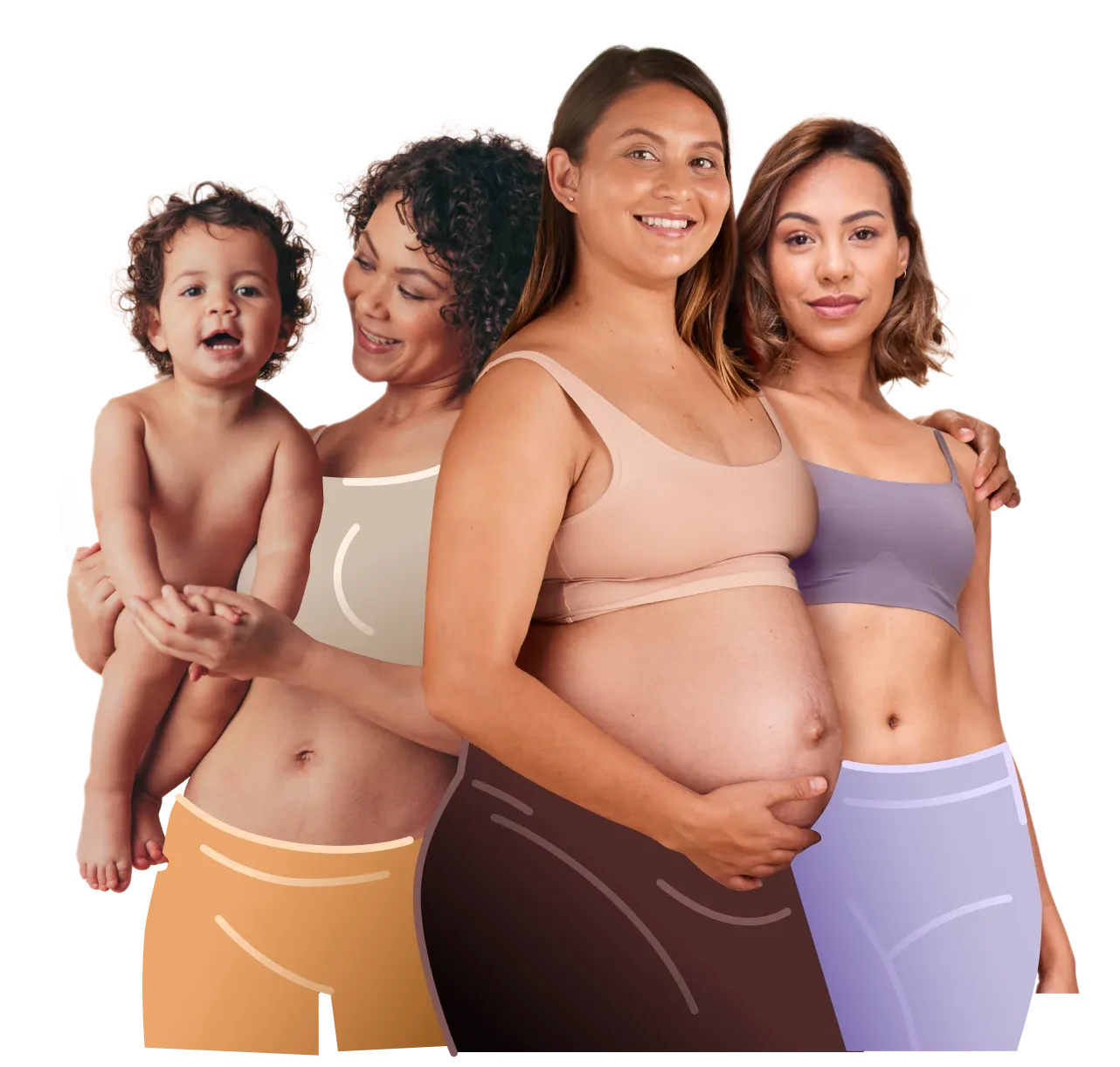

Your daughter needs your warmth
Hello, baby!
Entering into the world is a shock for your daughter. Keeping her close to your body will make her feel safe. The kangaroo method, also called skin-to-skin contact, is important not only psychologically, but also for her physiological health. Newborns have yet to establish thermoregulation. For nine months, your baby has been swimming in warm amniotic fluids, and now, exposed to the air, she is cold. Mom's skin is an ideal source of heat.
WHO also recommends that babies wear hats and one or two layers of clothing more than an adult in the first days of life [1].
When baby is not sleeping, clothes are better than swaddling: it will give your daughter freedom of movement, which allows her to start learning coordination [2].
What to pay attention to
Baby’s belly button, or rather, her umbilical cord. The main thing is to make sure that it remains dry [1, 2]. If you notice that it gets wet or inflamed, talk to your doctor or nurse.
Hunger. Not all babies are ready to actively breastfeed immediately after birth. Sometimes they just don't have the strength. But it’s still important to start bringing baby to the breast and feed on demand. If your daughter sucks sluggishly, try to start dropping a few drops of colostrum or milk directly into her mouth.
Vaccinations. On the first day after birth, the baby will be vaccinated against hepatitis [3].
Nothing to worry about
If you see red spots in your daughter’s diaper, it is most likely uric acid salts. This usually occurs in babies who are fully breastfed on the second or third day after giving birth. Just keep nursing and baby will get enough fluid. If you are concerned, or think it might be blood, talk to your doctor [4].
Weight loss. On the third day after giving birth, almost all babies weigh less than at birth. On average a baby may lose about 6% of her body weight. On the fifth or sixth day, your daughter will begin to gain weight again.