
EN
try amma today
A new stage of life
Pregnancy

A new stage of life

3 min readWeek 11
Key takeaways
3 min
  • Track your baby's development from embryo to fetus as all major organs and systems form during early pregnancy weeks.
  • Observe key milestones including brain development, immune system formation, and the beginning of organ function around 10-12 weeks.
  • Prepare for ultrasound appointments where you can see your baby's face, limbs, and heart development clearly.
  • Consider choosing baby names during this exciting developmental stage when sex organs begin forming and producing hormones.
  • Monitor your baby's growth as they develop from curved position to straighter posture with strengthening neck muscles.

At 10-12 weeks of pregnancy, your baby graduates from embryo to fetus with all major organs and systems in place. Key developments include brain formation, immune system establishment, and visible facial features on ultrasound, making this an exciting time to consider baby names.

amma app

Track your pregnancy in the app

Personalized content for your pregnancy week

Download App

A new stage of life

At time, the baby has graduated from embryo to fetus! All basic systems and organs are in place and continue to grow in complexity [1]. Growing bigger and bigger every week, the baby’s curved body gradually straightens — with their head not so tightly pressed to the chest. As the baby learns to lift their head, the neck is strengthened.

A new stage of life - A new stage of life

This week, the baby’s legs begin to catch up to the development of their arms. All joints are clearly defined and the fingers and small nails are visible. Milk teeth are developing under the gums. Baby’s musculature is getting stronger, so movements become more pronounced, although you still won’t be able to feel them. The right and left hemispheres of the brain and cerebellum continue to develop quickly.

This week, the lymphatic system is formed with the thymus gland, providing the baby with their first immune cells, called lymphocytes. These will protect the baby from foreign proteins.

Your baby is now swallowing amniotic fluid which helps aid in their development and helps the intestines to start working. The liver produces its first bile and synthesizes blood proteins; kidneys and other urinary organs also begin to function. Amniotic fluid is flushed out with urine about 10 times a day. This liquid does not contain toxic products, since the fetus uses the mother's system to excrete them.

At this time, the sex glands of boys begin to produce testosterone and the ovaries begin to produce female germ cells.

What we can see on an ultrasound

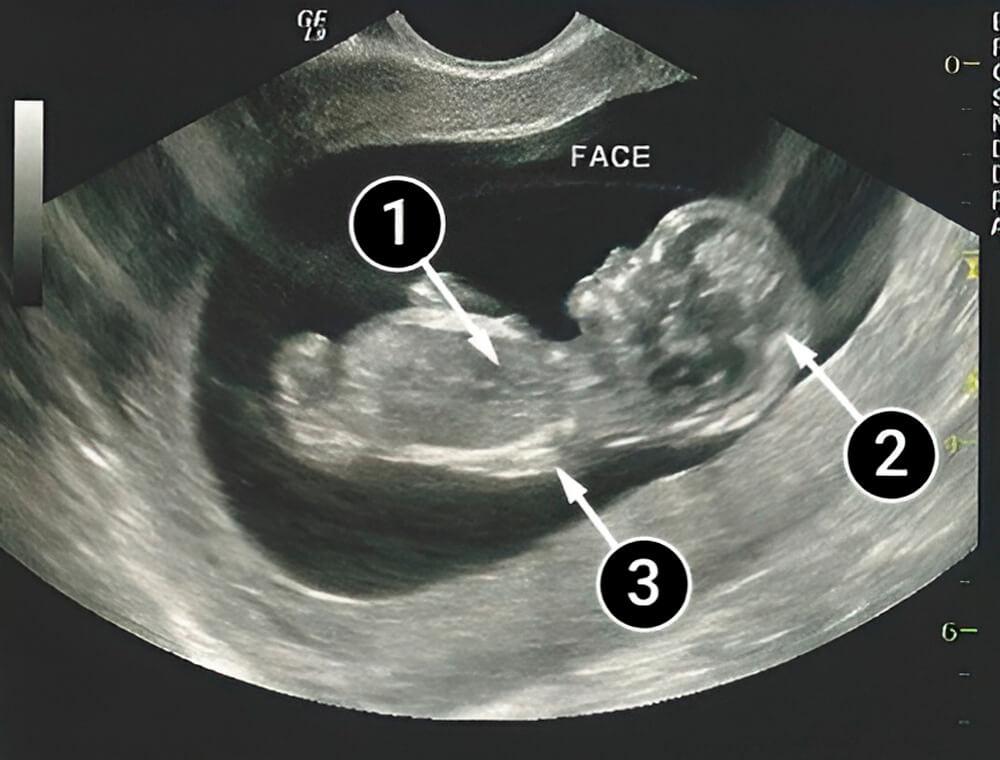
The first photograph shows a baby lying on their back surrounded by amniotic fluid. Their movements are becoming more distinct, and they are already able to push off from the uterus wall.

The baby’s head is visible and still measures about half their body. The little one’s face is clearly outlined, including nose and lips.

In the foreground, you can see the baby’s shoulder and left arm. Legs are bent and not visible from this position.

The dark spot on the chest is the heart, which already has four chambers, but venous and arterial blood are still mixed.
A new stage of life - A new stage of life
  1. heart

  2. head

  3. hand

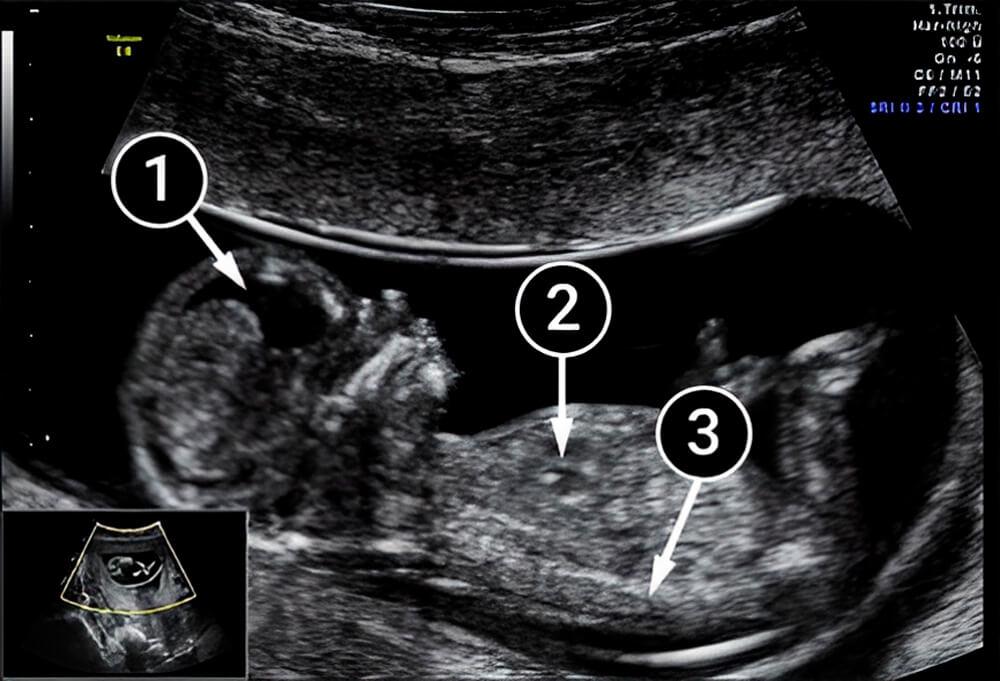
The following picture shows the baby’s head. A clear view of the face allows you to see the eye sockets under the eyelids, nose, lips, chin, and neck.

The head is raised and the right arm rests along the torso. Right now, the arms are longer than the legs, but they will soon catch up.

A tiny heart is visible in the chest.
A new stage of life - A new stage of life
  1. the brain

  2. heart

  3. hand


  1. Brewer S. The Pregnant Body Book. Dorling Kindersley Publishing Staff, 2012, p. 133.

Frequently asked questions

You can start considering baby names as early as 10-12 weeks when your baby transitions from embryo to fetus. Many parents begin exploring baby names once they see their baby's development on ultrasound and feel more connected to their growing child.

At 10-12 weeks, you can see your baby's head, face features including nose and lips, arms, and heart. The baby's movements become more distinct and they can push off from the uterus wall.

The baby's lymphatic system forms around 10-12 weeks with the thymus gland producing the first immune cells called lymphocytes. These cells protect the baby from foreign proteins during development.

Normal development includes visible brain hemispheres, functioning kidneys and liver, formed joints and fingers, and a four-chambered heart. Your healthcare provider will confirm healthy development through ultrasound examinations.

Medical Disclaimer

This article is for informational purposes only and is not a substitute for professional medical advice, diagnosis, or treatment. Always seek the advice of your physician or qualified health provider with any questions you may have regarding a medical condition.

Meet our medical experts

Medically reviewed content

Reviewed by healthcare professionals · Updated June 8, 2025

Track your pregnancy on the go

Rated 4.8417,594 reviews