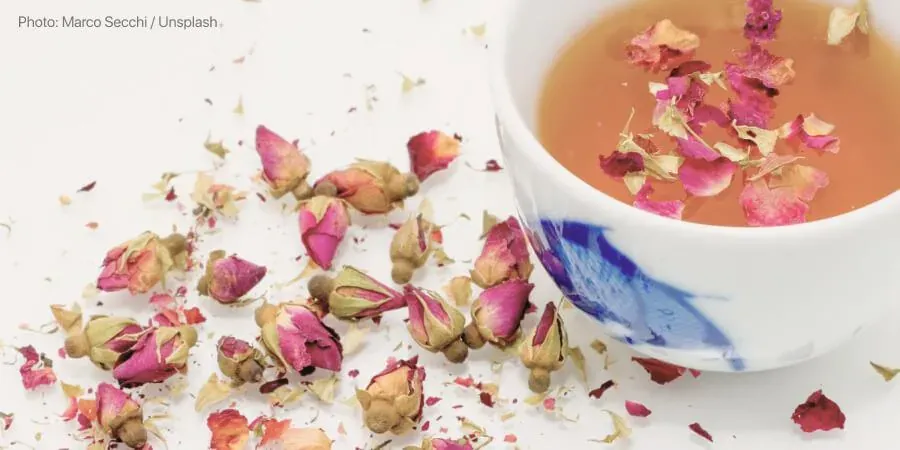

Unlike pharmaceutical drugs, herbal teas are available over the counter in grocery stores and from your garden. According to various sources, 30 to 80 percent of women in developed countries (where there is access to evidence-based medicine) drink herbal tea during pregnancy [1, 2].
No country has conducted large-scale clinical trials on the safety of herbal teas during pregnancy [1]. Most of the conclusions surrounding the benefits of herbs are based on traditional beliefs or experiments on animals. At the same time, even if some herbal remedies are safe, it is not known how they react in combination with medications [3].
Here are some of the herbal teas women often drink during pregnancy and what we know about them:
Chamomile
It is often used as a sedative or mild sleeping agent. Its effectiveness is not proven, but no side effects are known, so it is deemed safe to drink during pregnancy [3].
Peppermint
It is considered an effective remedy for morning sickness. In case of mild to moderate nausea, doctors may recommend mint tea or peppermint candies to help alleviate symptoms [4].
Raspberry and strawberry leaves
These are considered a good remedy for strengthening the uterine walls and preparing for childbirth [3, 1]. No risks for the baby have been confirmed [1].
St. John's wort
This herb is believed to help with mild to moderate depression, but in experiments on rats, St. John's wort tea has led to birth defects or caused lethargy in newborn rats. No human experiments have been conducted, but it is not considered safe for pregnant women [3].
Echinacea
It is popularly considered an immunity booster, often taken to ward off colds, its efficacy is not proven, but no side effects are known. Echinacea is, however, known to suppress corticosteroids, so if you have a prescription for corticosteroids, you should avoid it [3].
Ginger
Although it is known as a folk remedy for nausea [4], there is no evidence of its effectiveness. What is proven is its ability to reduce the effectiveness of anticoagulants (blood thinners) [3]. At high dosages (more than 28 g per 2 lbs of body weight), ginger may increase the risk of miscarriage [1].
Nettle leaves
Used in folk medicine to stop or prevent bleeding, nettles are often recommended before childbirth. Nettle leaves are perhaps the only herb that can confidently be used as a dietary supplement, as they contain calcium, iron, folic acid, and vitamin K. Also, nettle has mild diuretic properties, so it can help prevent urinary tract infections [5]. So drink up!