EN
try amma today
Baby now kicks and flutters!
Pregnancy

Baby now kicks and flutters!

3 min readWeek 10
Key takeaways
3 min
  • Recognize baby kicks and flutters as key early signs of pregnancy when your baby develops movement capabilities around 16-20 weeks.
  • Understand that your baby's brain cortex differentiates and nervous system divides into central and peripheral systems during this stage.
  • Identify fetal features on ultrasound including the disproportionately large head, developing limbs, and umbilical cord connection.
  • Monitor how your baby begins perceiving light even with closed eyelids and develops the diaphragm muscle membrane.
  • Track placenta development as the corpus luteum gradually transfers its hormone-producing duties to support pregnancy.

Early signs of pregnancy include baby kicks and flutters felt between 16-25 weeks when the baby develops movement capabilities. During this time, the brain's cortex differentiates, enabling hand-to-face movements and leg straightening that mothers experience as distinctive pregnancy symptoms.

amma app

Track your pregnancy in the app

Personalized content for your pregnancy week

Download App

Baby now kicks and flutters!

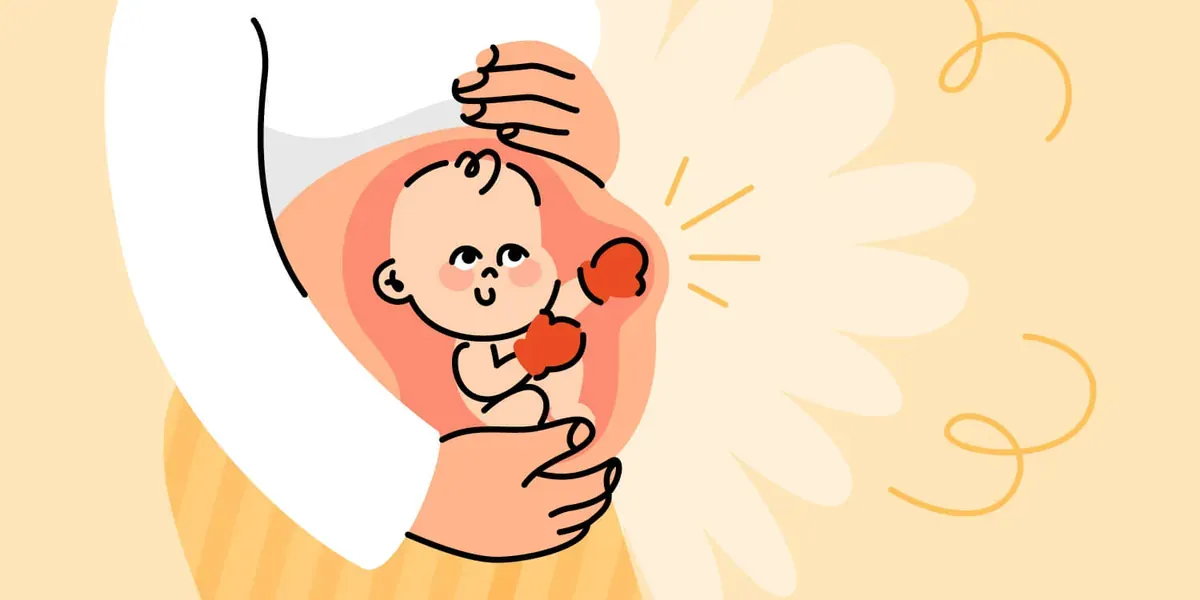
Floating in the amniotic fluid, your baby can now bring their hands to their face or straighten their legs and suck their toe [1].

The baby’s brain is growing too. The cortex is now differentiated, and the hemispheres are further separated from the middle and medulla oblongata. The nervous system is growing in complexity — it has now been divided into the central and peripheral systems [2].

The baby’s head is round and still disproportionately large. Even though the baby's eyelids are closed [3, 4], they can start to perceive light. The diaphragm, which is the muscle membrane that separates the chest from the stomach [5], also forms this week, while the corpus luteum gradually fades, transferring its duties to the placenta [6].

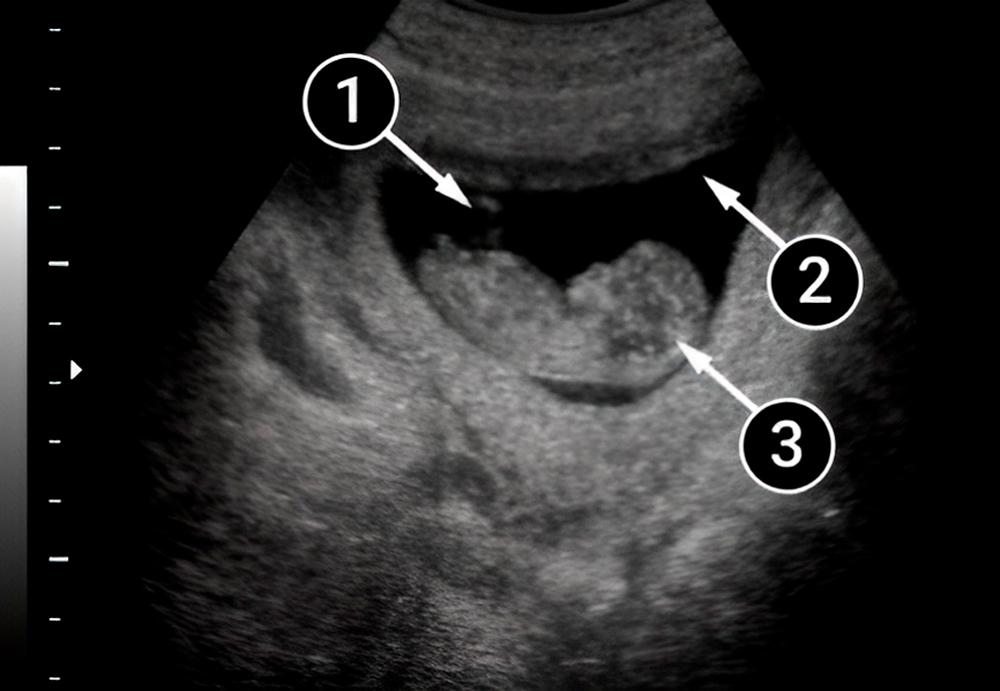
What we can see on an ultrasound

In this picture, a baby swimming in amniotic fluid leans comfortably against the walls of the amniotic sac. The baby’s profile outlines their little button nose, mouth, and even a tiny ear — a bit lower than where it will be when fully developed.

The baby’s head is still very large, almost half the size of the body. In this picture, a tiny neck is also visible. And so is the heart — the small dot seen in the baby’s chest. Though the legs are not visible, you can see the outline of the baby’s right hand.

The baby swims in amniotic fluid, which is the large dark outline seen in the picture. The spiral is the umbilical cord, which provides a close connection between mother and child. It is connected to the placenta, and blood flows through its vessels providing the developing baby with nutrients and oxygen.
Baby now kicks and flutters! - Baby now kicks and flutters!
Frequently asked questions

Most women feel their first baby kicks between 16-25 weeks of pregnancy, with first-time mothers typically feeling movement later than those who have been pregnant before. These early movements often feel like flutters or bubbles rather than distinct kicks.

Early ultrasounds reveal the baby's large head relative to body size, developing facial features like nose and mouth, and the umbilical cord connection. You can also see the amniotic sac, amniotic fluid, and sometimes hand movements as the baby develops motor skills.

During early pregnancy, the baby's brain cortex differentiates and the nervous system divides into central and peripheral systems. This neurological development enables the baby to bring hands to face and move limbs, creating the kicks and movements mothers feel.

The placenta gradually takes over hormone production from the corpus luteum during early pregnancy development. This transition ensures continued pregnancy support while the placenta provides nutrients and oxygen through the umbilical cord.

Medical Disclaimer

This article is for informational purposes only and is not a substitute for professional medical advice, diagnosis, or treatment. Always seek the advice of your physician or qualified health provider with any questions you may have regarding a medical condition.

Meet our medical experts

Medically reviewed content

Reviewed by healthcare professionals · Updated June 5, 2025

Track your pregnancy on the go

Rated 4.8417,594 reviews