EN
try amma today
Choline: food for the brain
Pregnancy

Choline: food for the brain

2 min readWeek 5
Key takeaways
2 min
  • Include choline-rich foods like eggs, beef, chicken, and salmon in your diet during pregnancy and breastfeeding for optimal brain health.
  • Consume 1.5 times more choline while breastfeeding to support your recovery, memory, muscle tone, and fat metabolism.
  • Ensure adequate choline intake during pregnancy as it directly impacts your baby's brain development and future speech abilities.
  • Breastfeed exclusively when possible, as breast milk provides stable choline levels (125-165 mg/L) that meet your baby's developmental needs.
  • Monitor your choline levels during nursing since maternal deficiency can affect the quality of breast milk and baby's development.

Choline is essential for healthy pregnancy as it supports baby's brain development and speech formation. Pregnant and breastfeeding mothers need 1.5 times more choline, found in eggs, beef, chicken, and salmon, to ensure optimal maternal recovery and infant cognitive development.

amma app

Track your pregnancy in the app

Personalized content for your pregnancy week

Download App

Choline: food for the brain

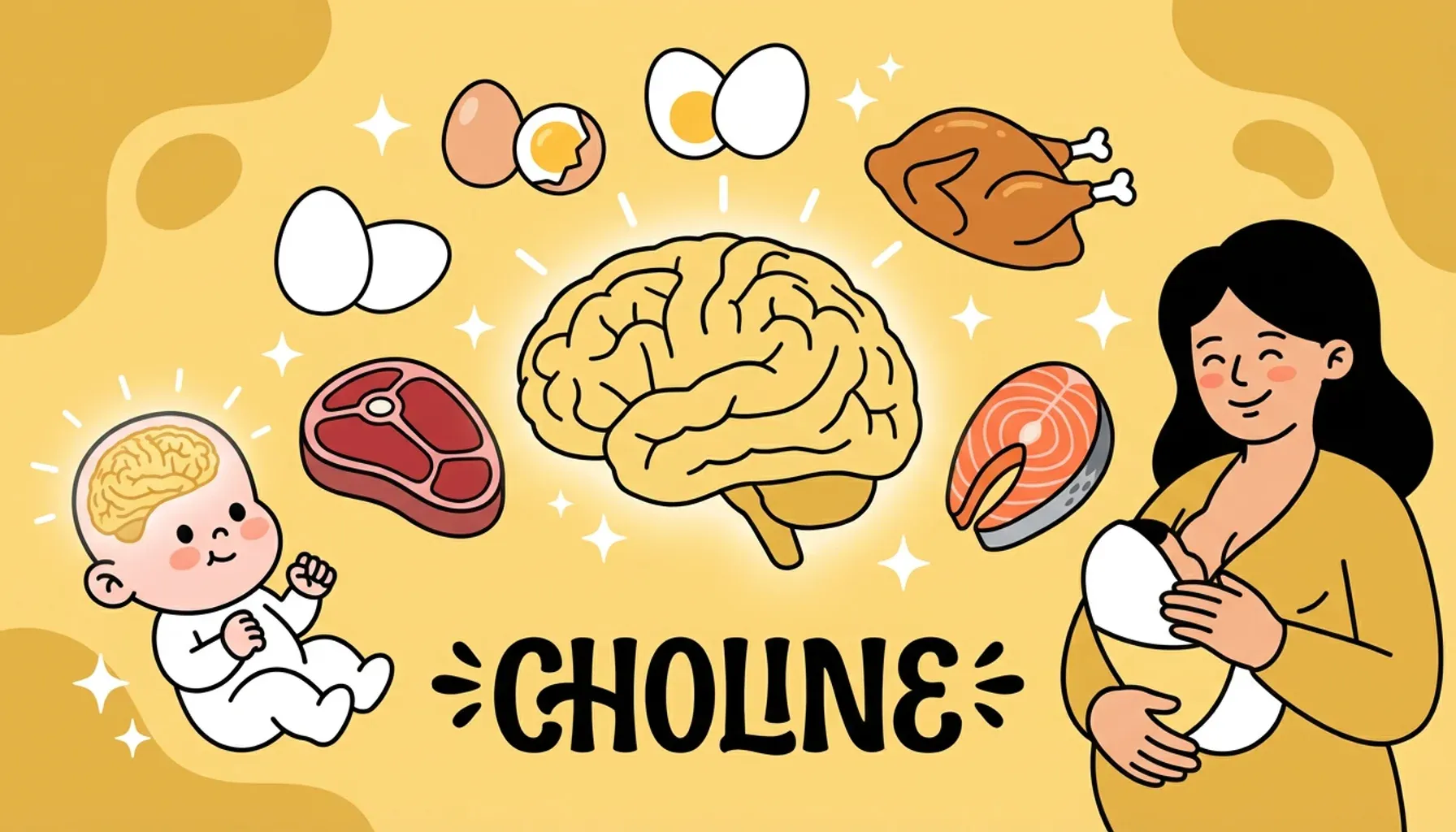
Choline (found in vitamin B4) is a vitamin-like essential nutrient that aids different steps in metabolism. Breastfeeding mothers need it one and a half times more than everyone else [1].

What mom needs

Mom needs choline for the speedy return of all systems and organs to their prenatal state. Choline:

  • protects against absent-mindedness and helps restore memory and attention [1].
  • helps restore muscle tone.
  • affects fat metabolism [1], therefore helping nursing mothers lose weight.

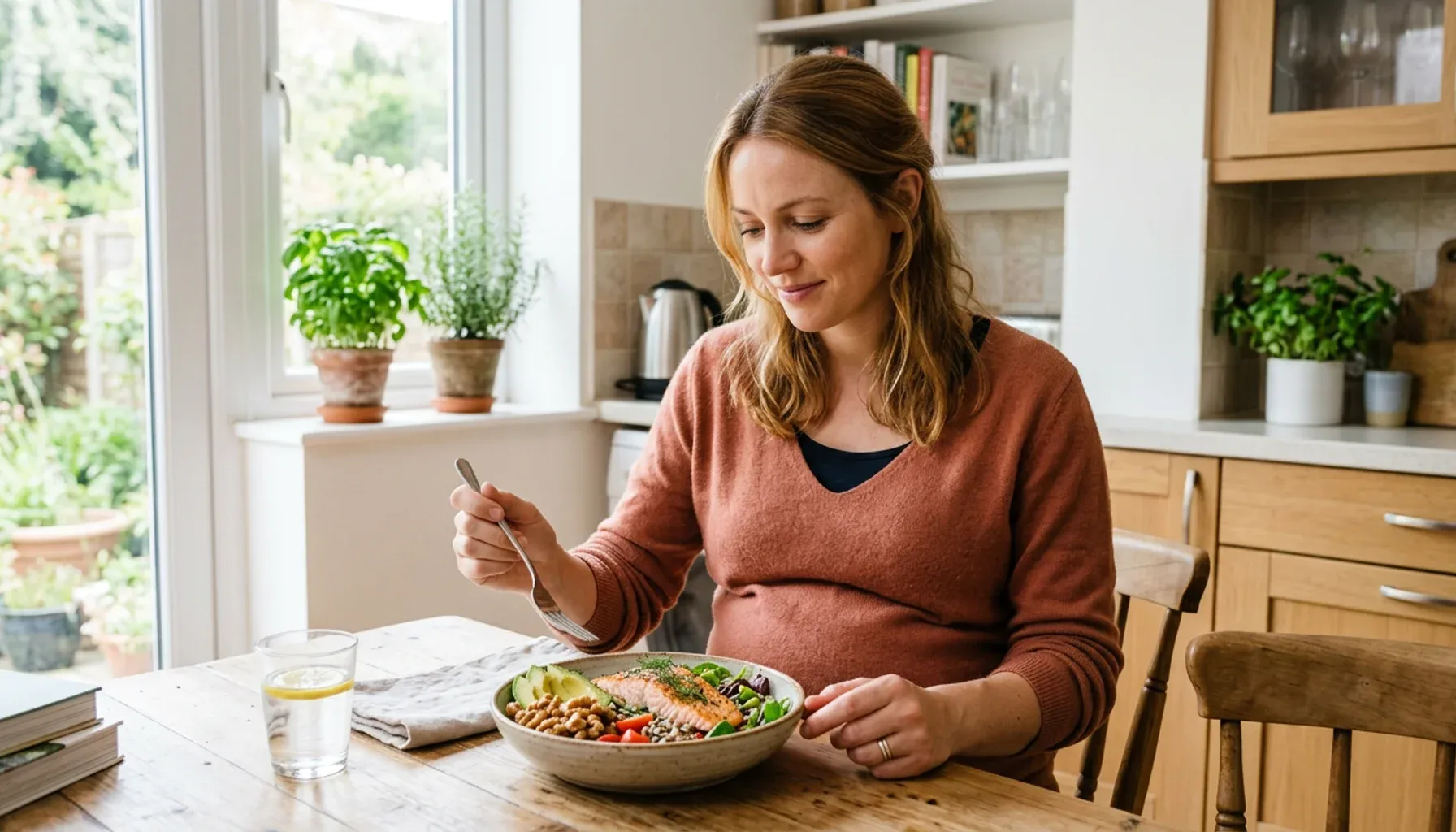
Most choline is found in beef, chicken, salmon and egg yolks [2].

What baby needs

Babies receive choline from breast milk and use it for brain development [2]. There are studies that show that speech development depends on the consumption of choline in the first months of life [3].

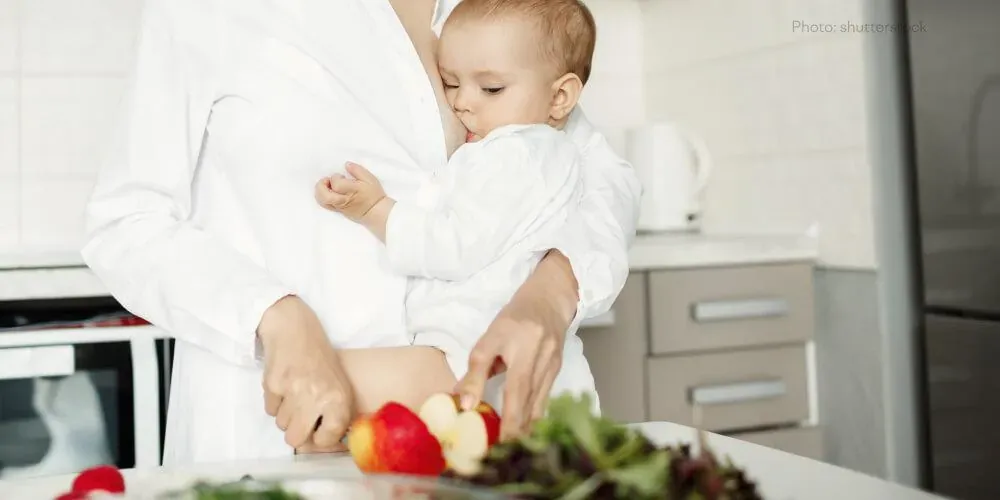
After two weeks of nursing, the choline content in breast milk is more or less stable — about 125 to 165 mg / l — exactly how much babies. Therefore, babies who are exclusively breastfed will always get enough [3]. If mom is deficit, however, she will remain low in choline unless she adds choline-rich foods to her her diet.
  1. Choline. Fact Sheet for Health Professionals. NIH. ODS, 2021.

  2. Nutritional Gaps and Supplementation in the First 1000 Days. Katrina Beluska-Turkan, Renee Korczak, et al. Nutrients, 2019 Dec.

  3. Dietary Choline Intake: Current State of Knowledge Across the Life Cycle. Alejandra M. Wiedeman, Susan I. Barr, Timothy J. Green, et al. Nutrients, 2018 Oct.

Frequently asked questions

The richest sources of choline include beef, chicken, salmon, and egg yolks. These foods provide essential nutrients for both maternal health and baby's brain development during pregnancy and breastfeeding.

Breastfeeding mothers need 1.5 times more choline than non-nursing women. This increased requirement supports postpartum recovery, memory restoration, and ensures adequate choline levels in breast milk for baby's development.

Yes, choline is crucial for baby's brain development and affects speech development in the first months of life. Adequate maternal choline intake during pregnancy and breastfeeding supports optimal cognitive development.

Choline supports fat metabolism and helps restore muscle tone after pregnancy. Combined with its role in returning organs to their pre-pregnancy state, adequate choline intake can support healthy postpartum recovery and weight management.

Medical Disclaimer

This article is for informational purposes only and is not a substitute for professional medical advice, diagnosis, or treatment. Always seek the advice of your physician or qualified health provider with any questions you may have regarding a medical condition.

Meet our medical experts

Medically reviewed content

Reviewed by healthcare professionals · Updated September 3, 2024

Track your pregnancy on the go

Rated 4.8417,594 reviews