EN
try amma today
Getting tired is normal
Pregnancy

Getting tired is normal

2 min readWeek 25
Key takeaways
2 min
  • Accept that pregnancy fatigue is a natural physiological response as your body creates a human being, not laziness.
  • Set realistic daily expectations by limiting yourself to one major task per day instead of overwhelming schedules.
  • Take frequent breaks at work by standing, stretching, and walking to relieve muscle tension and prevent leg swelling.
  • Sleep on your left side to prevent the uterus from pressing on blood vessels and reduce fluid retention.
  • Allow yourself complete rest periods without guilt, as sometimes doing nothing is exactly what your body needs.

Pregnancy fatigue is completely normal as your body works to create a human. Combat tiredness by setting realistic daily expectations, taking frequent breaks, lying on your left side to improve circulation, and allowing yourself guilt-free rest periods when needed.

amma app

Track your pregnancy in the app

Personalized content for your pregnancy week

Download App

Getting tired is normal 

At this point in pregnancy, your partner feels the baby’s movements more and more. Some are gentle, others so abrupt that she can feel her stomach pull, but it’s all completely normal. 

It’s also common for the expectant mother to experience swelling and soreness in her legs. During pregnancy, the adrenal glands produce more hormones, which cause fluid retention in the tissues, causing edema. In addition, a larger uterus affects blood flow from the veins in the legs to the heart. As a result, fluid can accumulate in the veins, and seep into the surrounding tissues, increasing swelling [1]. 

Lying on the left side can help manage swelling, as this prevents the uterus from pressing down on the inferior vena cava and does not interfere with the outflow of blood. Some women may be prescribed compression stockings by their doctor [1]. 

If your partner is still working, some of her daily duties may start to become more challenging, which can in turn cause a certain degree of frustration. 

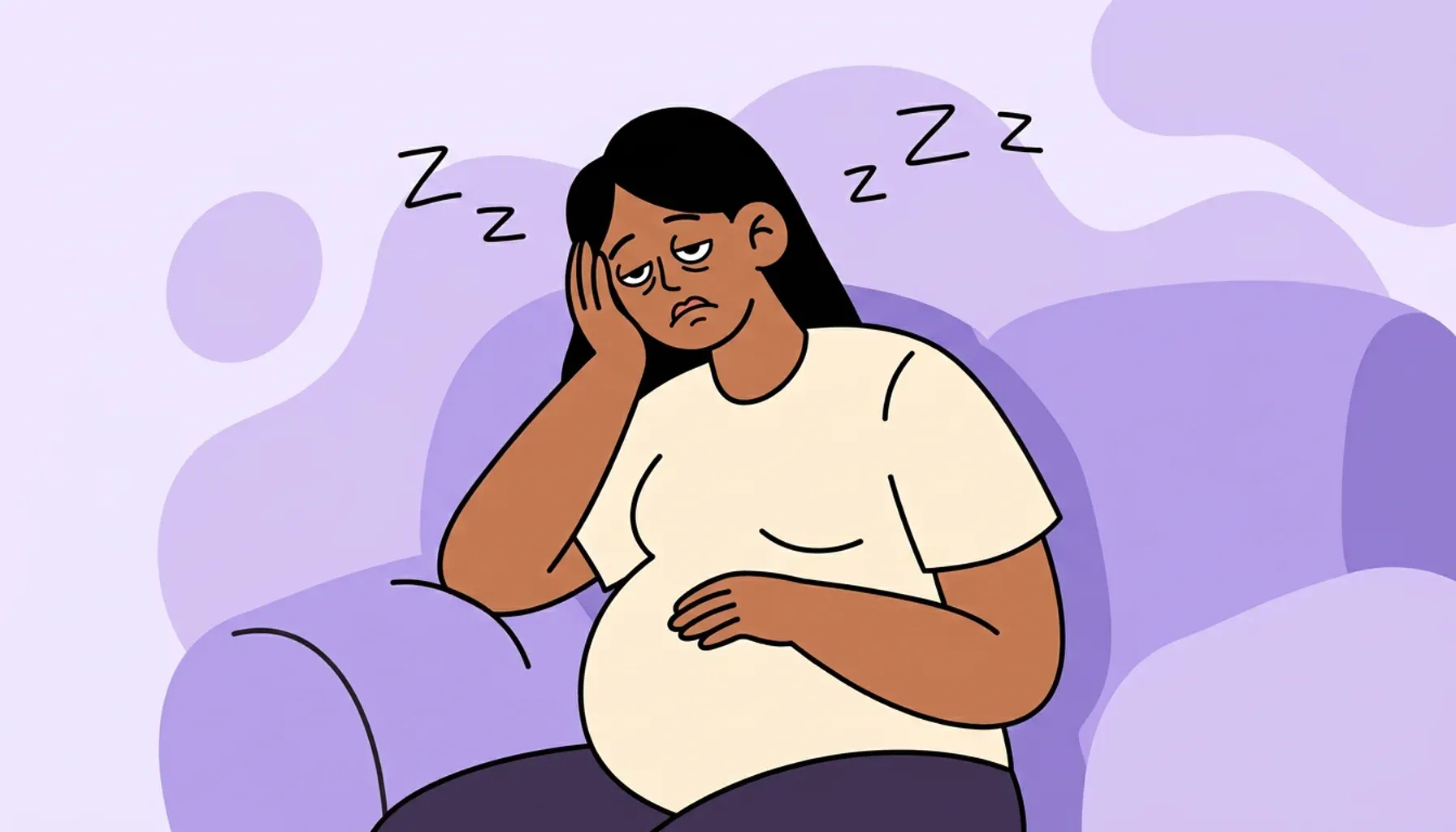
Tiredness is a natural physiological manifestation of pregnancy [2], it’s seldom about feeling too lazy to do things. A little extra support can come in quite handy right about now. Here are some tips for dealing with pregnancy fatigue. 

Having realistic expectations

Remind your partner that her body is under stress because it is creating a human! So it’s natural for her to find everyday tasks more challenging. Lowering the bar and not setting unrealistic goals is a good thing. 

Keeping plans simple

Everyday plans should be doable. One large task per day is more than enough. Planning to clean the entire house after she had a full workday is not the best idea [3]. 

Taking breaks

At work, your partner has to prioritize her breaks. Standing up often, stretching, and walking has to be part of her workday. This will help relieve muscle tension and prevent swelling of the legs [3]. 

Doing nothing

Sometimes what the body needs is complete rest. Every weekend doesn’t have to be an adventure, sometimes spending some quiet time at home, resting, or lying on the couch is just what a mom-to-be needs [3].


Frequently asked questions

Pregnancy fatigue is a natural physiological response as your body works hard to create a human. Hormonal changes and increased energy demands make everyday tasks more challenging than usual.

Lie on your left side to prevent your uterus from pressing on major blood vessels. Take frequent breaks to stand, stretch, and walk, and consider compression stockings if recommended by your doctor.

Yes, it's completely normal to feel both gentle and abrupt baby movements during pregnancy. Some movements may feel strong enough to make your stomach pull, but this is a healthy sign of fetal activity.

Prioritize taking regular breaks to stand, stretch, and walk. Set realistic expectations by planning only one major task per day and avoid overwhelming schedules after full workdays.

Medical Disclaimer

This article is for informational purposes only and is not a substitute for professional medical advice, diagnosis, or treatment. Always seek the advice of your physician or qualified health provider with any questions you may have regarding a medical condition.

Meet our medical experts

Medically reviewed content

Reviewed by healthcare professionals · Updated September 4, 2024

Track your pregnancy on the go

Rated 4.8417,594 reviews