
First trimester screenings, including ultrasound and blood tests, are performed to identify moms who need additional testing. If you hear one of these first screenings indicate "high risks," it just means you will need additional testing [1].
What risks are we talking about?
According to the results of first trimester screening, a woman falls into the high risk group if:
the thickness of the collar fold in a baby is 3 mm or more;
malformations of the baby are noticeable;
there is polyhydramnios or low amniotic fluids;
markers of chromosomal diseases are determined by ultrasound or blood tests.
How high is the risk?
Individual risk above 1:100 is a reason for invasive diagnosis. Chorionic villus sampling for mom’s before 12 weeks or amniocentesis (a sample of the amniotic fluid is taken) for 15-18 weeks can help the doctors determine what is happening.
What do these numbers 1:100 or 1:250 mean?
A risk of 1:100 means that one woman in 100 with the same rates gives birth to a child with a chromosomal abnormality. This is considered high risk. But let's look from the other side: 99 women with such data give birth to healthy children.
What is more accurate and safer: a chorionic villus sampling or amniocentesis?
The main advantage of a sampling is that it can be done earlier in pregnancy. That is, you have more time to make decisions [2].
But the chorionic villus sampling does not reveal some conditions that can be assessed by the analysis of amniotic fluid. If the expectant mother has already had children with a neural tube defect, then amniocentesis is preferable.
Both methods are associated with risks, but they are small — about 2%. The risk is thought to be slightly higher with sampling than with amniocentesis [3].
Will these tests give an answer on whether there is an anomaly?
Yes, these don't just tell you "probable risks," but provide a clear diagnosis.
Are there safer diagnostic methods?
A non-invasive prenatal test (NIPT) can be done. A woman's blood is taken from a vein. The mother's blood contains the baby's extracellular DNA. It can be used to determine Down syndrome and other most common chromosomal abnormalities.
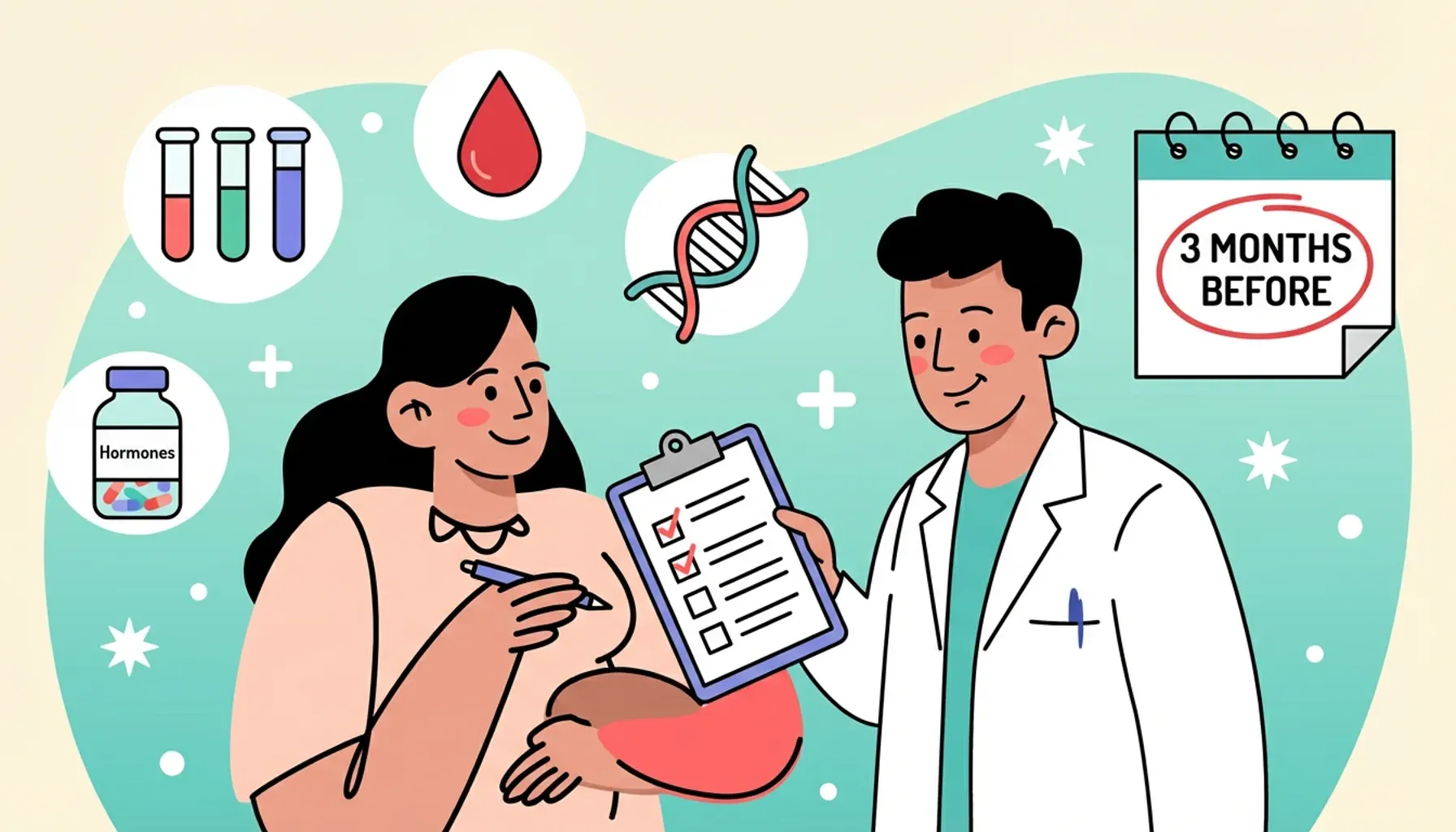
If my partner and I did a genetic test at the stage of pregnancy planning, are the risks in screening considered the same?
Genetic tests before pregnancy help calculate the likelihood of inherited diseases. First trimester screening reveals a chromosomal abnormality that occurs only after fertilization — a risk that cannot be calculated before pregnancy [3].