
Sleeping and Growing
The baby’s brain is almost completely formed [1]. The pupils change size depending on light and the bones are getting stronger. The skull remains soft because the cranial plates have not yet fused [1], this will make it possible for the baby to pass through the narrow birth canal [1, 2, 3].
 When your baby is born, you will notice that some parts of his head are very soft. These non-ossified areas of the cranial vault are called fontanelles [1]. They allow the skull to remain flexible as the brain grows [4].
As the central nervous system matures, the baby develops cycles of activity and rest. In the womb, they spend most of their time in REM sleep, which is characterized by rapid eye movement and is important for the formation of reflexes. At this stage in pregnancy, another type of sleep can be detected, during which the eyes move at a slower pace. Both phases of sleep are characterized by specific electrical activity in the brain, which can be monitored by an electroencephalogram (EEG).
If you are expecting twins
Even if labor starts today, don’t be scared. By WHO standards, babies born after 32 weeks are considered only marginally premature. They may not even need special medical support.
What can be seen on ultrasound
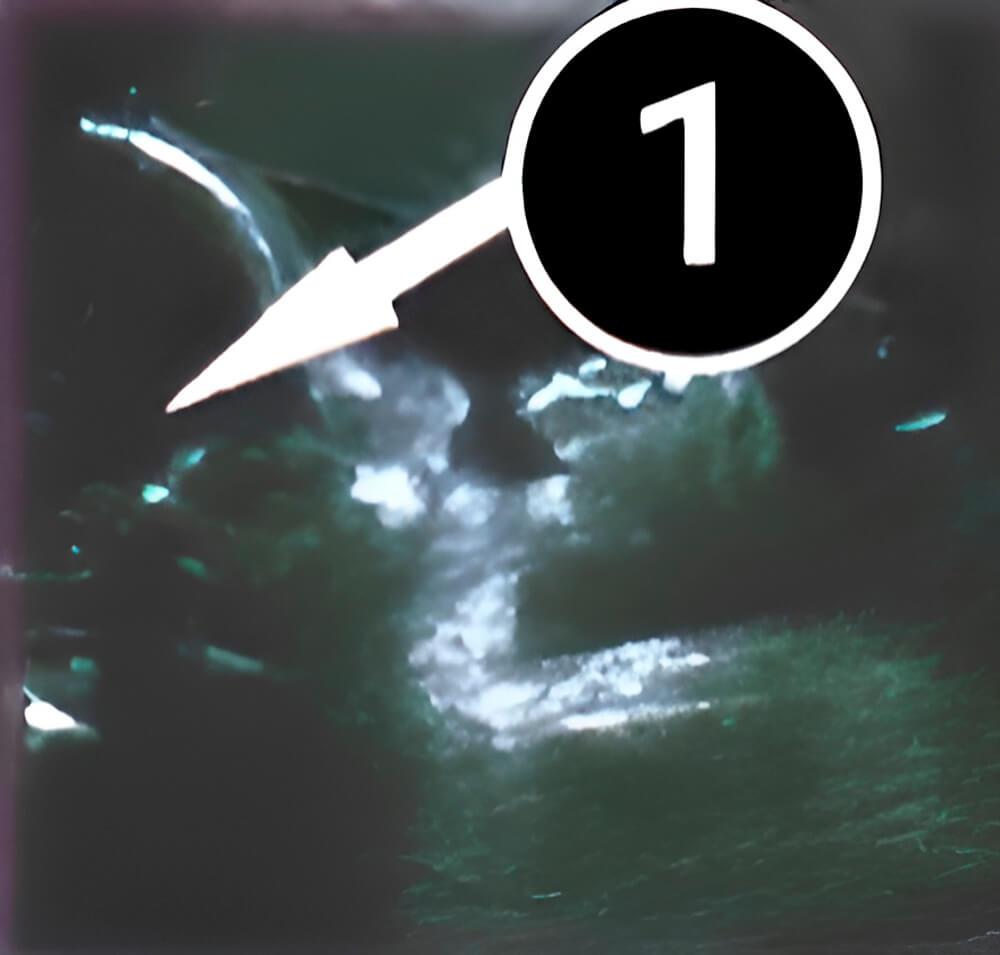
In the image, the baby is lying on their right side towards the screen of the ultrasound machine, giving us a close-up view of their profile. You can see the outlines of the forehead and chin. To the right, the baby’s arm is bent at the elbow and the palm and phalanges of the fingers are visible. At the moment the picture was taken, the baby was probably sucking on their thumb.