
That cute baby face
We’re getting close! All of the baby’s organs and systems are ready to work to keep them healthy after birth [1]. However, labor may still be a few weeks away. Not to worry, everything will happen in due course [2].
At this point, the baby is actively moving their facial muscles — pouting, frowning, and grimacing — and responding to sound and light by blinking and flinching. The toenails aren’t quite as grown in as the fingernails, but that will change soon after birth when you’ll have to trim them often [3].
By this week, the baby is moving less than before. They are fully grown, so there’s not quite as much room for them to move around [3]!
At this time, there is more variety in the baby’s movements. They can touch the back of their head with their hand and press the back of their hand against the uterus. There should be a pattern to these movements, and they should be smooth; if they ever become very frequent or aggressive, or if the movements stop completely, your partner should consult her doctor [3].
At this time, the doctor will closely monitor the baby’s position. Head down is the most common position at this stage and the best for an uncomplicated delivery. If the baby hasn’t turned yet, the obstetrician can perform an external cephalic version (ECV) in the hospital with the help of ultrasound equipment [4].
If your partner is expecting twins
At this time, even a single pregnancy is considered full-term, and if the mother has reached this milestone with twins, she is to be congratulated. She is a hero!
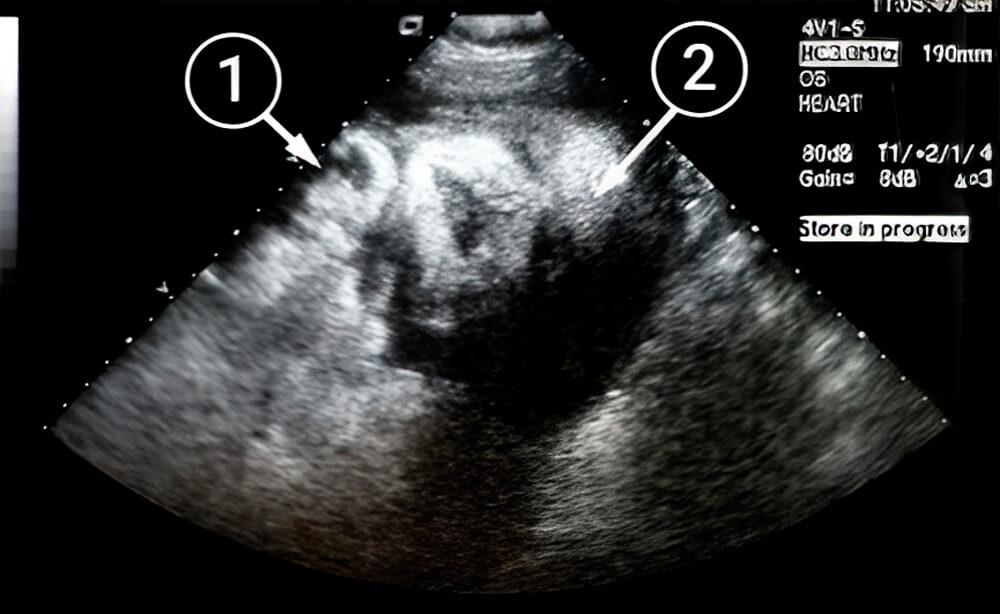
What we can see on an ultrasound
This picture shows a close-up of the baby's head. Their facial features are fully formed: eyes, nose, and forehead are visible. The baby is resting their chin on their hand.