EN
try amma today
The baby is almost ready for birth
Pregnancy

The baby is almost ready for birth

2 min readWeek 36
Key takeaways
2 min
  • Monitor your baby's movements as they become more cramped but still active, causing visible belly shifts and rhythmic hiccups you can feel.
  • Expect your baby to gain weight rapidly as they develop essential subcutaneous fat for temperature regulation after birth.
  • Prepare for delivery as most babies are positioned head-down by this stage, indicating readiness for birth.
  • Track twin development carefully, as weight differences are normal but may require medical supervision for smaller babies.
  • Schedule regular ultrasounds to monitor bone and muscle development, which should be clearly visible at this stage.

At 35 weeks of healthy pregnancy, babies develop crucial subcutaneous fat for temperature regulation and typically position head-down for birth. They continue gaining weight while becoming more cramped, causing noticeable belly movements and hiccups mothers can feel.

amma app

Track your pregnancy in the app

Personalized content for your pregnancy week

Download App

The baby is almost ready for birth

Thanks to more subcutaneous fat, the baby has become plump and fleshy. Their skin is smooth, pink, velvety, and coated with a thick protective biofilm called vernix caseosa. The baby’s subcutaneous fat layer is thick enough that it will help regulate their body temperature after birth. 

The baby is rather cramped in the womb but still manages to move a lot [1]. The expectant mother will notice her belly shift and bulge as the baby changes positions. She can also tell when the baby gets the hiccups because her belly will twitch rhythmically [2].

Most babies are already positioned head down. They are almost ready for birth. In the meantime, they will continue to gain weight [3].

If your partner is expecting twins

At this time, the average set of twins weighs about 2.5 kg each, the very limit at which a baby is no longer considered small. However, the weight is often unevenly distributed, with one baby noticeably heavier than the other. For example, one can weigh 3 kg (like a baby from a single pregnancy), and the second only 2 kg. The lower-weight baby may need special medical supervision. However, studies show that by the age of two, the "small" child usually catches up to the "big" one [4].

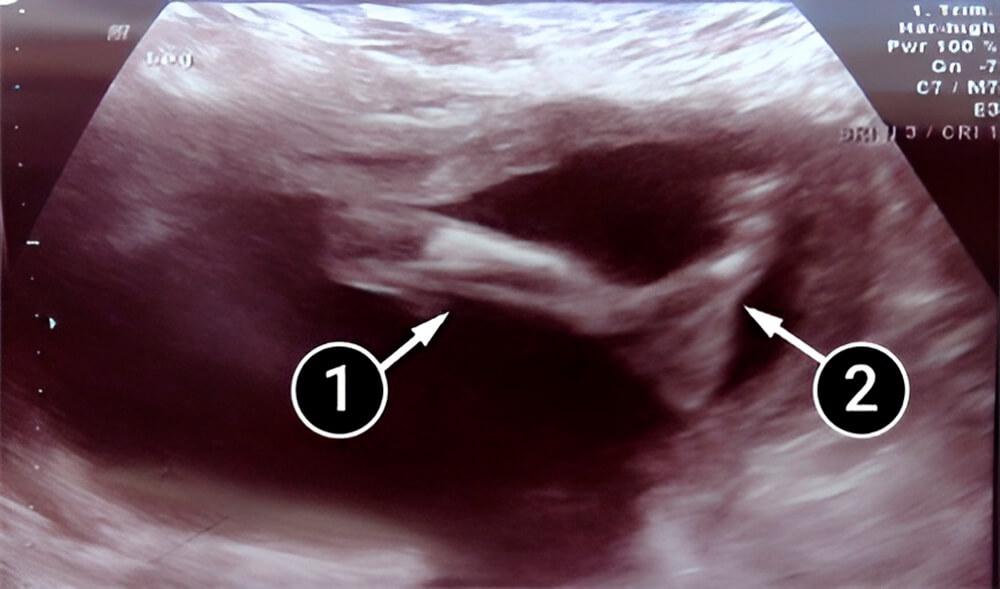
What we can see on an ultrasound

The image shows the baby’s leg. The muscles and bones of the leg and foot are clear, we can see the arch, heel, and toes.

The baby is almost ready for birth - The baby is almost ready for birth
Frequently asked questions

At 35 weeks, your baby develops subcutaneous fat for temperature regulation and positions head-down for birth. You'll notice more pronounced movements, belly shifts, and may feel rhythmic hiccups as space becomes limited.

Yes, weight differences in twins are common, with one baby often weighing 2-3kg while the other weighs around 2kg. The smaller baby may need medical supervision but typically catches up by age two.

Signs include head-down positioning, continued weight gain, and increased subcutaneous fat development. Your baby will still move actively despite cramped conditions, causing visible belly movements.

Vernix caseosa is a protective biofilm coating your baby's smooth skin at 35 weeks. This thick, creamy substance helps protect your baby's skin and indicates normal healthy development.

Medical Disclaimer

This article is for informational purposes only and is not a substitute for professional medical advice, diagnosis, or treatment. Always seek the advice of your physician or qualified health provider with any questions you may have regarding a medical condition.

Meet our medical experts

Medically reviewed content

Reviewed by healthcare professionals · Updated September 2, 2024

Track your pregnancy on the go

Rated 4.8417,594 reviews