EN
try amma today
The first signs of pregnancy
Pregnancy

The first signs of pregnancy

3 min readWeek 3
Key takeaways
3 min
  • Watch for missed periods, breast tenderness, and nausea as the most common early pregnancy signs starting as early as implantation.
  • Take a blood test for the most accurate pregnancy confirmation, as it can detect HCG levels as early as 8 days after fertilization.
  • Monitor your HCG levels regularly between weeks 5-13, as proper rises indicate healthy pregnancy development.
  • Expect additional symptoms like frequent urination, food aversions, and mood changes due to hormonal fluctuations.
  • Consult your healthcare provider if HCG levels rise slowly or are unusually high, as these may indicate complications or multiples.

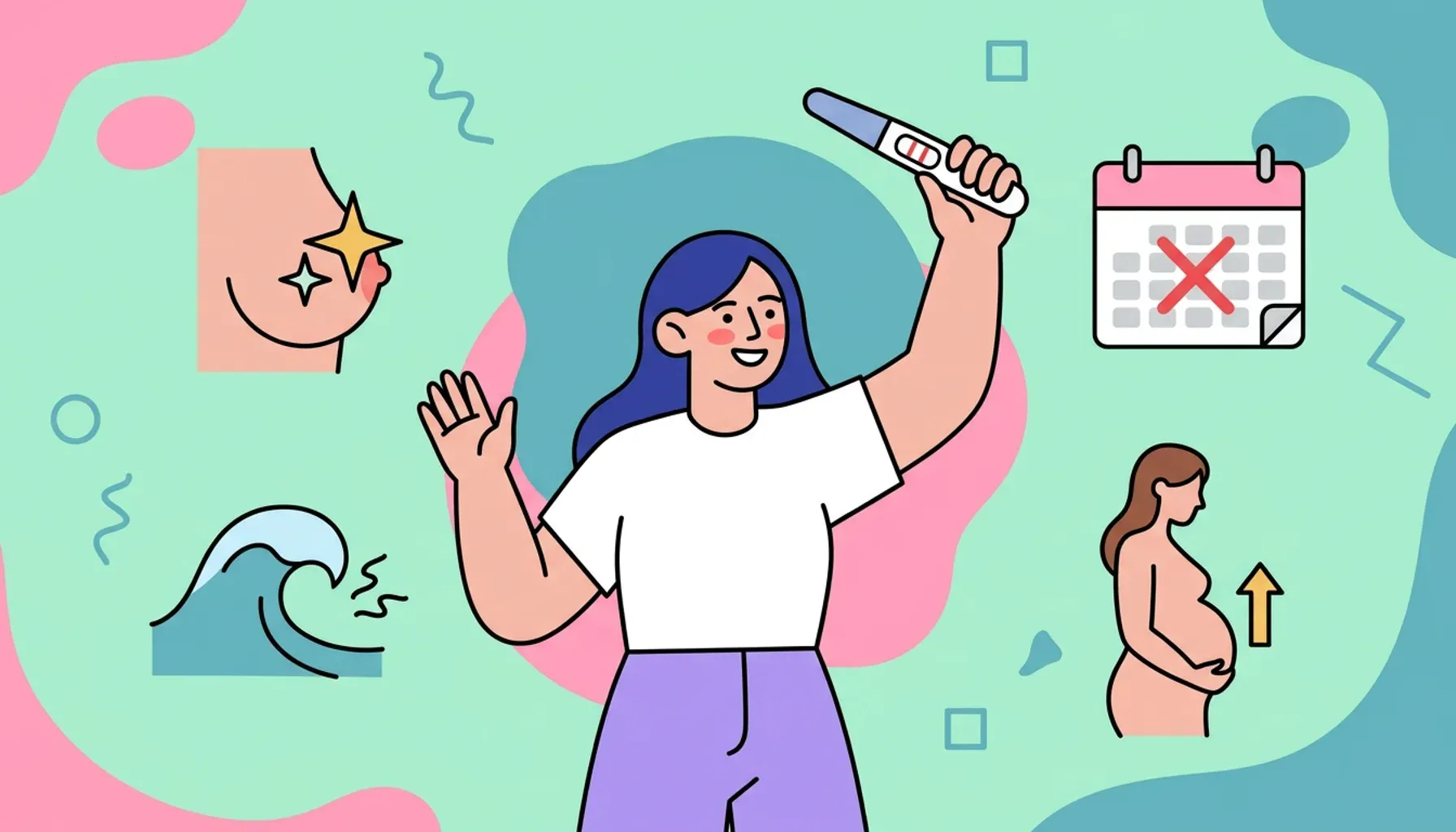
Early pregnancy signs include missed periods, breast tenderness and enlargement, nausea, frequent urination, and food aversions. These symptoms result from hormonal changes and can appear as early as implantation, though a blood test provides the most accurate confirmation of pregnancy.

amma app

Track your pregnancy in the app

Personalized content for your pregnancy week

Download App

The only sure-fire way to know that you’re pregnant is for your doctor’s office to administer a blood test. That said, some of the early signs of pregnancy can be detected as soon as the attachment of the fertilized egg. Experiences vary from woman to woman, but here are some common telltale signs.

Missed period

For women with a reliable-as-clockwork cycle, this is a very strong sign of pregnancy. The missed period may be accompanied by a little blood spotting; this is the result of damage to small vessels in the uterine cavity during implantation of the ovum [1].

Breast enlargement and tenderness

You might already experience breast tenderness and swelling around your period. Additional signs of pregnancy are the darkening of the nipples and prominence of breast veins. These effects are due to hormonal changes. Discomfort usually goes away after a few weeks as your body adjusts to hormonal levels [1, 2].

Nausea and vomiting

These are classic pregnancy signs that most often begin around week 4-6, but can appear earlier. Despite the term “morning sickness”, vomiting can occur at any time of day. We don’t know the exact cause of the nausea and vomiting, but it seems that hormonal changes play a role [1, 2].

Increased HCG levels

The main marker of pregnancy is HCG, or human chorionic gonadotropin. It is produced by chorionic cells from the moment the ovum attaches to the uterine wall. HCG can be detected in your urine and blood.

HCG is what your drugstore pregnancy test is detecting. However, a blood test is more accurate than a urine test. Urine tests don’t show you specific HCG levels, just whether they’re above a certain threshold. Women who are pregnant but have HCG levels on the lower side may get a false negative from a urine test [3].

HCG can be detected in your blood on the eighth day after fertilization. It’s very important to track HCG levels over the course of your pregnancy, as it’s a key indicator of normal, healthy development. Levels rise around 50% every 24 hours for the first eight weeks, with a peak at 10-11 weeks. Then, levels gradually fall until about week 16, after which they stabilize until birth. It’s recommended to test regularly from weeks 5-8 to weeks 11-13 [4].

If your HCG levels are rising slowly, it may be a sign of ectopic pregnancy (which must be confirmed with an ultrasound). If your levels are higher than normal by about 30%, it’s usually a sign of multiple pregnancy [5].

Other minor signs:

  • frequent urination;

  • change in taste;

  • aversion to certain foods or odors;

  • increased irritability and tearfulness.

All of these are due to hormonal changes as your body prepares to grow a baby!
Frequently asked questions

The earliest pregnancy signs include a missed period, breast tenderness and enlargement, nausea, and frequent urination. These symptoms can appear as early as implantation when the fertilized egg attaches to the uterine wall.

Blood tests can detect pregnancy as early as 8 days after fertilization and are more accurate than urine tests. Home pregnancy tests work best after a missed period for most reliable results.

HCG levels should rise about 50% every 24 hours in early pregnancy, peaking at 10-11 weeks. Slowly rising levels may indicate ectopic pregnancy, while levels 30% higher than normal often suggest twins or multiples.

Yes, nausea and vomiting typically begin around weeks 4-6 and can occur any time of day despite being called 'morning sickness.' This is caused by hormonal changes and usually improves after the first trimester.

Breast tenderness, enlargement, darkening nipples, and prominent veins can appear very early in pregnancy due to hormonal changes. These symptoms typically improve after a few weeks as your body adjusts.

Medical Disclaimer

This article is for informational purposes only and is not a substitute for professional medical advice, diagnosis, or treatment. Always seek the advice of your physician or qualified health provider with any questions you may have regarding a medical condition.

Meet our medical experts

Medically reviewed content

Reviewed by healthcare professionals · Updated September 1, 2024

Track your pregnancy on the go

Rated 4.8417,594 reviews