EN
try amma today
What does the baby’s brain need?
Pregnancy

What does the baby’s brain need?

2 min readWeek 28
Key takeaways
2 min
  • Eat fish rich in omega-3 fatty acids and iodine during pregnancy to support your baby's neurocognitive development and protect against future depression.
  • Include green leafy vegetables throughout pregnancy for folates, which enhance speech development by age two and boost spatial thinking and memory.
  • Consume beef liver and chicken eggs for choline, with two eggs providing half your daily requirement to support visual-spatial and auditory memory development.
  • Focus on nutrient-dense foods during the third trimester when brain development accelerates and long-term cognitive abilities are established.
  • Combine folate-rich and choline-rich foods together for maximum synergistic effects on your baby's developing brain and future learning capacity.

A baby's developing brain needs omega-3 fatty acids from fish, folates from green leafy vegetables, and choline from eggs and liver. These nutrients support neurocognitive development, memory formation, and future learning abilities when consumed during pregnancy.

amma app

Track your pregnancy in the app

Personalized content for your pregnancy week

Download App

What does the baby’s brain need?

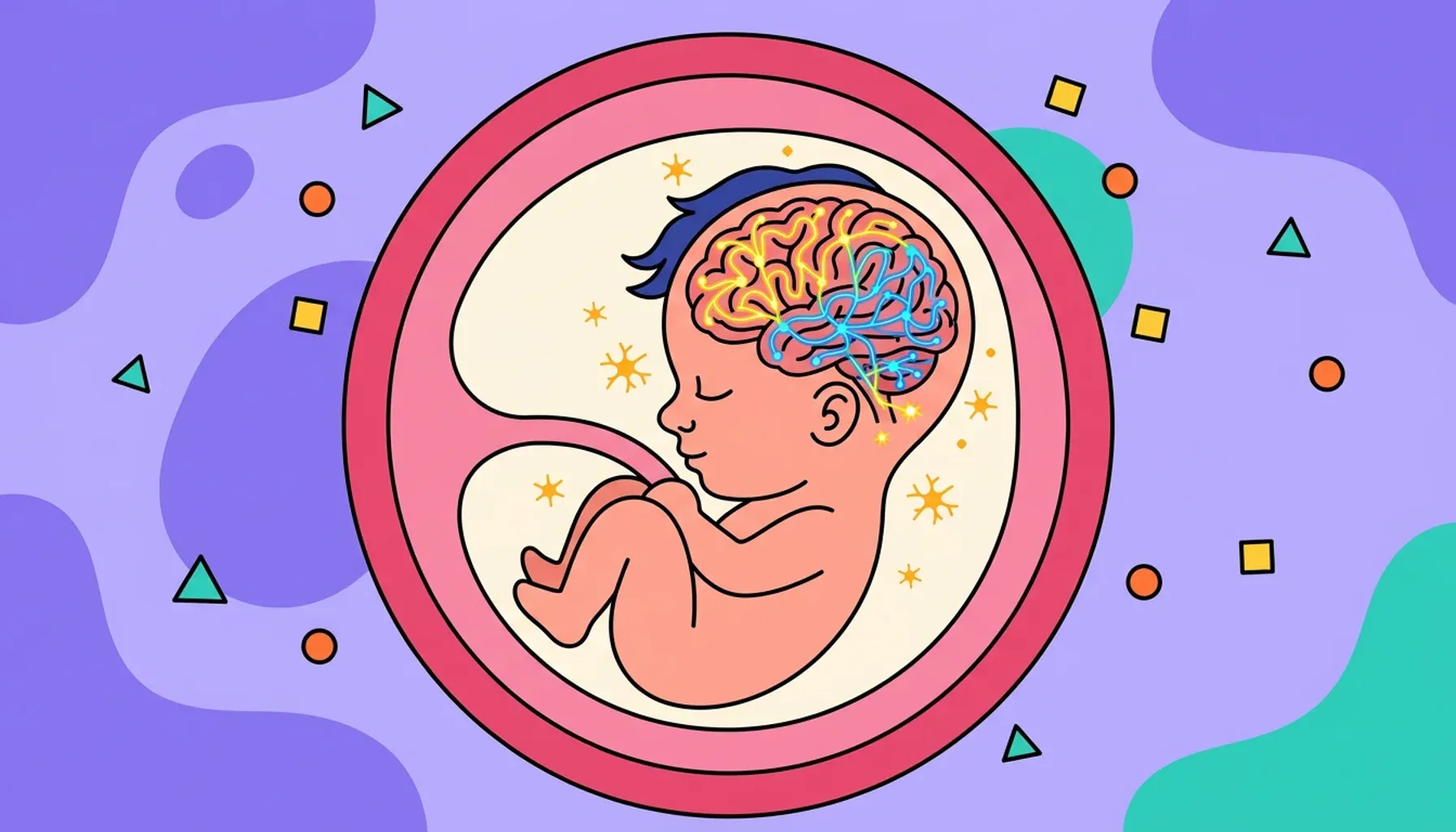
At this time, the baby’s brain is actively developing. And we have a chance to influence his emotions and intelligence right now with the help of food. Here are some foods that will be especially helpful:

Fish

There is convincing evidence that eating fish during pregnancy contributes to the neurocognitive development of the child. It protects him from forgetfulness and from depression in the future. Two components of fish contribute to producing these benefits: omega-3 polyunsaturated fatty acids and iodine. Moreover, omega-3 can affect gene expression and, for example, disable the baby’s genetic options that led to depression for his mother so he will not inherit a tendency to depression [1]. Iodine regulates the development of the nervous system, and the emotional balance or nervousness of the person who will be born can be affected by this microelement.

Green leafy vegetables

You already know that the folates contained in leafy greens are necessary in preparation for pregnancy and in the first trimester because they affect the formation of the neural tube. But, in the later stages, large quantities of folates should be present in the diet: The development of speech skills in children by the age of two is influenced by their level of folates in the last trimester of pregnancy [2].

Numerous studies have confirmed that the availability of folic acid for a long time after the closure of the neural tube stimulates the development of spatial thinking and memory in a growing brain [3].

Beef liver and chicken eggs

Beef liver and chicken eggs are the main sources of choline. Two eggs cover half the daily requirement for this substance. But later in pregnancy, choline works in tandem with folates and to contribute to the development of visual-spatial and auditory memory of the child [3]. The better you feed the baby now, the easier it will be for him to study at school later.


Frequently asked questions

Fish rich in omega-3 fatty acids, green leafy vegetables containing folates, and foods high in choline like eggs and beef liver are essential for baby brain development. These nutrients support neurocognitive development, memory formation, and speech skills.

While brain foods are important throughout pregnancy, the third trimester is particularly crucial for continued folate intake. This period significantly impacts speech development by age two and spatial thinking abilities.

Pregnant women should eat 2-3 servings of low-mercury fish per week to provide adequate omega-3 fatty acids and iodine. Choose salmon, sardines, and other safe fish varieties for optimal brain development benefits.

Yes, maternal diet during pregnancy directly influences baby's cognitive development and future intelligence. Proper nutrition with omega-3s, folates, and choline can enhance memory, spatial thinking, and learning abilities.

Insufficient folate intake can impair neural tube formation early in pregnancy and reduce brain cell development later. This may negatively impact your child's speech development, memory, and spatial thinking abilities.

Medical Disclaimer

This article is for informational purposes only and is not a substitute for professional medical advice, diagnosis, or treatment. Always seek the advice of your physician or qualified health provider with any questions you may have regarding a medical condition.

Meet our medical experts

Medically reviewed content

Reviewed by healthcare professionals · Updated January 18, 2025

Track your pregnancy on the go

Rated 4.8417,594 reviews