
Naturally when a baby is born their parents want to do everything possible to keep them safe, healthy, and well. Alongside vaccinations, the doctor or nurse at the hospital or health facility is likely to perform a heel prick test on the newborn baby as part of their first check-up.
The heel prick test (also known as the blood spot test) is a test given to babies when they are born. The test assesses whether the newborn has any health conditions requiring medical attention.
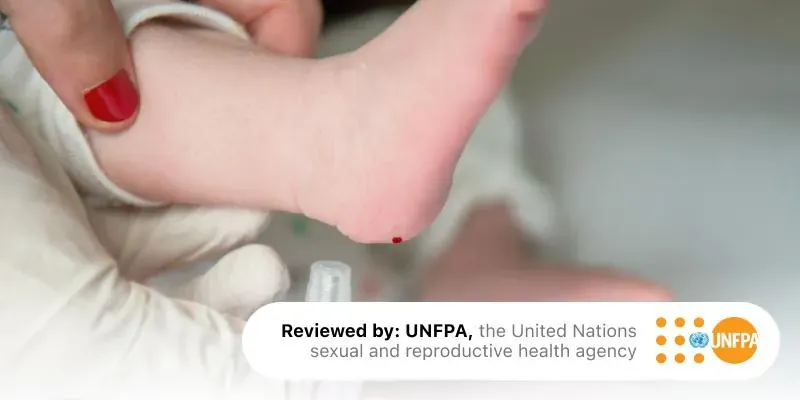
Part of this process will involve drawing blood from the baby's heel. This test can diagnose several rare genetic disorders that can be managed if detected through early screening [1].
How and when is this blood test performed?
Typically, your doctor or nurse will prick the baby's heel and squeeze out a few drops of blood onto a special card. Most hospitals do this within five days of birth, but preterm babies may have this test performed later [2].
What disorders does the test screen for?
The list of disorders includes rare hereditary conditions that are nevertheless important to catch early for effective treatment [1, 3]. They include:
Cystic fibrosis, a disorder involving the secretion of fluids, most commonly affecting the lungs;
Galactosemia, an inability to metabolize galactose leading to liver and kidney dysfunction, cognitive disorders, and cataracts;
Congenital hypothyroidism, which affects growth and puberty;
Phenylketonuria (PKU), phenylalanine amino acid buildup which can lead to intellectual disability, cognitive and behavioral disorders, and seizures;
Androgenital syndrome, which precipitates disorders related to the imbalance of hormones synthesized and produced in the adrenal cortex.
While these disorders are rare, they are also very serious, therefore early detection can help provide timely treatment and lessen the severity.
How long does it take to get results?
It varies, so talk to your doctor. In many cases, if the blood sample tests negative for all disorders, you may not get results back at all. In the meantime, remember that the conditions listed above are very rare.
How can I comfort my baby during this test?
This is a test all babies go through, so although the slight prick may feel uncomfortable for the baby it will not cause any harm. You can soothe your baby during the test by cuddling and feeding them and making sure they're warm and comfortable.
Occasionally, the sample may need to be taken when your baby is older than 5 days for example on days 6, 7, or 8. Sometimes a second blood spot sample is needed. If this happens, the reason for a second sample will be explained to you.
This article was created in association with UNFPA, the United Nations sexual and reproductive health agency.