EN
try amma today
You can hear the baby’s heart beating
Pregnancy

You can hear the baby’s heart beating

3 min readWeek 7
Key takeaways
3 min
  • Listen for your baby's first heartbeat around week 6 of pregnancy during an ultrasound appointment, beating at 130-150 beats per minute.
  • Observe major organ development during this critical period, including the heart, brain, spinal cord, and early formation of eyes and ears.
  • Understand that fetal movements begin around 6 weeks but are too subtle for mothers to feel at this early stage.
  • Recognize that ultrasounds at 6 weeks can detect twins, though 'vanishing twin syndrome' may still occur.
  • Prepare for rapid brain development as five distinct brain regions form from the neural tube during this week.

You can first hear your baby's heartbeat around 6 weeks of pregnancy during an ultrasound appointment. At this stage, the nearly-formed heart beats at approximately 130-150 beats per minute, marking an exciting milestone in early fetal development.

amma app

Track your pregnancy in the app

Personalized content for your pregnancy week

Download App

You can hear the baby’s heart beating

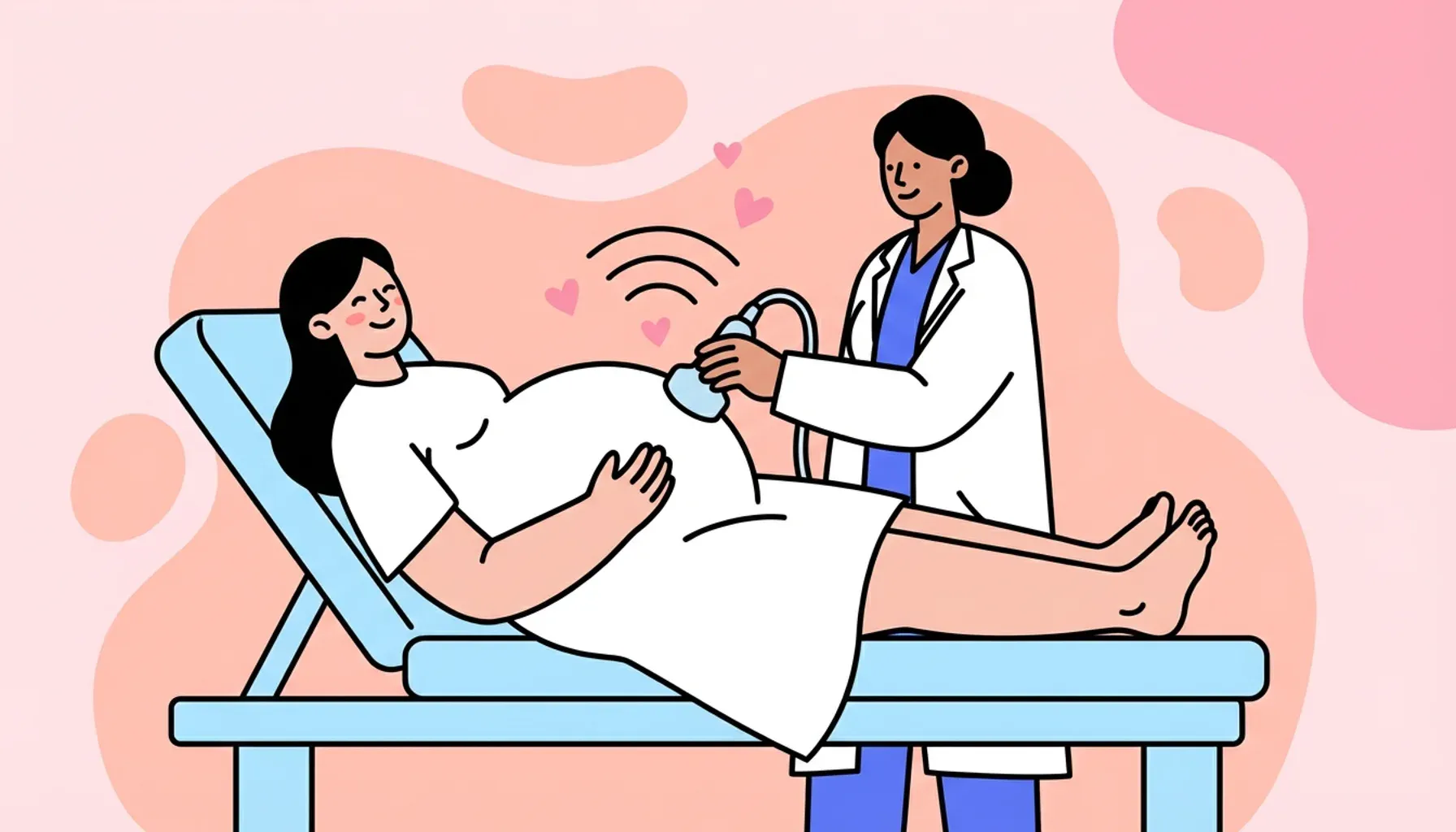
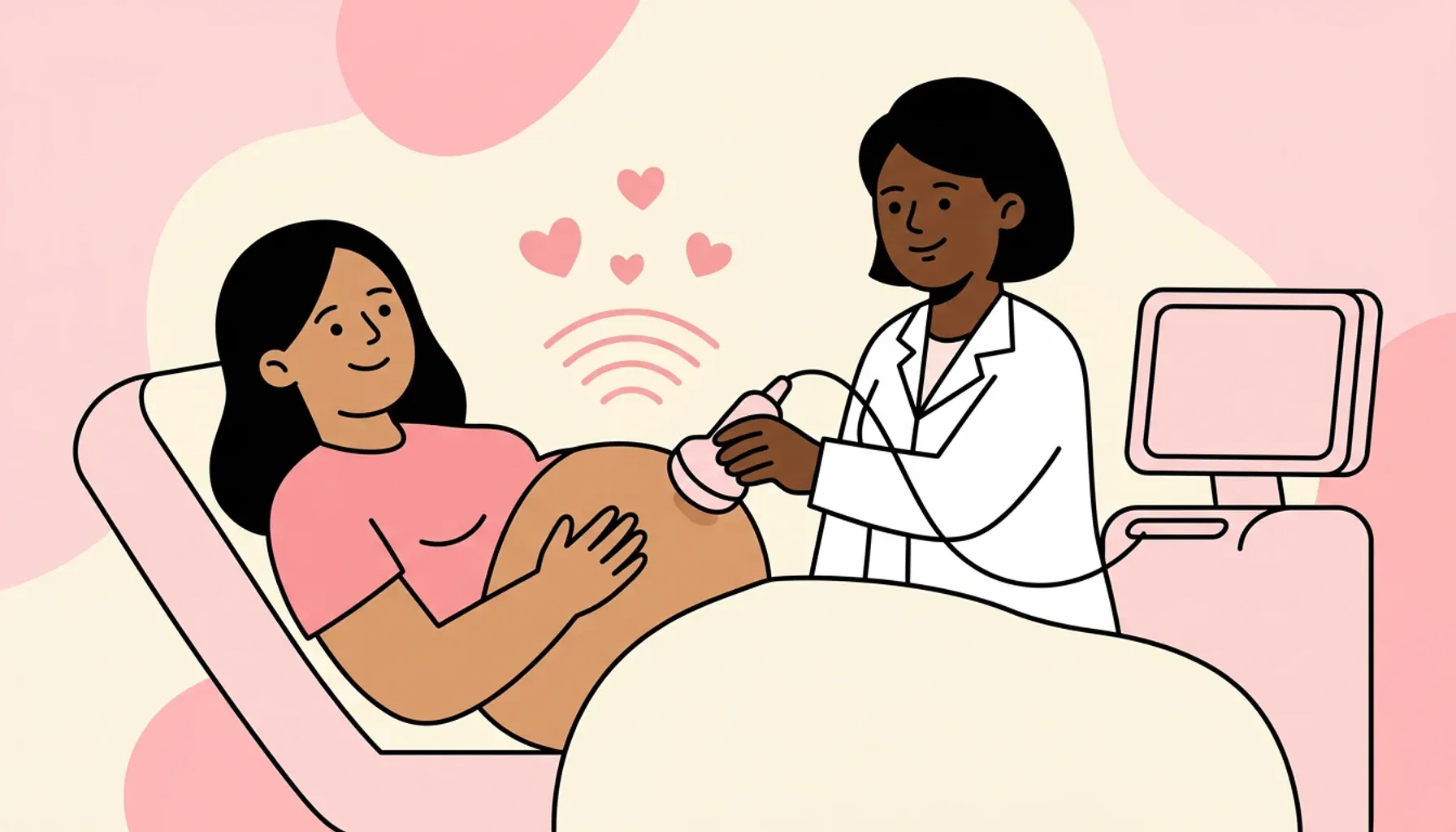
If your partner has an ultrasound at week six, you are likely to hear the baby’s heartbeat for the first time [1]! At this point, the heart is almost formed and already pumping at about 130-150 beats per minute. 

During this period of development, the baby’s vital organs and systems are forming.

  • Dark spots appear in the upper part of the face that will soon become the eyes, but the beginnings of the retina and optic nerves are already there. Dimples on the sides of the head will turn into the ears [2].

  • The spinal cord, spine, muscles, and skin are formed. Arms also begin to form, developing sooner than the legs. 

  • The central nervous system forms connections with the muscles, allowing the fetus to begin moving. Their movements are so subtle, even the most attentive mother would not be able to feel them. 

  • The baby’s brain is also actively developing, and the head quickly increases in size. Five folds form in the neural tube, which correspond to the five parts of the brain [1].

  • The gastrointestinal tract is also developing, including the pharynx, esophagus, and stomach. The liver and pancreas also develop, while the middle section of the intestine extends toward the umbilical cord. From the lower part of the intestinal tube, the rectum and urogenital sinus will form and develop into the prostate and bladder [3].

  • At this stage, the trachea begins to form, the first part of the respiratory system [1]. 

  • On the sides of the kidneys, the genital glands begin to develop [1]. 

  • The placenta is also busy developing. By the end of the week, it will be about 11 mm thick, and its blood supply will increase [1].

What we can see on an ultrasound 

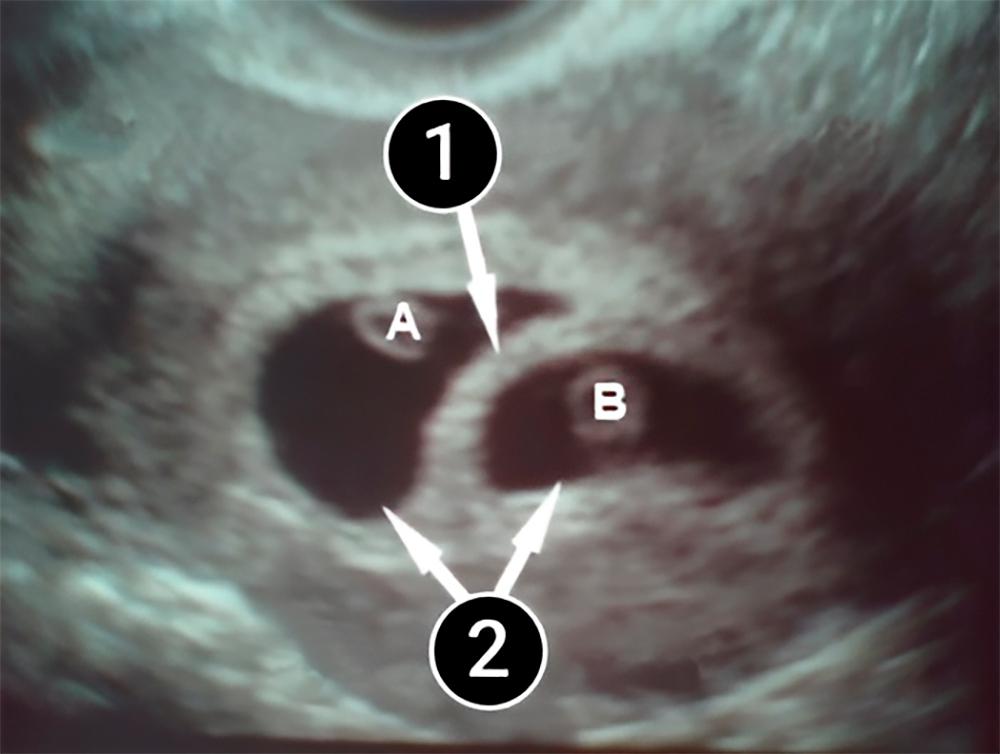
This photo captures the development of twins. The fetal eggs occupy almost half of the uterus, seen as a rim of light, surrounded by a thick layer, which is the endometrium. 

There is a clear separation between the fetal eggs, suggesting that the twins are heterogeneous (or fraternal) and each will develop separately. 

The embryos themselves are not visible in the picture, but their fetal sacs can be seen (each has its own). Thanks to these sacs, the fetus receives proteins, trace minerals, and amino acids. In the photo, they are marked with the letters A and B. 

At this point in pregnancy, the diagnosis of "twins" cannot yet be considered final, as there is a mysterious (but by no means rare) phenomenon known as the missing twin syndrome. At the beginning of pregnancy, a woman can have two or even three embryos in her uterus, but then only one develops, with no trace of the second remaining.
You can hear the baby’s heart beating - You can hear the baby’s heart beating
Frequently asked questions

You can typically first hear a baby's heartbeat around 6 weeks of pregnancy during an ultrasound. At this stage, the heart beats at approximately 130-150 beats per minute.

At 6 weeks, major organs form including the heart, brain, spinal cord, and early stages of eyes and ears. The digestive system, respiratory system, and placenta also begin developing.

No, while the baby begins moving at 6 weeks due to nervous system connections with muscles, these movements are too subtle for mothers to feel. First movements are typically felt much later in pregnancy.

A 6-week ultrasound shows the fetal sac, amniotic fluid, and basic body outline including the head and body. The baby's profile may be visible, and twins can sometimes be detected.

Many parents begin considering baby names as early as 6 weeks when they first hear the heartbeat. This exciting milestone often makes the pregnancy feel more real and prompts name discussions.

Medical Disclaimer

This article is for informational purposes only and is not a substitute for professional medical advice, diagnosis, or treatment. Always seek the advice of your physician or qualified health provider with any questions you may have regarding a medical condition.

Meet our medical experts

Medically reviewed content

Reviewed by healthcare professionals · Updated September 8, 2024

Track your pregnancy on the go

Rated 4.8417,594 reviews