
By week 16, some expectant mamas already have a noticeable, round belly, while others barely look pregnant. The fact is, your bump not only depends on the size of your growing baby.
Most women begin to show during their second trimester, which makes sense because it’s a time of rapid growth for the baby. From here to the time of birth, the baby will grow seven times their size [1]!
In typical, healthy pregnancies, babies develop at basically the same rate. In those early weeks, weight varies little from baby to baby. And yet, their moms can look very different! So, what determines the size and shape of your belly?
Body type and height
With tall women, their bump is less noticeable because the baby has more room in their longer torsos. Additionally, if mama has toned abdominal muscles from strength exercises, her belly will look smaller [2].
Number of pregnancies
The abdominal muscles of women who have given birth before tend to be more elastic. With subsequent pregnancies, her belly will stretch more and she will show earlier [3].
Number of babies
Mom's expecting twins (or other multiples!) will grow a larger belly than others, not only because of the babies but because they’ll naturally gain more weight during pregnancy [4].
Amniotic fluid volume
Amniotic fluid surrounds the baby throughout the pregnancy and provides nutrients. Some women have a larger than usual volume of the fluid. Moderate polyhydramnios (the technical term) is usually not dangerous, but you’ll want to see your doctor more often to keep tabs on it. If your belly suddenly grows in a noticeable way, seek immediate medical attention [5, 6].
Weight gain
Contrary to popular belief, you don’t need to “eat for two” while pregnant. You only need about 300-450 additional calories per day for the baby, and they should be added in the form of whole, nutritious foods rather than sweets or junk food [7, 8]. Weight gain beyond what is considered standard may result in a large belly.
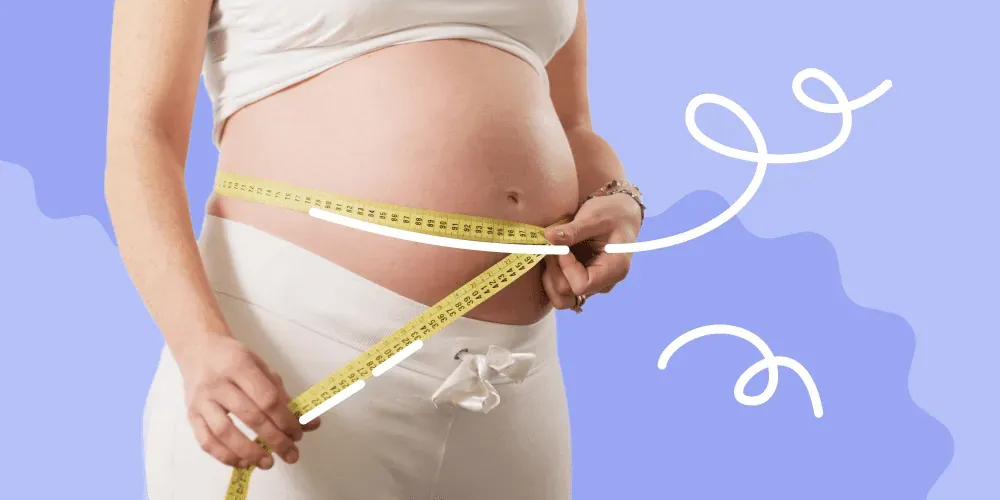
Note! The size of the belly is an individual and subjective thing. However, the baby’s size provides reliable information about how the pregnancy is progressing. Doctors determine the baby's growth by measuring fundal height. That is the distance from the pubic bone to the highest point of the uterus. The expectation is that after week 24 of pregnancy, the fundal height of a baby growing normally will match the number of weeks of pregnancy, plus or minus 2 centimeters [9].