EN
try amma today
How weight affects the likelihood of conception
Getting Pregnant

How weight affects the likelihood of conception

2 min read
Key takeaways
2 min
  • Maintain a BMI between 18.5-25 for optimal fertility as both underweight and overweight conditions can disrupt ovulation and reduce conception chances.
  • Consult a fertility doctor before starting weight loss programs, as underlying conditions like PCOS may require medical treatment beyond diet and exercise.
  • Recognize that men's weight affects fertility too - every 20 pounds of excess weight reduces conception chances by 10% due to hormonal changes.
  • Understand that extreme BMIs (under 18.5 or over 30) can lead to irregular menstrual cycles, ovulation problems, and increased miscarriage risks.

Weight significantly affects fertility in both men and women. The optimal BMI for conception is 18.5-25. BMIs below 18.5 or above 30 can disrupt ovulation, reduce sperm quality, and decrease pregnancy chances by up to 10% per 20 pounds of excess weight.

amma app

Track your pregnancy in the app

Personalized content for your pregnancy week

Download App

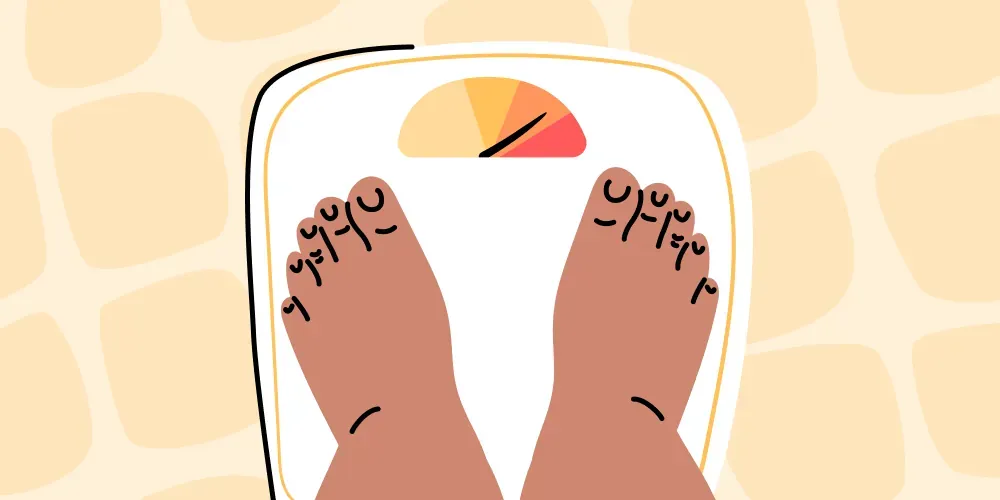
Excess weight can interfere with conception [1]. This applies to both men and women. Being underweight can also lead to fertility issues.

What is the optimal weight for a future mom for conception?

It’s more helpful to talk about the ratio of weight and height — the body mass index (BMI) than weight. Doctors recommend achieving a BMI of 18.5 to 25 before you plan to conceive [2]. A BMI of 18.5 or less disrupts the regularity of menstrual cycles and can lead to a complete stop of ovulation. Without ovulation, there is no pregnancy [3].

A BMI of 30 or higher can also lead to a lack of ovulation. Early miscarriages are also statistically more common in women with a high BMI [2]. According to the American Society of Reproductive Medicine, a BMI of greater than 30 reduces even the chances of success with IVF [3].

Does the weight of the future father matter?

Low motility and low sperm concentration are more common in overweight men than in men of average weight. Presumably, this is due to the fact that excess adipose (fat storage) tissue affects the level of testosterone and other hormones important for reproduction. Every 20 lbs (9 kg) of excess weight reduces the chances of becoming a father by 10% [4].

So, you need to lose weight before you go to the doctor about infertility?

No. You should start by contacting a doctor. Together, you can develop a weight loss and conception plan. Sometimes the same factors that lead to infertility also provoke weight gain — and it is impossible to get rid of them with diet and exercise alone. For example, many women with polycystic ovary syndrome (PCOS) are overweight, and this is a vicious circle: PCOS contributes to obesity, and obesity exacerbates PCOS. Women with polycystic ovaries may need additional treatment for weight loss, including medications that regulate insulin resistance [3].


Frequently asked questions

Weight itself doesn't affect pregnancy test accuracy, but excess weight can reduce fertility and conception chances. If you're having difficulty conceiving, consult a doctor about optimal weight ranges.

Doctors recommend a BMI between 18.5-25 for optimal fertility. BMIs below 18.5 or above 30 can disrupt ovulation and reduce pregnancy chances.

Yes, overweight men have lower sperm motility and concentration. Every 20 pounds of excess weight reduces conception chances by 10% due to hormonal changes.

Consult a fertility doctor first to develop a comprehensive plan. Some conditions like PCOS cause both weight gain and infertility, requiring medical treatment beyond diet alone.

Medical Disclaimer

This article is for informational purposes only and is not a substitute for professional medical advice, diagnosis, or treatment. Always seek the advice of your physician or qualified health provider with any questions you may have regarding a medical condition.

Meet our medical experts

Medically reviewed content

Reviewed by healthcare professionals · Updated September 2, 2024

Track your pregnancy on the go

Rated 4.8417,594 reviews