
The Joy of Imitation
By this age, babies can smile and grimace. And they do it quite often: sometimes to communicate with you, and sometimes for no apparent reason.
Your baby is becoming more and more sociable. He distinguishes between voices and faces and reacts more emotionally to some (like mom and dad). Grandmothers, nannies, aunts and uncles are less likely to cause such an animated response [1].
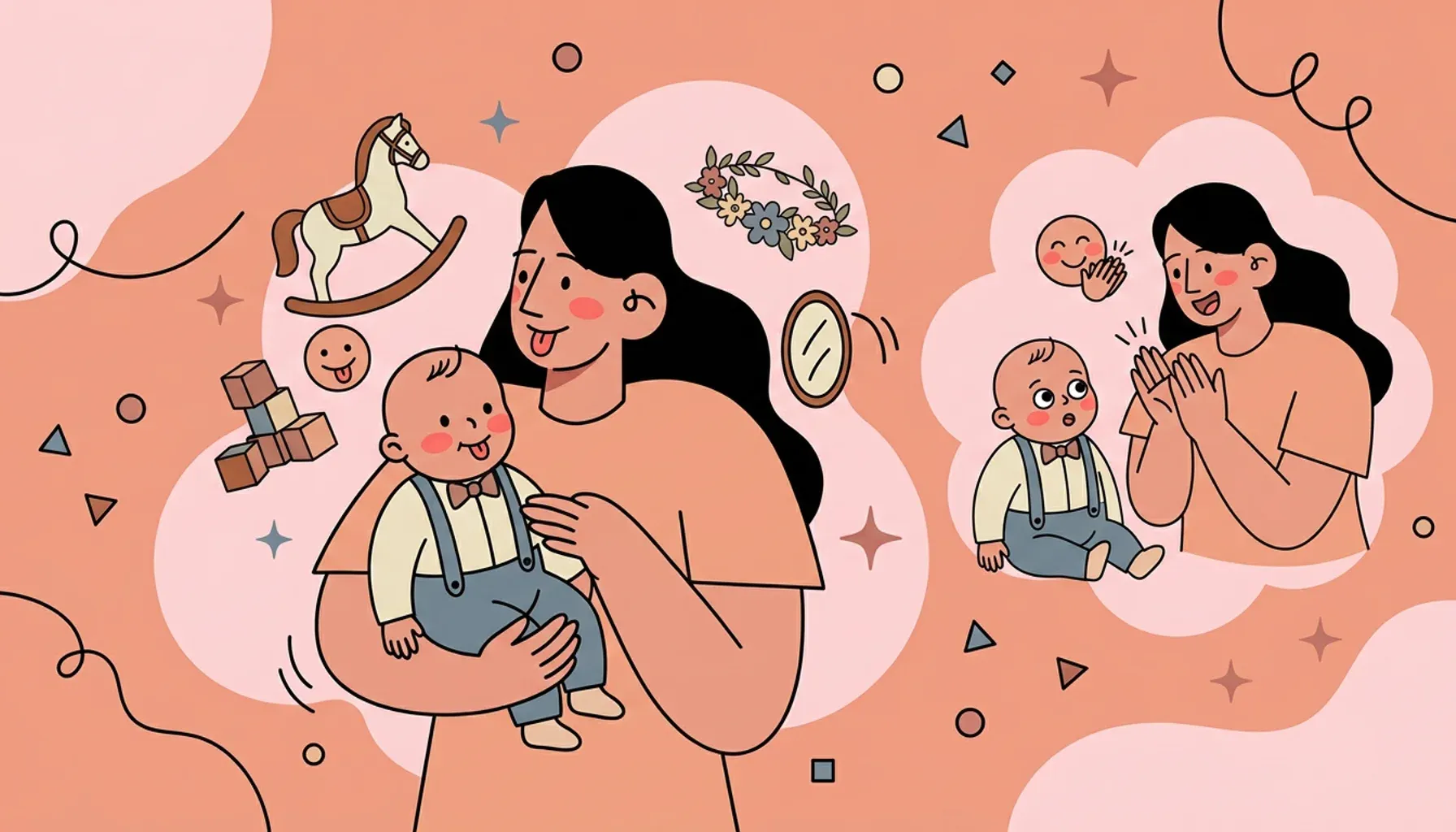
Sometimes you may notice that your son is trying to "mirror" or repeat your facial expressions. Stick out your tongue, open and close your mouth, smile with wide eyes [1]. Studies show that babies are more diligent in copying moms than dads [2].
Sometimes your son, instead of repeating your facial expressions, may begin to comment on them with babbling sounds [2]. He has not yet worked out another way to talk.
But we must be careful. Often parents, delighted that they can almost really communicate with their baby, can tire him out. If your son suddenly starts crying while playing with you, most likely, he is tired. Over time, you will learn to catch earlier signals indicating he’s ready for less stimulation [3]. Signs include:
- avoiding eye contact
- becoming restless and fussy
- appearing sluggish and sleepy
- rubbing his eyes.
Perhaps it's time for baby to take a nap.