EN
try amma today
Coffee and wine: how they affect breastfeeding
New Parent

Coffee and wine: how they affect breastfeeding

3 min readWeek 13
Key takeaways
3 min
  • Feed your baby first, then consume coffee or wine to minimize exposure through breast milk.
  • Wait at least 3 hours after one alcoholic drink before breastfeeding your baby again.
  • Limit caffeine intake to 300mg daily (2-3 cups of coffee) while breastfeeding.
  • Avoid 'pump and dump' tactics as caffeine and alcohol clear from milk as they clear from your bloodstream.
  • Monitor your baby for changes in sleep patterns or increased fussiness after consuming caffeine or alcohol.

Coffee and wine pass into breast milk immediately and remain as long as they're in your bloodstream. Feed baby first, then consume beverages. Wait 3+ hours after alcohol and limit caffeine to 300mg daily while breastfeeding safely.

amma app

Track your pregnancy in the app

Personalized content for your pregnancy week

Download App

Coffee and wine: how they affect breastfeeding

Caffeine and alcohol pass into breast milk almost immediately after drinking them and remain there for as long as they circulate in your blood. Therefore, the popular tactic "pump and dump" does not work [1].

What mom needs

After having a baby, sometimes mom may want to resume drinking coffee and wine again. A study in Australia showed that 60 to 70% of breastfeeding mothers regularly indulge in a glass of wine and this does not prevent them from caring for their babies [2].

For women, coffee and wine are not best friends because the polyphenols they contain interfere with the absorption of iron [3]. And those who are breastfeeding are always in short supply of this valuable trace element: all of its reserves go into milk. However, there is a nuance: alcohol promotes the absorption of iron [3], so in this regard, the harm from wine is immediately balanced by the benefits.

You also must consider how drinking will impact your ability to care for baby.

What baby needs

Baby certainly does not need caffeine and alcohol: both can affect the infant's excitability and sleep, and slow down thier development [1, 4]. A high concentration of caffeine can reduce iron levels in breast milk, and this will lead to anemia in the baby [4].

On average, after one serving of alcohol (a glass of wine, a beer), milk becomes safe after three hours. After two servings - after five hours, after three - after eight hours [1].

Caffeine takes longer to take, but in small doses it is not as dangerous as alcohol. It reaches its peak level in milk two hours after ingestion, and then declines [4].

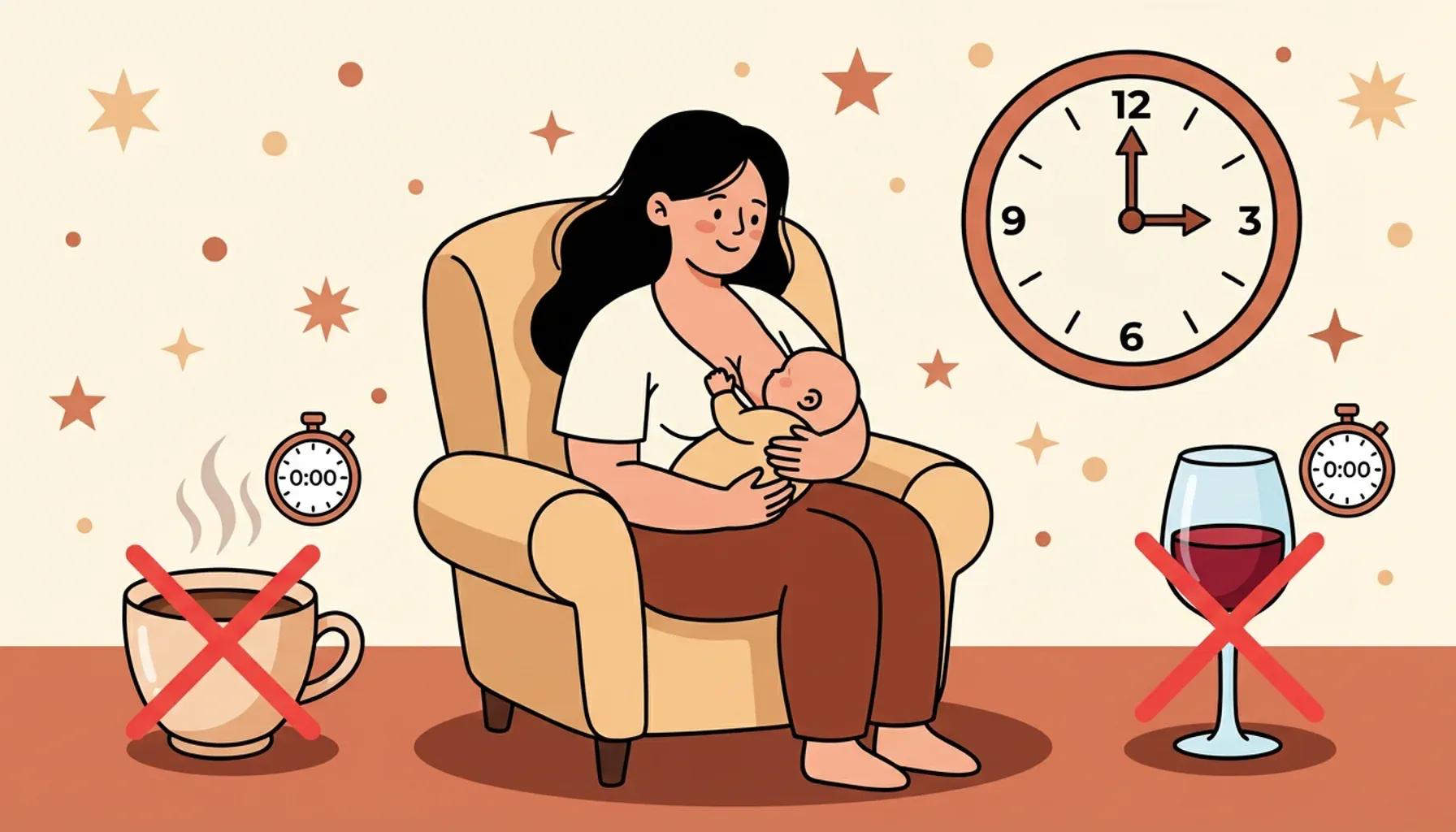
Therefore, the general rule is this: first feed the baby, and then drink coffee or wine. Then, then feed baby 3+ hours after you had your beverage of choice.

It’s recommended that mama doesn’t drink more than 300 mg per day — that's about two or three cups of coffee per day. Caffeinated drinks (cola and energy drinks) should also be considered [4].

For alcohol, drink no more than one serving per day [1].


  1. CDC. Breastfeeding. Breastfeeding and Special Circumstances. Vaccinations, Medications, Drugs. Alcohol. CDC, 2021.

  2. Alcohol consumption by breastfeeding mothers: Frequency, correlates and infant outcomes. Judy Wilson, Rui Yang Tay, et al. Drug Alcohol Rev, 2017.

  3. A Review of Nutrients and Compounds, Which Promote or Inhibit Intestinal Iron Absorption: Making a Platform for Dietary Measures That Can Reduce Iron Uptake in Patients with Genetic Haemochromatosis. Nils Thorm Milman. J Nutr Metab., 2020.

  4. Caffeine. Drugs and Lactation Database (LactMed). NLM, 2006 (Last Revision: April 19, 2021).

Frequently asked questions

Yes, you can drink coffee while breastfeeding in moderation. Limit intake to 300mg of caffeine daily (2-3 cups of coffee) and feed your baby before consuming caffeine for best results.

Wait at least 3 hours after one glass of wine before breastfeeding. After two drinks, wait 5 hours, and after three drinks, wait 8 hours for the alcohol to clear from your milk.

No, pumping and dumping does not work. Alcohol and caffeine remain in breast milk as long as they circulate in your bloodstream, regardless of pumping.

Caffeine can affect your baby's sleep patterns, increase excitability, and potentially slow development. High concentrations may also reduce iron levels in breast milk, leading to anemia.

Limit alcohol consumption to no more than one serving per day while breastfeeding. Always ensure you can safely care for your baby and follow proper timing guidelines.

Medical Disclaimer

This article is for informational purposes only and is not a substitute for professional medical advice, diagnosis, or treatment. Always seek the advice of your physician or qualified health provider with any questions you may have regarding a medical condition.

Meet our medical experts

Medically reviewed content

Reviewed by healthcare professionals · Updated September 8, 2024

Track your pregnancy on the go

Rated 4.8417,594 reviews