EN
try amma today
Pacifiers: pros and cons
New Parent

Pacifiers: pros and cons

2 min read
Key takeaways
2 min
  • Consider pacifiers for SIDS reduction - studies show they significantly lower the risk of sudden infant death syndrome during sleep.
  • Wait to introduce pacifiers until breastfeeding is established to avoid potential early weaning issues.
  • Choose age-appropriate pacifiers with shields large enough to prevent choking and avoid using bottle nipples as substitutes.
  • Prepare for weaning challenges later, as breaking the pacifier habit can be difficult for older children.
  • Never tie pacifiers around your baby's neck with ribbons due to strangulation and suffocation risks.

Pacifiers offer benefits like SIDS reduction and soothing comfort, but may interfere with breastfeeding and cause dental issues. They help satisfy sucking reflexes without overfeeding and allow nursing mothers recovery time, though weaning can be challenging later.

amma app

Track your pregnancy in the app

Personalized content for your pregnancy week

Download App

It's likely that your baby will stop crying if you give them a pacifier. But for various reasons, some parents don't want to teach their child how to use a pacifier. Let's look at the arguments that are out there.

Pros

  • Sucking is soothing. Sometimes babes just need to satisfy their sucking reflex, but they are not hungry — and the pacifier solves the problem without leading to overeating [1]. 

  • A pacifier during sleep significantly reduces the likelihood of sudden infant death syndrome (SIDS). There is no clear understanding of how this works yet. But it works [2]!

  • A pacifier allows mom to recover. If baby satisfies their desire to suck on mama's nipples, it can cause pain and not allow enough time for healing. Ultimately, using pacifiers helps to establish breastfeeding [3].


Cons

  • Some argue that pacifiers interfere with breastfeeding [2]. Studies indicate that using a pacifier by breastfed babies may cause them to wean early [3]. Therefore, pediatricians occasionally advise against introducing a pacifier until breastfeeding has been established [4].

  • Pacifiers can disrupt bite development and result in misaligned teeth (malocclusion). Specialized orthodontic nipples alleviate the problem, but they do not completely eliminate it. Children who are not given pacifiers, on the other hand, are more likely to suck their thumbs or fingers, which increases their chances of developing malocclusion [5].

  • It is difficult to wean a baby off a pacifier. 

Every parent makes the decision for himself whether to put up with the challenges of weaning their child later on when they are older or to deal with the challenges of life without a pacifier right now.

 Pacifier use guidelines 

It is possible to debate the advantages and disadvantages of pacifiers for a very long time, but here are some indisputable dos and don'ts [6]:

  • Don't use a bottle nipple instead of a pacifier. For starters, the baby will swallow air and get gas. Second, they will suffocate if they put it all the way in their mouth.

  • Buy pacifiers based on age. The shield between the nipple and the ring should be big enough  to keep the nipple from going all the way into the mouth. And the nipple itself is small enough not to reach the throat. The nipple shouldn't go all the way to the throat either.

  • Do not tie a pacifier around your baby's neck with a ribbon. This is very dangerous and could hurt you badly or even make them suffocate.

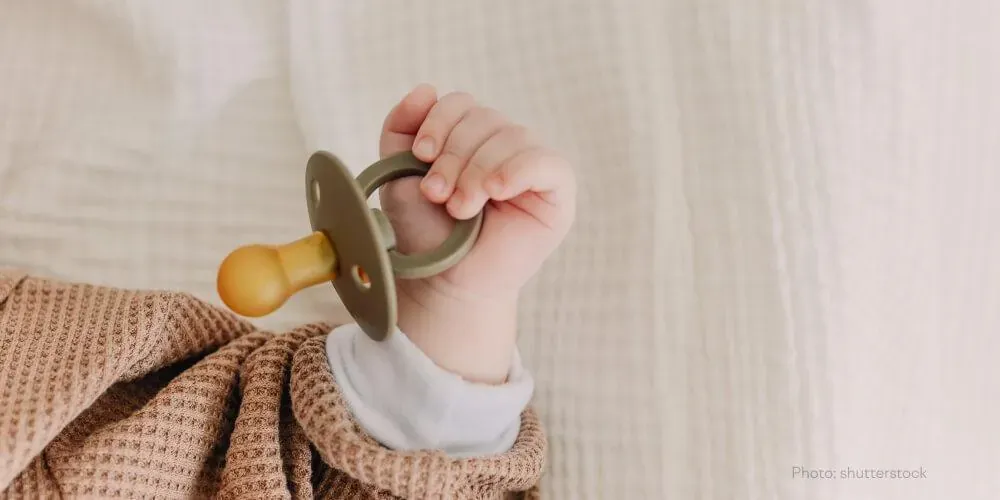
Photo: shutterstock


Frequently asked questions

Yes, pacifiers significantly reduce the likelihood of sudden infant death syndrome (SIDS) when used during sleep. While the exact mechanism isn't fully understood, multiple studies confirm this protective effect.

Wait until breastfeeding is well established, typically after 3-4 weeks. Early pacifier introduction may interfere with breastfeeding and cause babies to wean earlier than desired.

Prolonged pacifier use can disrupt bite development and cause misaligned teeth. However, orthodontic pacifiers help minimize this risk, and thumb sucking (common without pacifiers) can cause similar issues.

Never use bottle nipples as pacifiers, choose age-appropriate sizes with proper shields, and never tie pacifiers around your baby's neck. Replace pacifiers regularly and inspect for damage.

Weaning from pacifiers can be challenging, especially with older children who are more attached. Parents must weigh current soothing benefits against future weaning difficulties when deciding whether to introduce pacifiers.

Medical Disclaimer

This article is for informational purposes only and is not a substitute for professional medical advice, diagnosis, or treatment. Always seek the advice of your physician or qualified health provider with any questions you may have regarding a medical condition.

Meet our medical experts

Medically reviewed content

Reviewed by healthcare professionals · Updated September 4, 2024

Track your pregnancy on the go

Rated 4.8417,594 reviews