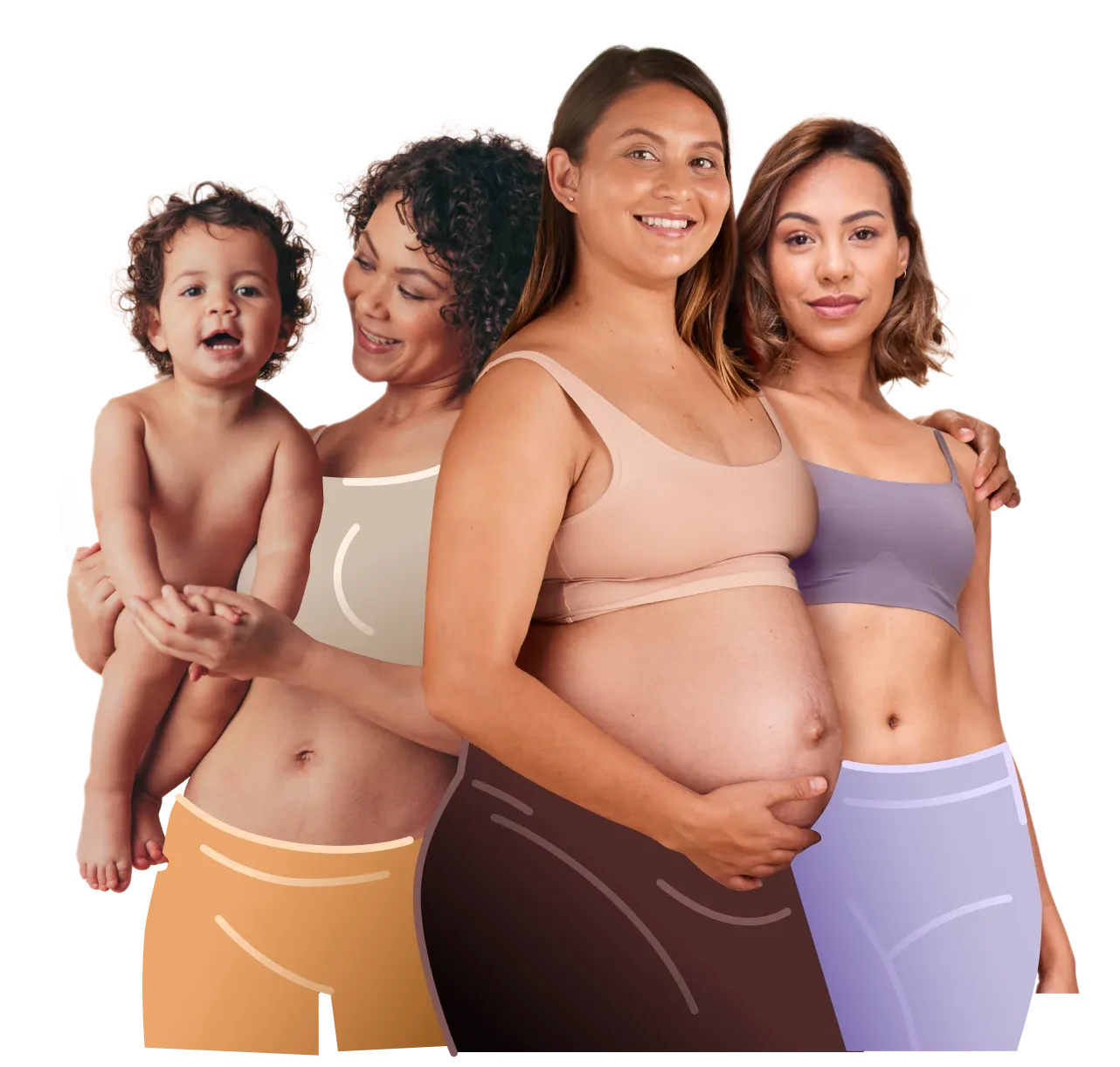

"You can’t have coffee, be around animals, or raise your arms too high”. Every expectant mother hears these kinds of warnings, but let’s look more closely at the myths surrounding pregnancy.
1. Morning sickness only happens in the morning
Nausea and vomiting are common during the first trimester. They are most likely related to the effects of strong hormones. Expectant mothers don’t just get sick in the morning, however, but any time of day, including nighttime. Nausea and vomiting usually stop at around 16–20 weeks. Some women don’t experience it at all [1].
2. If you’re super sick, it’s a girl!
And if not, it’s a boy? Not exactly. This is an old but persistent myth. Some studies have supported this belief, but only where the participants had excessive vomiting . There is no relationship between nausea and the sex of the baby [2].
3. You can guess the baby’s sex by the mama’s belly
A common belief is that if mama’s belly is “low,” she’s carrying a boy, and if it’s “high,” it’s a girl. There is no evidence to support this. Mama’s belly will look high or low because of completely unrelated factors, like how the uterus muscles are stretching or the baby’s resting position [3].
4. Coffee is a no-no
If you drank coffee before becoming pregnant and did not experience issues with blood pressure or anxiety, go ahead and keep enjoying your coffee! Updated research shows that expectant mothers can safely consume up to 200mg of caffeine per day without adverse effects for baby. That’s about 16 oz. of regular brewed coffee or three espresso shots. However, it’s important to keep drinking lots of water, especially because caffeine is a diuretic and flushes water out of the body [4].
5. Just a little alcohol won't hurt, right?
Wrong. Even the smallest quantities of alcohol can seriously affect the development of the baby and lead to birth defects and chronic diseases. Drinking alcohol is a huge risk to your baby's health and just not worth it [5].
6. You need to eat for two people
It’s not the quantity of the food that matters, but the quality. When you’re an expectant mama, your diet should include nutritious foods rich in many vitamins and minerals. You actually only need about 300 more calories per day than before pregnancy. This could be a homemade sandwich, a few pieces of fruit, or some low fat cheese. For mamas expecting twins, 600 extra calories per day is recommended. However, this is obviously nothing close to eating for two people [6].
7. You shouldn’t eat meat
On the contrary, meat is a great source of protein for pregnant women. You should only avoid raw or undercooked meat, as it can contain dangerous microorganisms. The same goes for fish [7].
8. Pregnant women shouldn’t live with pets
This myth is based on the fear of toxoplasmosis, a parasitic disease that is transmitted to humans from an infected cat or dog . The truth is that the parasite is spread through the pet’s feces, so the best protective measure is to let someone else clean the litter box. If you need to do it yourself, wear rubber or disposable gloves and then wash your hands thoroughly with soap afterwards [8].
9. Don’t raise your arms too high
Some people believe that raising your arms high creates the risk of strangulation of the baby by the umbilical cord. There is no basis for this fear. There is no connection between the movements of a pregnant woman’s arms and the movement of the umbilical cord. If this were true, almost any physical movement would be dangerous for the baby [9].
10. Wide-hipped women have easier labor
The ease or difficulty of labor is not affected by the width of your hips, but by the anatomical structure of your pelvis. This is something that can only be determined by an OBGYN [10].