EN
try amma today
Are you drinking enough water?
Pregnancy

Are you drinking enough water?

3 min readWeek 8
Key takeaways
3 min
  • Increase your daily fluid intake by 8-16 ounces during the first trimester to support increased blood flow and fetal development.
  • Choose water and mineral water over caffeinated drinks, sodas, and juices to avoid empty calories and potential risks to baby's heart rate.
  • Listen to your body's thirst signals and sip water throughout the day, especially when experiencing morning sickness or eating salty foods.
  • Include water-rich foods like watermelon and spinach in your diet to supplement your daily fluid intake.
  • Prioritize mineral water containing calcium, magnesium, and iron to support your healthy pregnancy and prevent constipation.

Pregnant women should drink 12.5-13.5 cups of fluids daily, adding 1-2 extra glasses to the standard recommendation. This increased hydration supports healthy pregnancy by maintaining proper blood flow, nutrient absorption, and fetal development while preventing dehydration-related complications.

amma app

Track your pregnancy in the app

Personalized content for your pregnancy week

Download App

Are you drinking enough water?

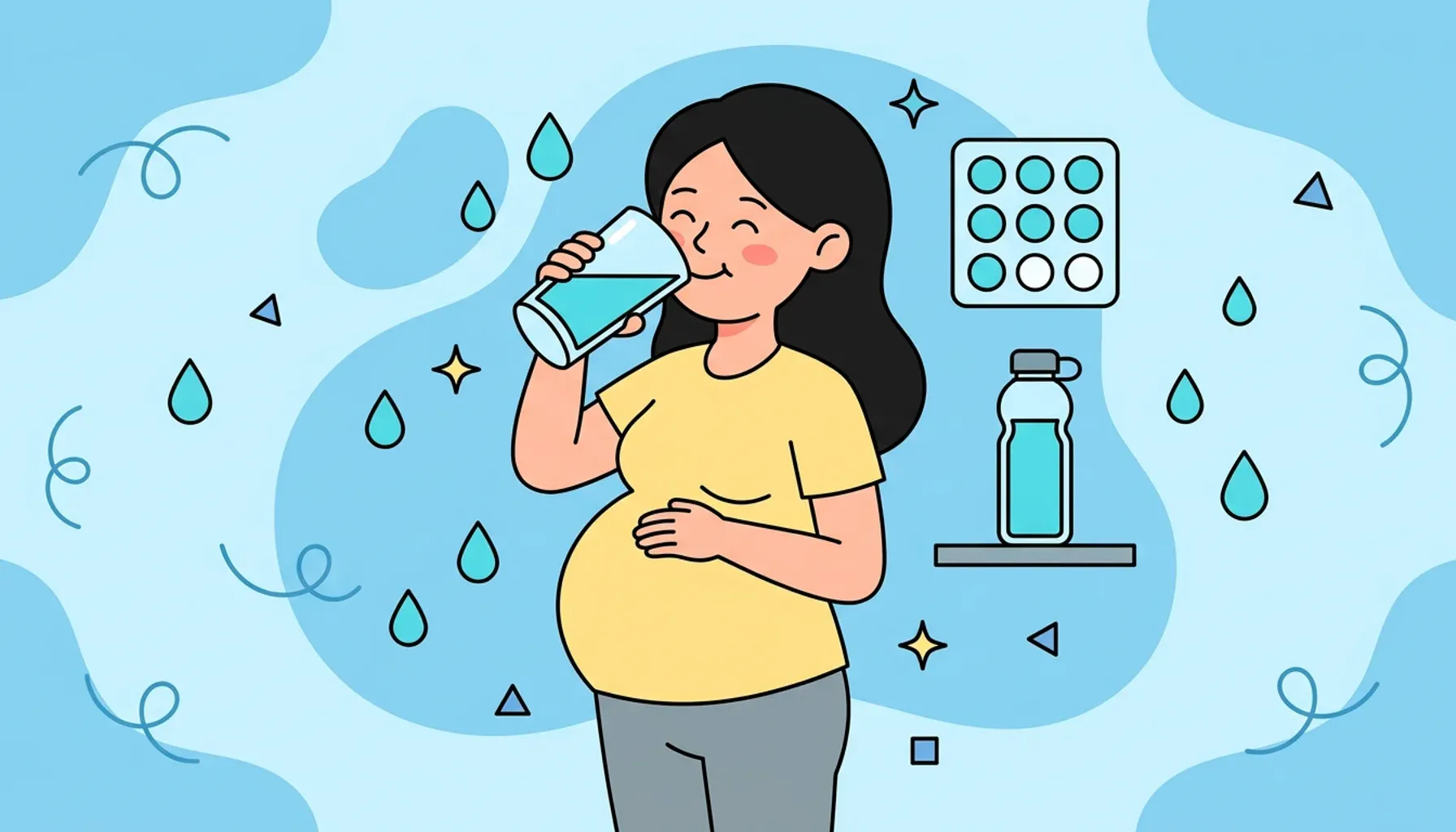
You’re probably familiar with the old saying that you need to drink 8 glasses of water a day. That is easy to remember and it’s a reasonable goal for most adults. The more scientific answer to how much water you should be drinking comes from the U.S. National Academies of Sciences, Engineering, and Medicine. They have determined that an adequate daily fluid intake is about 15.5 cups (3.7 liters) of fluids a day for men and 11.5 cups (2.7 liters) of fluids a day for women [1]. But that’s not quite as catchy.

During pregnancy, your need for water will increase. During the first trimester — even before you begin showing or gaining weight — you will notice an increased thirst. That is normal — your body is increasing in blood flow and creating new life — and needs water to do so!

When you eat salty foods, be sure to drink enough extra water to restore your electrolyte balance. Also, if you're throwing up due to morning sickness, it’s easy to become dehydrated. Sip on water throughout the day. You now need extra water to ensure the absorption and assimilation of water-soluble vitamins, including folate, vitamin B6 and vitamin C.

Staying hydrated will also help you avoid constipation [2]! During the first trimester, increase your fluid intake by about one to two glasses (about 8-16 ounces). And, most importantly, do not ignore your thirst: listen to your body! It knows what you need.

When selecting your beverage remember:

  • Coffee and other caffeinated drinks (including tea and energy drinks) in a dose of more than a cup (200 g) per day can affect the heart rate of a child [3].

  • Sweet soda is full of sugar and empty calories — soda provides nothing useful for baby and may cause weight gain. One average, people get 30% of unnecessary added sugar from soda. Who needs that [4]?

  • Juices contain the same amount of sugars as sodas [5].

  • Alcohol is best avoided. However, a number of studies have shown that if you drink a couple of glasses of wine in the very early stages, before you knew you were pregnant, baby’s health is unlikely to be affected [6].

  • Mineral water, especially containing iodides, iron, calcium, phosphorus and magnesium, can compensate for the deficiency of important trace elements during pregnancy and help you avoid constipation [7].

  • You can also get fluids from the foods you eat. Watermelon and spinach, for examples, are almost 100% water by weight.


Frequently asked questions

Pregnant women should drink about 12.5-13.5 cups of fluids daily, which is 1-2 glasses more than the standard recommendation for women. This increased intake supports your growing baby and increased blood volume.

Limit coffee and caffeinated drinks to less than one cup daily, avoid alcohol, and minimize sugary sodas and juices. These beverages can affect your baby's development or provide unnecessary calories without nutritional benefits.

Yes, dehydration during pregnancy can lead to constipation, poor vitamin absorption, and complications from morning sickness. Proper hydration is essential for nutrient transport and fetal development.

Mineral water containing calcium, magnesium, iron, and phosphorus is excellent for pregnancy. It helps compensate for nutrient deficiencies, supports healthy pregnancy development, and can help prevent constipation.

Water-rich foods like watermelon, spinach, cucumbers, and other fruits and vegetables contribute significantly to your daily fluid intake. These foods are nearly 100% water by weight and support overall healthy pregnancy nutrition.

Medical Disclaimer

This article is for informational purposes only and is not a substitute for professional medical advice, diagnosis, or treatment. Always seek the advice of your physician or qualified health provider with any questions you may have regarding a medical condition.

Meet our medical experts

Medically reviewed content

Reviewed by healthcare professionals · Updated June 1, 2025

Track your pregnancy on the go

Rated 4.8417,594 reviews