
At last, she will sleep at night!
But this is not really true. Nine weeks is a landmark milestone in the life of a baby and (parents). At this age, the production of cortisol and melatonin, hormones responsible for circadian rhythms and sleep, has stabilized. As a result, many infants begin to sleep more at night and less during the day [1]. It’s not that your baby girl will sleep all night long, but five or seven hours in a row is quite possible. If your daughter still confuses the time of day, try to strictly observe the rules of good sleep hygiene [2].
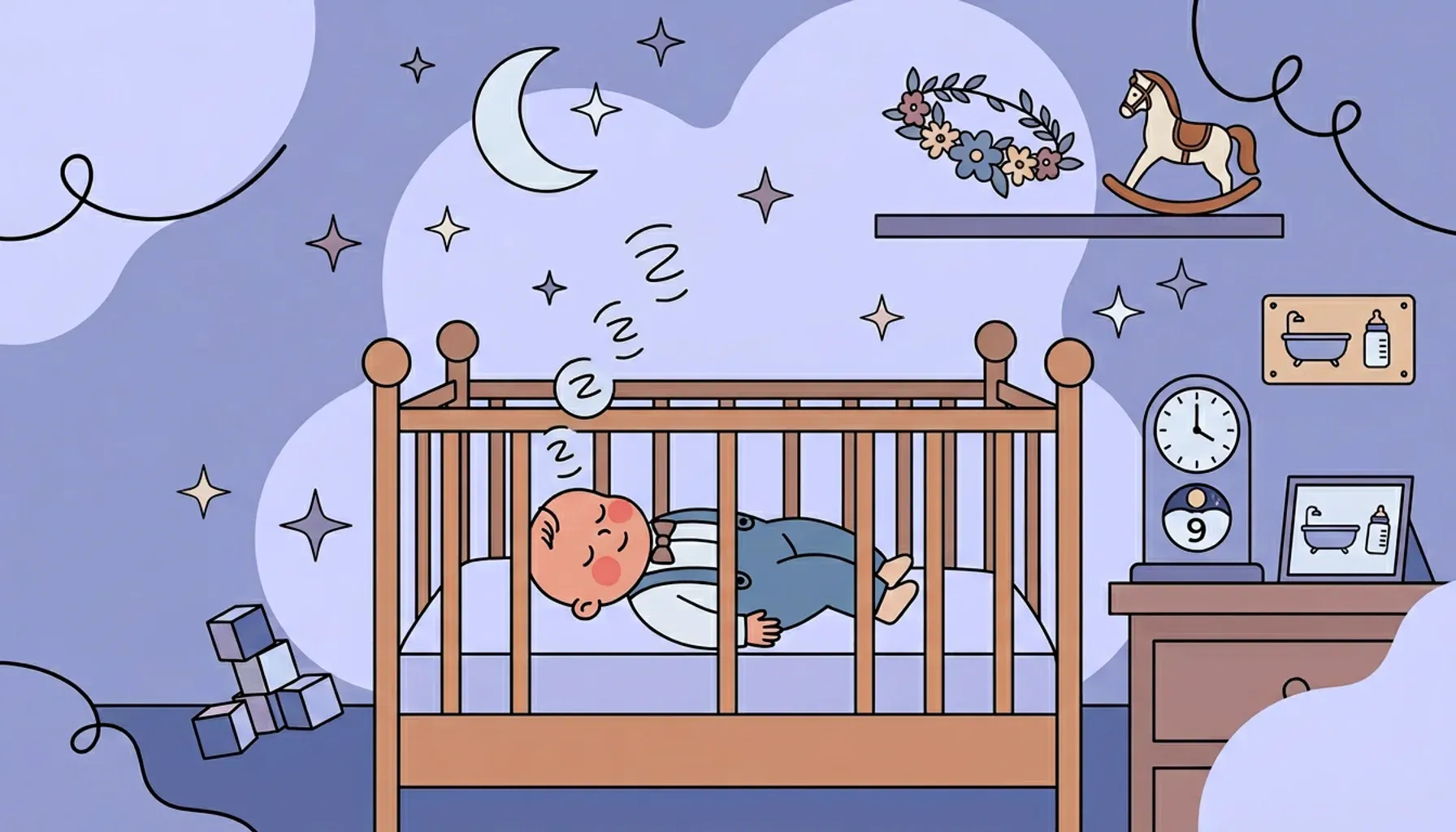
Set up a ritual of going to bed. A certain sequence of actions, which should end with falling asleep, helps baby start to find a better rhythm. For a baby, it can be, like this: bathing, changing into night clothes, last feeding, putting in a crib, patting or singing to sleep.
It is important to understand that if you include motion, such as bouncing and swinging, in this ritual, then you will likely have to do this even as your daughter grows and becomes larger and heavier. So consider which actions you will like to do in the months to come.
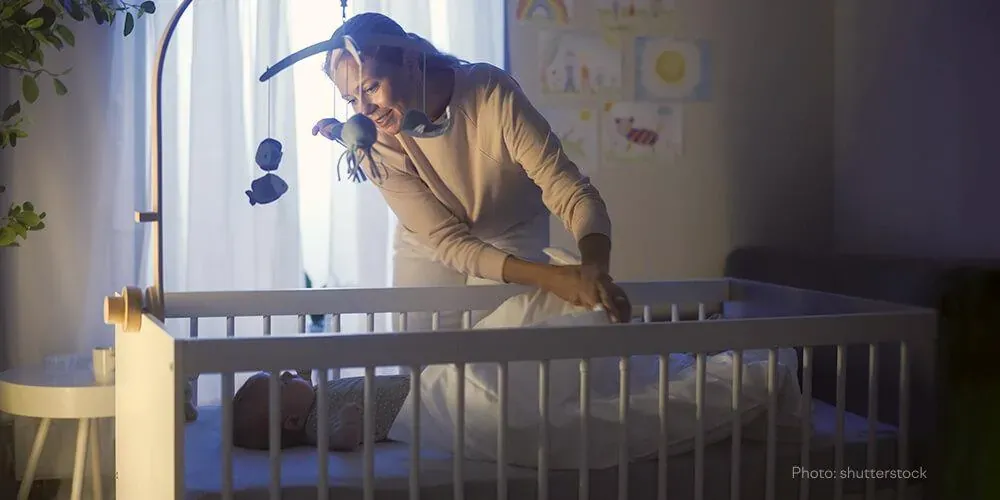
One of the main rules is that it’s necessary to sleep in complete darkness [1, 2]. The dim glow of the TV or phone can disrupt your daughter’s sleep. Animal experiments have even shown that night illumination in infancy is associated with increased anxiety in adolescence and adulthood. Such experiments have not been conducted on humans. But there is reason to believe that the effect will be the same [1].