
At this stage, make sure to pay attention to your veins!
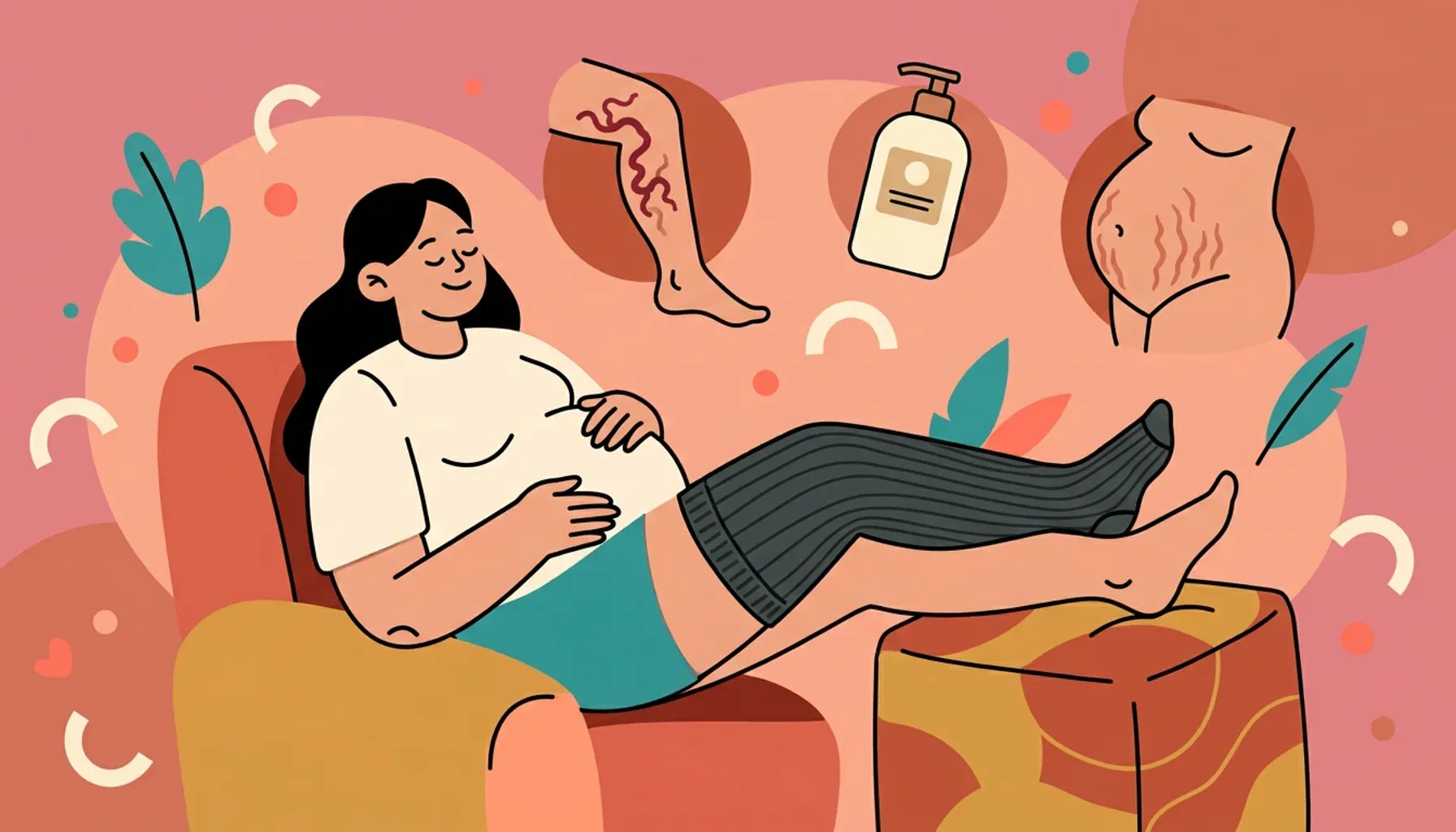
As your pregnancy progresses, the skin of the abdomen becomes thinner. In areas of more tension, dark streaks called stretch marks can appear, and they can be itchy. Avoid wearing clothes made of synthetic materials, which can aggravate the discomfort. Creams and oils can help reduce irritation [1].
During pregnancy, your heart pumps much more blood through your body to provide the baby with everything they need to grow. This strains your veins and in some cases, women develop varicose veins.
Varicose veins are caused by increased venous pressure in the legs and relaxation of the vascular walls, due to the influence of hormones. To relieve pain and heaviness try the following:
Move more. Do not stand in one place for long periods;
Elevate your legs often;
Eat more fiber-rich foods;
Drink more fluids, about half a gallon (2-2.5 liters) a day.
Due to the heaviness in the pelvic organs, the veins in the rectal region also suffer, causing hemorrhoids, which can result in pain and a burning sensation. These symptoms can be relieved with a warm bath and sea buckthorn oil. If you experience severe, persistent pain, consult your doctor or a proctologist [2, 3, 4].
If you are expecting twins
Your stomach is now about the same size as a single pregnancy nearing childbirth. Twins usually grow to about the same size as "singles". If you add to that the burden of two full bags of amniotic fluid and if each baby has their own placenta, then it can’t be easy for you right now, in the most literal sense [5]. Allow yourself to rest!
Discharge
At this stage of pregnancy, you may experience discharge. Normally it is transparent, milky white, and with a mild odor. A strong-smelling, yellow-green, or cheesy discharge may signal an infection and should be treated by a doctor [4]. If you have bloody or overly fluid discharge, seek immediate medical attention [6].