EN
try amma today
Congratulations, you are pregnant!
Pregnancy

Congratulations, you are pregnant!

2 min readWeek 4
Key takeaways
2 min
  • Understand that embryo development begins before pregnancy tests show positive results, with the blastocyst preparing for implantation into the uterine wall.
  • Recognize that hCG hormone production starts after implantation and determines gestational age through blood or urine concentration levels.
  • Know that early ultrasounds show small dark dots indicating fetal sacs surrounded by thick endometrium layers in a pear-shaped uterus.
  • Learn that twin pregnancies appear as two distinct dark spots on ultrasound, each with separate fetal sacs and developing placentas.
  • Schedule your pregnancy test appropriately, as hCG levels need time to build up after implantation for accurate results.

A healthy pregnancy begins with embryo development before positive test results appear. The blastocyst implants into the uterine wall, produces hCG hormone, and forms protective chorionic villi that develop into the placenta, creating optimal conditions for fetal growth.

amma app

Track your pregnancy in the app

Personalized content for your pregnancy week

Download App

Congratulations, you are pregnant!

Though it is too early for a pregnancy test to show long-awaited positive result, the embryo has already started to develop [1].

Congratulations, you are pregnant! - Congratulations, you are pregnant!The blastocyst prepares for implantation into the uterine wall and the mucous membrane releases tiny chorionic villi, the beginnings of the future placenta, to help it attach. The villi capture the blastocyst, spread the uterine tissue and lead the way to the endometrium.

After implantation, the blastocyst begins to produce the pregnancy hormone chorionic gonadotropin (hCG). Gestational age is determined by the presence and concentration of hCG in the blood or urine.

The inner and outer parts of the embryo start to form. The outer, or trophoblast, is responsible for implantation of the embryo in the uterus. The internal, or embryoblast, assists in the development of the baby’s tissues and organs.

Between the inner and outer parts of the embryo a liquid filled bubble slowly forms. Surrounded by the chorionic villi, this bubble will become the placental barrier that protects the fetus.

What we can see on an ultrasound

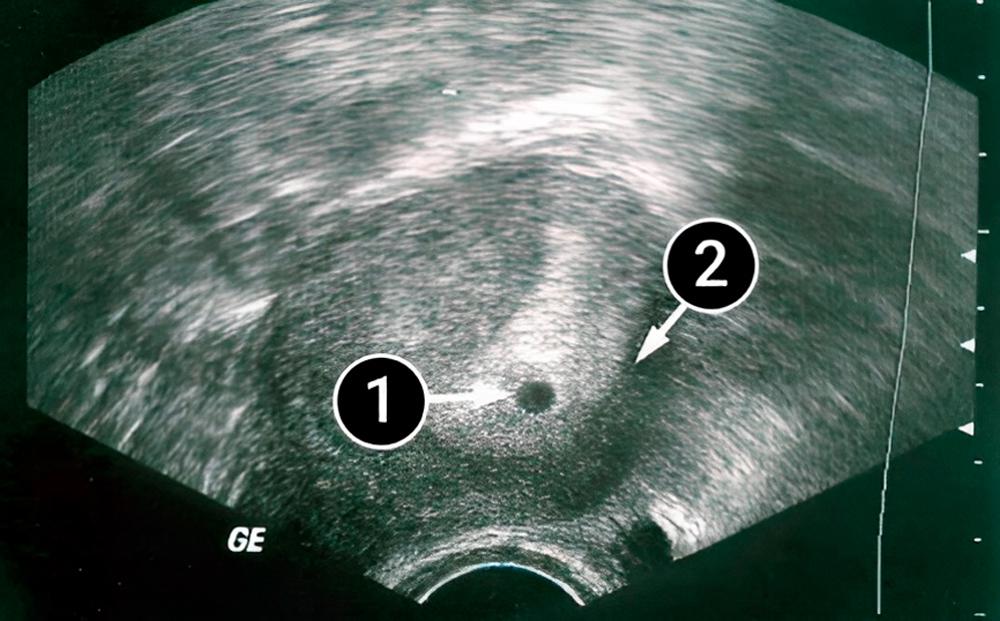
In the center of the picture, you can see a small dark dot, indicating a pregnancy with a single fetus. A thick layer of endometrium tightly surrounds the fetal sac. Where it meets the uterine wall, a vasculature and placenta will soon begin to form.

In the picture, the uterus is pear-shaped. At this time, the uterus has not started growing and the mother is not yet showing.

Congratulations, you are pregnant! - Congratulations, you are pregnant!
Frequently asked questions

Embryo development begins immediately after conception, even before pregnancy tests show positive results. The blastocyst starts preparing for implantation and developing chorionic villi within days of fertilization.

Human chorionic gonadotropin (hCG) is the pregnancy hormone that confirms pregnancy. It's produced after implantation and can be detected in blood or urine to determine gestational age.

Early pregnancy appears as a small dark dot (fetal sac) surrounded by thick endometrium in a pear-shaped uterus. Twin pregnancies show two distinct dark spots, each representing separate embryos with individual fetal sacs.

Wait until after your missed period for most accurate results, as hCG levels need time to build up after implantation. Blood tests can detect pregnancy earlier than urine tests.

The placental barrier forms from chorionic villi and protects the developing fetus. This barrier develops between the inner and outer parts of the embryo as a fluid-filled protective bubble.

Medical Disclaimer

This article is for informational purposes only and is not a substitute for professional medical advice, diagnosis, or treatment. Always seek the advice of your physician or qualified health provider with any questions you may have regarding a medical condition.

Meet our medical experts

Medically reviewed content

Reviewed by healthcare professionals · Updated August 15, 2025

This article is based on peer-reviewed research and trusted medical sources.

  1. How soon can I do a pregnancy test? NHS.

Track your pregnancy on the go

Rated 4.8417,594 reviews