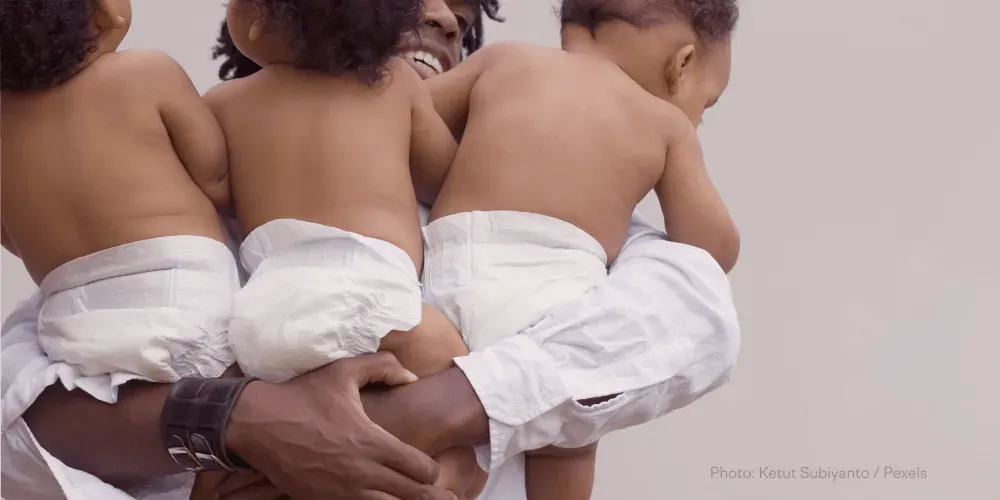

How can I give each of my twins their own place and space? Should I refer to them separately? We’ll tell you what you need to do to get emotionally closer to each one of your babies.
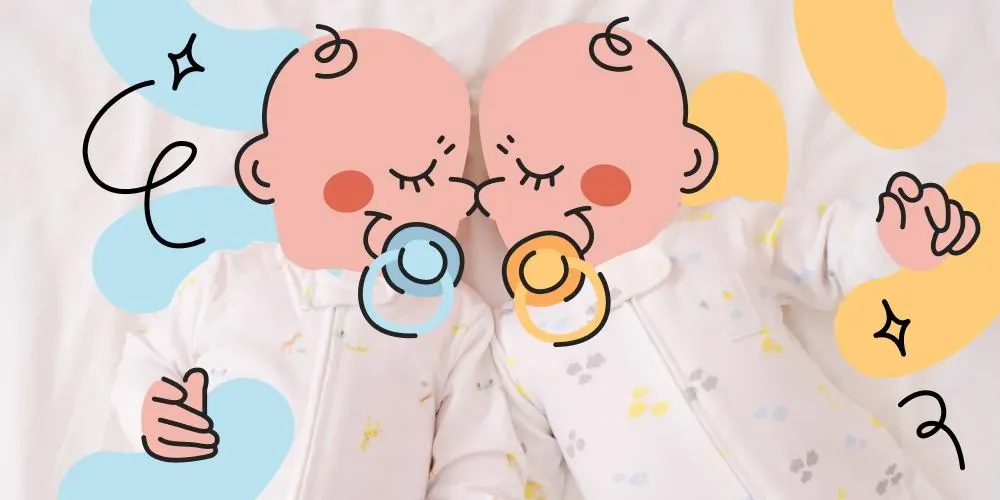
Parents of twins and those close to them often see their children as one. Firstly, it happens naturally, because in the first few months the babies are always together, eating and sleeping at the same time. Secondly, it is a common belief that twins are much more attached to each other than other siblings.
However, each twin is different and unique. Both children need to be treated as individuals. This is necessary to form a healthy attachment to both mom and dad.
Okay, but it's enough to be able to tell them apart, right?
Pay close attention to how your babies look, move their arms and legs, how actively they show emotions, and how loudly they cry. Sometimes the difference in temperament can be detected through these signs in the first few weeks of life.
But if you find you can’t tell them apart yet, that's okay too. Take a closer look, maybe the babies have physical differences. One of them may have a birthmark that the other doesn’t. Or maybe they both have it but on different sides, this happens with about a quarter of identical twins — they are called mirror twins [1].
And if there are no visible differences?
Create them yourself! For example, put a yellow bracelet on one twin and a blue one on the other. Or buy different colored socks or headbands for each one.
There is also another option. You can take a water-based marker and put a different colored dot on the heel of each baby. Or write the first letter of his or her name. You can also place a mark on their big toenail. Make sure to replace the dot or mark on their feet after each bath.
Is it necessary to emphasize the differences between twins?
Absolutely. It is important for healthy development. Imagine their lives in 20-25 years when they are adults. As much as we would like it, twins will not always be able to be close to each other. And that's okay, each one has to have their own life. The task of the parent is to raise them to be self-sufficient, confident, and happy people. To do this, you need to look at each of your children as an independent person from the very beginning, not as part of a whole.
What should you do?
From the earliest days of life, call your children by their first names, including in conversations with other people. If someone asks: "How are the twins doing?", answer — "Maya and Julia are fine." [2].
Choose different clothes for the twins, and when they grow up, teach them to say hello to other people while saying their name [2].
Spend time with each of the twins separately. You can take turns going with them on walks or running errands.
On days when both you and your partner are at home, "split up" the children. Play with each of them in different areas of the house or apartment. If you are on your own, ask relatives or friends to babysit one of the twins while you spend some alone time with the other [1].
Photo: Ketut Subiyanto / Pexels