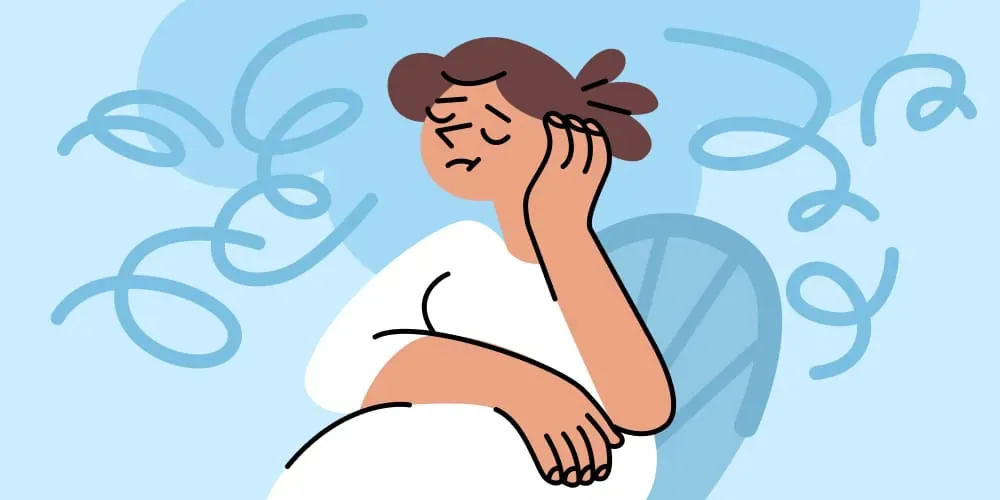

Anxiety over medical treatment and attention is natural. However, regular visits to your doctor can help you feel more in control of the situation.
Multiple pregnancies are considered high-risk pregnancies [1]. These words very often make parents very nervous. This is normal because the word "risk" evokes negative connotations. However, doctors use it in a different sense.
High risk is a medical term. It means that your body will be exposed to more physical stress. Statistically, twin pregnancies are more likely to present gestational diabetes, higher blood pressure, and premature birth, and they tend to need a C-section or other medical interventions more often [2].
That's what worries me!
Your fears are normal. Pregnancy is a stressful situation, multiple pregnancies are doubly so. The new situation you find yourself in is mostly unknown. Perhaps, after listening to doctors and reading stories, you’ve started to think that a twin pregnancy is dangerous. You start having recurring thoughts of every possible complication. This emotional state can have you constantly on edge, if you hear “your probability of x, y or z complication is higher” your brain translates it into “this will definitely happen to me”.
In reality, of course, this is not the case. Statistics cannot predict how events will unfold in your particular case. Yes, doctors provide you with special care and prescribe more procedures and tests. But that doesn't mean you're at risk. They are just being overly cautious.
Look at the situation from another angle. The more tests you get, the more control you may feel you have, and the fewer surprises you will face [1].
This sounds reasonable, but how do you reassure yourself?
First of all, stop looking for information about possible complications. No need to study how premature babies differ from full-term babies. Do not read horror stories on social networks! Try not to be around people who bring up the risks of multiple pregnancies. If they are your loved ones, ask them to be more positive! Most likely, their intentions are good, but they may not be pleasant for you to hear [3].
If fear overcomes you, share your worries with people you trust and who won't judge you, who won’t demand that you "pull yourself together" and that won’t feed your anxiety. If you start noticing increased negative thoughts, make sure to write them down in a notebook. You can also try anti-anxiety techniques, meditation, or art therapy. You may also find it helpful to consult a perinatal psychologist.
Phоtо: shutterstock