EN
try amma today
Let’s talk about iron
Pregnancy

Let’s talk about iron

2 min readWeek 12
Key takeaways
2 min
  • Increase iron intake from 18mg to 27mg daily during pregnancy to support increased blood volume and prevent anemia.
  • Choose heme iron sources like meat, liver, and poultry as they are absorbed twice as efficiently as plant-based non-heme iron.
  • Combine iron-rich foods with vitamin C sources like lemon juice, broccoli, or bell peppers to enhance iron absorption.
  • Avoid drinking tea immediately after iron-rich meals as polyphenols can reduce iron absorption by up to 50%.
  • Consider iron-fortified cereals and pastas as convenient alternatives if you experience side effects from iron supplements.

Pregnant women need 27mg of iron daily (up from 18mg pre-pregnancy) to support increased blood volume. Heme iron from meat absorbs better than plant-based sources, and combining iron with vitamin C enhances absorption while avoiding tea with meals.

amma app

Track your pregnancy in the app

Personalized content for your pregnancy week

Download App

Let’s talk about iron

Iron is part of hemoglobin, the main protein in blood. And since the volume of blood increases significantly during pregnancy, the need for iron increases as well. Before becoming pregnant, 18 mg of iron per day is adequate. But, now you should get at least 27 mg [1]. Most prenatal vitamins contain iron. But, often, iron supplements cause side effects, including constipation and vomiting, so it is often easier on your body to get the needed iron through your diet.

What foods contain the most iron?

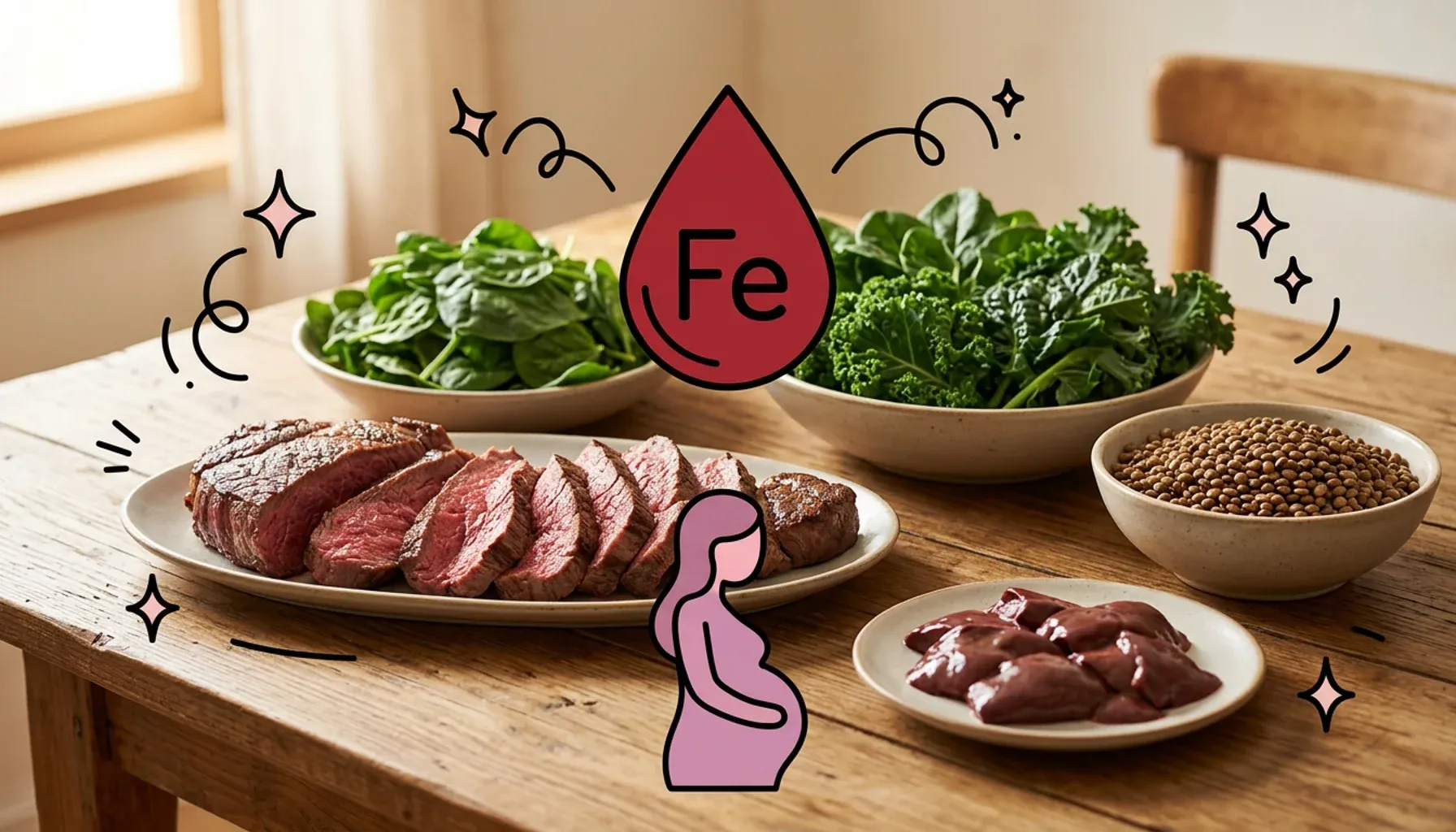
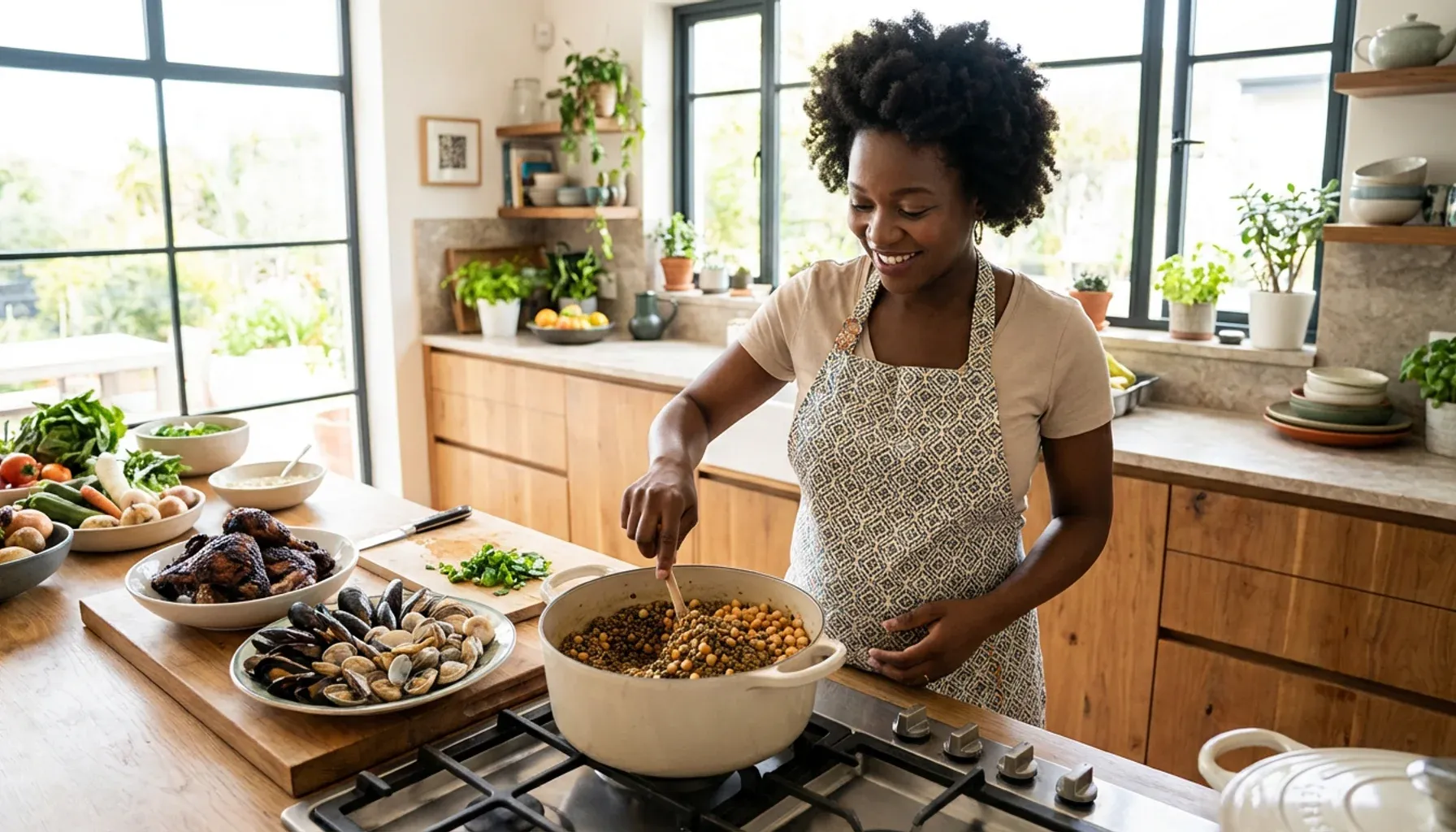
There are two types of iron: heme and non-heme. Heme is found in animal products: meat, liver, poultry, shrimp; non-heme is found in both meat and vegetable products, especially nuts (walnuts, almonds, cashews), legumes (lentils, beans, chickpeas), grains (especially buckwheat), fruits and berries (apples, apricots, pomegranates) [2].

Knowing the difference is important because heme is more easily absorbed by the body [3]. For example, liver contains almost as much iron as in lentils, but the body will absorb only half of the iron from lentils.

All iron, both heme and non-heme, is better absorbed in combination with vitamin C. For this, simply squeeze lemon juice on your iron-rich foods or serve them with veggies that contain vitamin C, like broccoli or bell peppers [1, 3, 4].

Polyphenols found in some plants, like tea [4], impede the absorption of iron. Therefore, it is better not to drink tea immediately after eating a meal.

Iron-containing food additives are widely used in the USA and Canada: many breakfast cereals, pastas and milk products are enriched with iron [3]. In many other countries, enriched products are not very common, so animal products remain the main source of iron.

Frequently asked questions

Pregnant women need 27mg of iron daily, compared to 18mg before pregnancy. This increased requirement supports the 50% increase in blood volume during pregnancy.

The best iron sources include liver, red meat, poultry, and seafood for heme iron. Plant-based options include lentils, beans, nuts, and iron-fortified cereals for non-heme iron.

Iron is essential for hemoglobin production, and blood volume increases significantly during pregnancy. Additional iron supports both maternal health and fetal development.

Eat iron-rich foods with vitamin C sources like citrus fruits or bell peppers. Avoid tea and coffee with meals as they can inhibit iron absorption.

Medical Disclaimer

This article is for informational purposes only and is not a substitute for professional medical advice, diagnosis, or treatment. Always seek the advice of your physician or qualified health provider with any questions you may have regarding a medical condition.

Meet our medical experts

Medically reviewed content

Reviewed by healthcare professionals · Updated August 15, 2025

Track your pregnancy on the go

Rated 4.8417,594 reviews