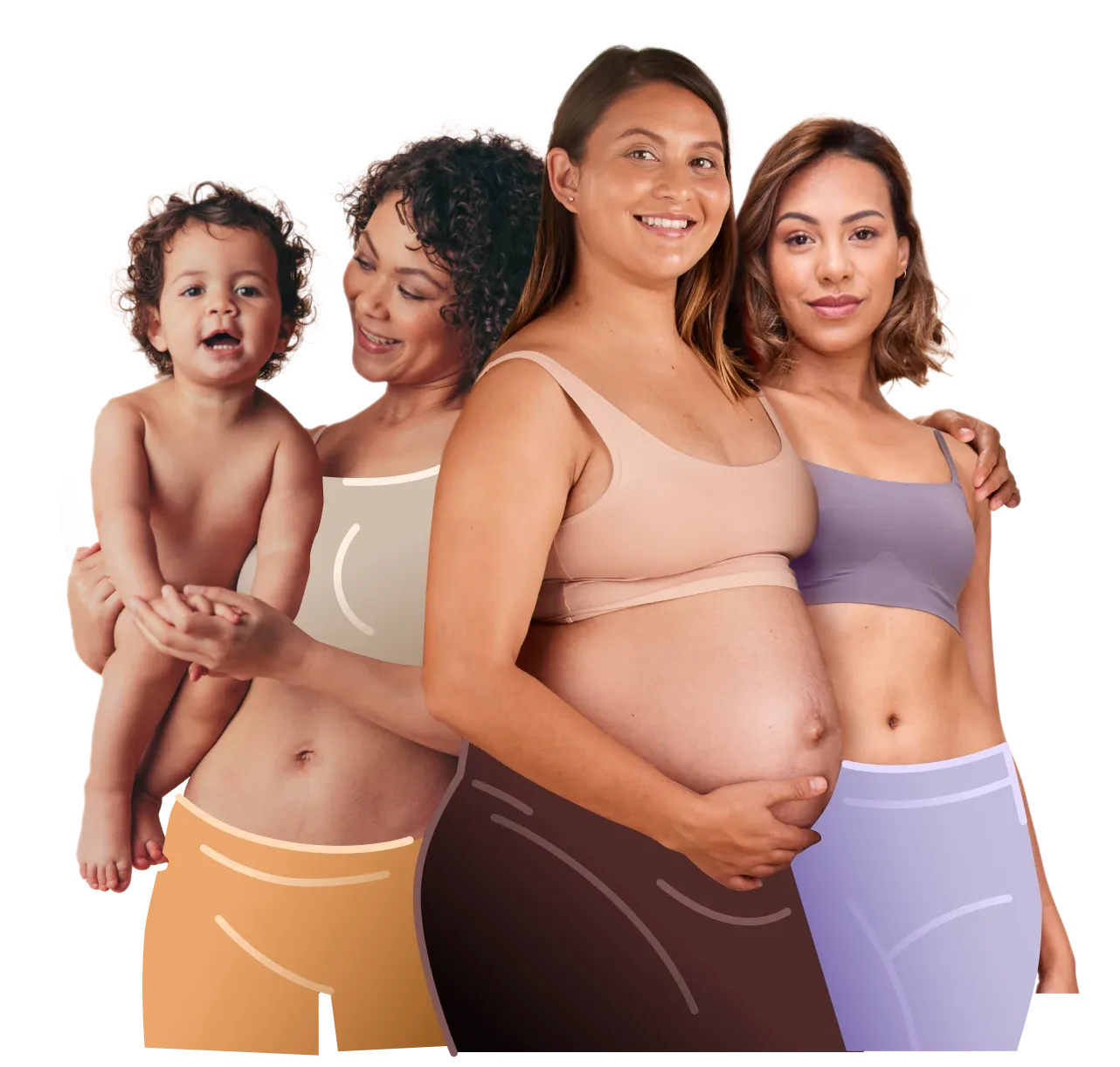

More and more women are having a baby in their late 30s [1]. Late pregnancy has its own peculiarities. Let's take a look at some common questions and concerns about pregnancy after 35.
Is it harder to get pregnant in your late 30s?
A woman’s reproductive system is most optimized for pregnancy until about age 30. Most women experience a sharp drop in fertility around age 37 as their egg supply diminishes [2]. This does not mean you can’t get pregnant after 37! There are still enough eggs left to conceive between age 35 and 40, but it may take longer to get pregnant. A typical 40-year-old woman has a 10% chance of getting pregnant in one menstrual cycle (compared to 25% for a 20- to 30-year-old woman) [3].
What are the risks to me?
Pregnant women over the age of 35 carry a higher risk of developing gestational diabetes . They are also more likely to suffer from high blood pressure, which increases the risk of preeclampsia . Both of these conditions are associated with risks of miscarriage and premature birth .
Placenta previa is also much more common in expectant mamas over 35. This condition is diagnosed when the placenta either partially or totally covers the cervix. Placenta previa requires a C-section delivery [4].
Now, all of these risks also apply to younger expectant mamas; no one is guaranteed a totally smooth pregnancy. A doctor will be ready to diagnose and treat any conditions that develop so that you have a safe and healthy pregnancy.
What are the risks to my baby?
Certain risks exist for babies of older mothers. They are more likely to have genetic abnormalities. For example, Down syndrome occurs in 1/1480 pregnancies of 20-year-old mothers and 1/353 pregnancies of 35-year-old mothers [3].
There is also a higher risk of miscarriage or premature birth. This can be due to preexisting chronic diseases in the mother, genetic problems, or egg quality [4].
In addition, multiple pregnancies are more common in women over 35. This is because as we age, our ovaries periodically produce more than one egg per menstrual cycle. Twins or triplets are not uncommon when using IVF . Multiple pregnancy carries its own risks to both mama and baby [3, 4].
What can I do to reduce these risks?
All of this said, most pregnancies and babies are healthy, and having access to excellent healthcare and a doctor you trust can make all the difference.
When you decide you will try to conceive, talk to your doctor about genetic testing. These tests can help detect the risk of chromosomal abnormalities and congenital illness. A full physical is important to assess your general health. Also pay attention to any problems or irritations you haven’t yet mentioned to your doctor. All of this is vital information so he or she can best care for you and baby. Furthermore, expectant mamas over age 35 need to see their doctor more frequently during pregnancy [4].
Take stock of your diet and do all you can to plan meals that are balanced and rich in vitamins and minerals, especially folic acid , iron, and calcium. You’ll need to take a prenatal multivitamin and eliminate alcohol and tobacco . Get regular exercise and stay in good shape so you are strong and resilient for your pregnancy and birth . Anything you can do to improve your overall health is a positive step toward reducing your risks and having a more comfortable pregnancy [4].