EN
try amma today
The baby is covered with fine hair
Pregnancy

The baby is covered with fine hair

2 min readWeek 22
Key takeaways
2 min
  • Understand that lanugo, the fine hair covering your baby at 21 weeks, helps regulate temperature and protects their delicate skin in the womb.
  • Observe your baby's growing abilities as their brain reaches 100g, allowing them to stretch, bend arms, and practice thumb-sucking for nursing preparation.
  • Expect stronger movements if carrying twins, as they compete for space and create more noticeable kicks compared to singleton pregnancies.
  • Recognize clear developmental milestones visible on ultrasound, including defined facial features, heart chambers, and the umbilical cord connection.
  • Start considering baby names now as you can clearly see your baby's features and personality beginning to emerge on ultrasound scans.

At 21 weeks pregnant, your baby develops lanugo - fine, delicate hair covering their entire body. This downy hair helps maintain body temperature and retains protective wax-like substances, typically disappearing before birth while your baby practices essential movements like thumb-sucking.

amma app

Track your pregnancy in the app

Personalized content for your pregnancy week

Download App

The baby is covered with fine hair

The baby is now about the size of a squash and weighs more than the placenta, which provides them with everything they need to grow and develop.

The way the baby looks is also changing; their whole body is covered by a thin and delicate fluff known as lanugo. This fine hair is believed to help the baby maintain body temperature [1]. Additionally, lanugo hair retains a wax-like substance that protects the baby from external influences in the womb [2]. Lanugo hair usually disappears before delivery.

At this time, the baby will periodically bring their thumb to their mouth and suck on it [2]. This is believed to be a type of preparation for nursing.

The mass of the baby’s brain is close to 3.5 oz (100 g) [3]. The number of connections between neurons allows the cerebral cortex to regulate simple movements. The baby can stretch both legs toward the wall of the uterus, bend both arms, and touch their face with their hands.

If your partner is expecting twins

Imagine she has two small zucchinis in her belly! Moreover, they are competing for territory, so she is going to feel significant poking from the inside, whereas other moms can probably compare their baby’s movements to the fluttering of butterfly wings.

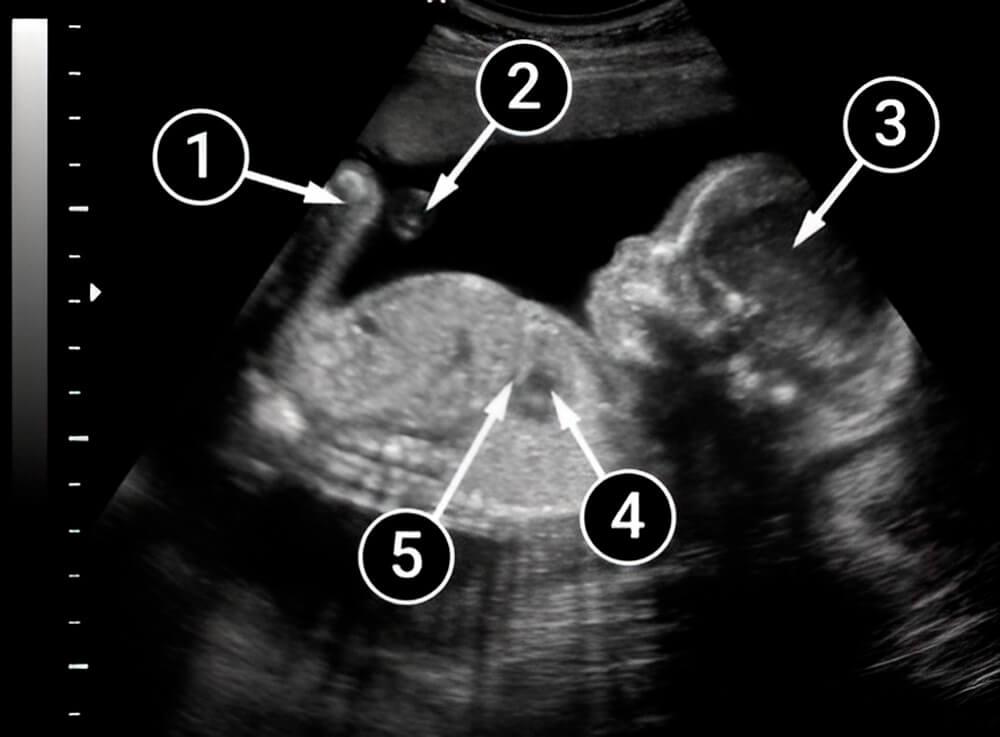
What we can see on an ultrasound

The baby lies on their back with their left side facing the screen. The contours of the head and neck are visible, and the forehead, nose, and lips are clearly defined. The dark area around the chest is the baby's heart. In the picture, you can also see the diaphragm, a thin line that separates the chest and abdominal cavity.

The picture clearly shows the baby’s rounded belly and legs. The umbilical cord, which delivers nutrients from the mother's body to the baby, is also visible.

The baby is covered with fine hair - The baby is covered with fine hair
Frequently asked questions

The fine hair covering your baby is called lanugo. This delicate, downy hair helps regulate your baby's body temperature and retains protective wax-like substances in the womb.

Around 21 weeks is perfect for considering baby names since your baby's features are becoming clearer on ultrasounds. Many parents find this an exciting time to connect names with their baby's developing personality.

Lanugo typically disappears before delivery, though some babies may still have traces at birth. This fine hair usually sheds naturally as your baby approaches full term.

At 21 weeks, your baby weighs more than the placenta and is about the size of a squash. Their brain alone weighs approximately 3.5 ounces (100 grams).

Your 21-week baby can stretch legs against the uterine wall, bend arms, touch their face, and suck their thumb. These movements help prepare them for life outside the womb.

Medical Disclaimer

This article is for informational purposes only and is not a substitute for professional medical advice, diagnosis, or treatment. Always seek the advice of your physician or qualified health provider with any questions you may have regarding a medical condition.

Meet our medical experts

Medically reviewed content

Reviewed by healthcare professionals · Updated September 2, 2024

Track your pregnancy on the go

Rated 4.8417,594 reviews