EN
try amma today
What is Placenta Previa?
Pregnancy

What is Placenta Previa?

1 min readWeek 27
Key takeaways
1 min
  • Understand that placenta previa affects only 1 in 200-250 pregnancies and involves the placenta forming in the lower uterus around 12-13 weeks.
  • Recognize that ultrasound screening during the first and early second trimester can diagnose this condition early in your healthy pregnancy journey.
  • Know that women over 30-35, those with previous C-sections, IVF, or urogenital infections have higher risk factors for developing placenta previa.
  • Take comfort that in 95.5% of cases, a low-lying placenta naturally moves upward by 36 weeks of pregnancy without intervention.
  • Discuss monitoring plans with your healthcare provider if diagnosed, as most cases resolve naturally during pregnancy progression.

Placenta previa occurs when the placenta forms in the lower half of the uterus around 12-13 weeks of pregnancy, affecting 1 in 200-250 pregnancies. Most cases resolve naturally, with 95.5% of low-lying placentas moving upward by 36 weeks, allowing for continued healthy pregnancy.

amma app

Track your pregnancy in the app

Personalized content for your pregnancy week

Download App

What is Placenta Previa?

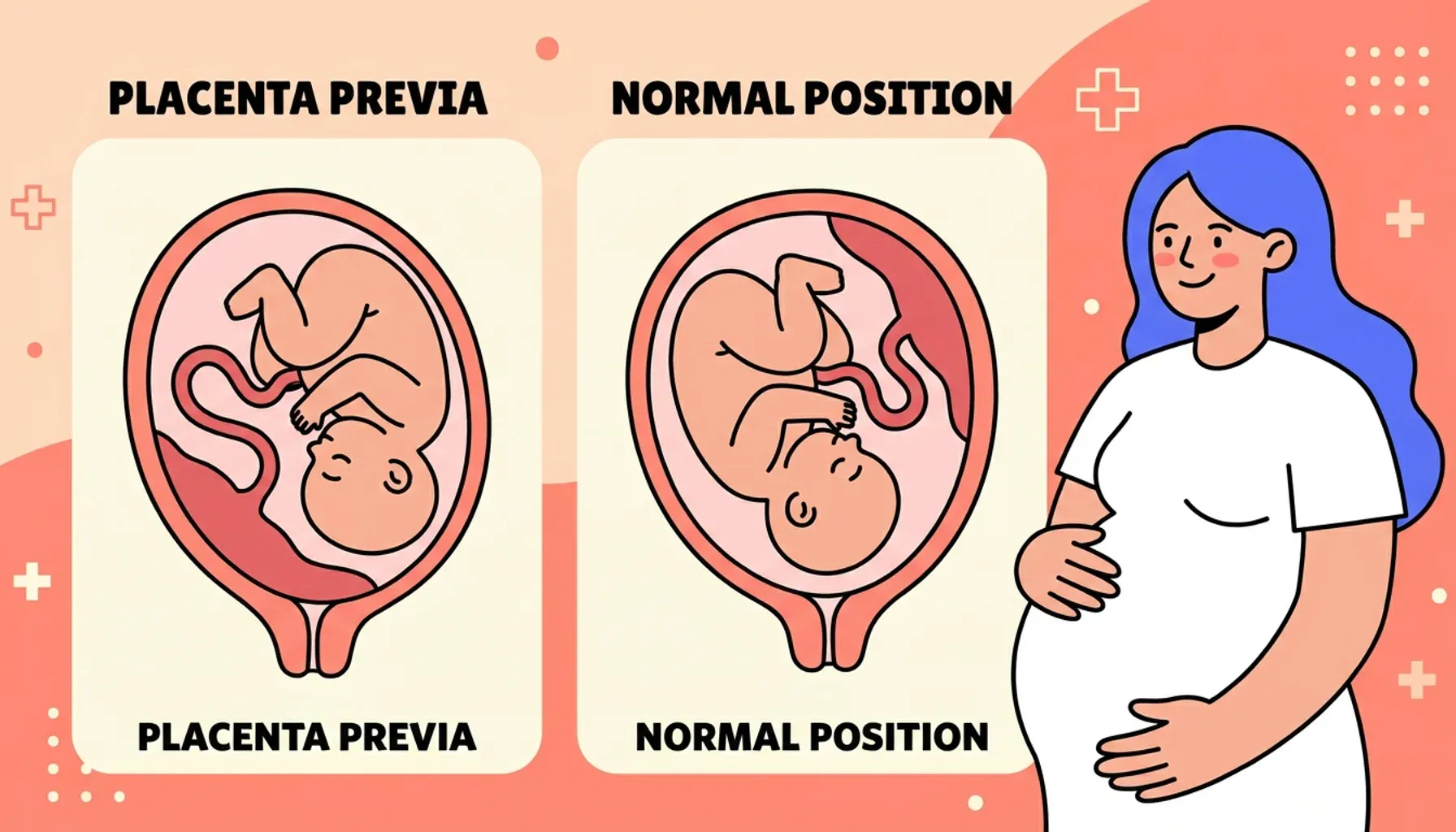
The placenta begins to form around 12-13 weeks. In some cases, it develops in the lower half of the uterus [1]. This is called a low-lying placenta or placenta previa. According to scientists, women at risk include those who have had IVF, caesarean section, infections of the urogenital tract, as well as those who become pregnant after 30-35 years. However, placenta previa is rather rare and only occurs in one out of 200-250 pregnant women [2].

How can you tell if you have placenta previa?

The doctor can make such a diagnosis after ultrasound screening in the first and early second trimester of pregnancy [3]. If you have been diagnosed with this, you should not be intimidated. In most cases, the low-lying placenta rises. In 89.9% of cases, this occurs by 32 weeks, and in 95.5% of cases, it occurs by 36 weeks [4].


Frequently asked questions

Placenta previa occurs when the placenta develops in the lower half of the uterus around 12-13 weeks of pregnancy. While it affects only 1 in 200-250 pregnancies, it can be managed effectively to maintain a healthy pregnancy with proper medical monitoring.

Placenta previa is typically diagnosed through ultrasound screening during the first and early second trimester of pregnancy. Your doctor can identify this condition during routine prenatal appointments as part of maintaining your healthy pregnancy care.

Yes, in most cases placenta previa resolves naturally as the pregnancy progresses. Studies show that 89.9% of low-lying placentas move upward by 32 weeks, and 95.5% resolve by 36 weeks of pregnancy.

Women over 30-35 years old, those who have had IVF treatments, previous cesarean sections, or infections of the urogenital tract are at higher risk. However, placenta previa can occur in any pregnancy regardless of risk factors.

While concerning, placenta previa shouldn't cause excessive worry as it's highly treatable and often resolves naturally. With proper medical monitoring and care, most women with this condition can still have a healthy pregnancy and delivery.

Medical Disclaimer

This article is for informational purposes only and is not a substitute for professional medical advice, diagnosis, or treatment. Always seek the advice of your physician or qualified health provider with any questions you may have regarding a medical condition.

Meet our medical experts

Medically reviewed content

Reviewed by healthcare professionals · Updated March 25, 2025

Track your pregnancy on the go

Rated 4.8417,594 reviews