EN
try amma today
What tests need to be done before pregnancy?
Pregnancy

What tests need to be done before pregnancy?

2 min readWeek 1
Key takeaways
2 min
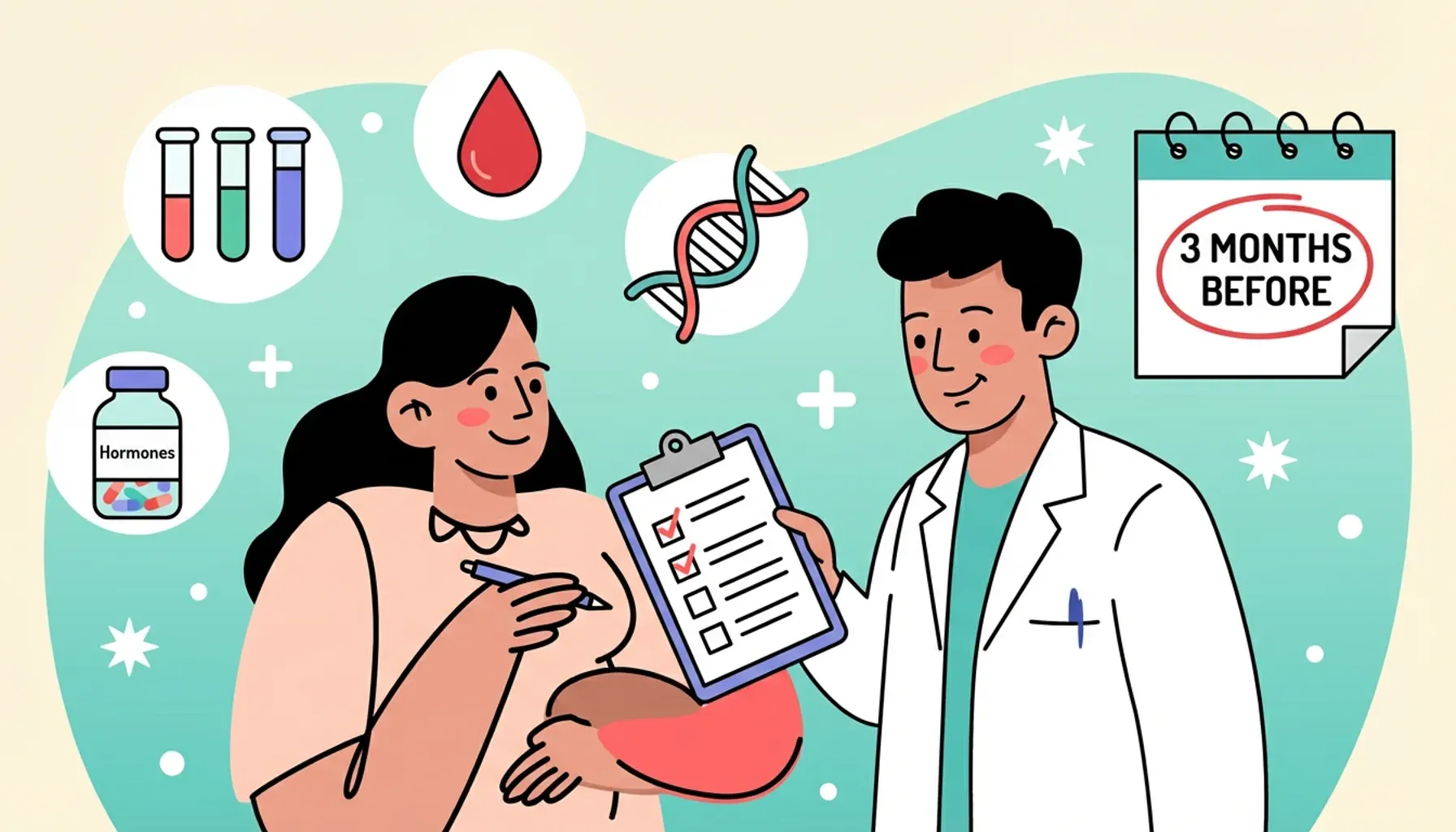
  • Schedule comprehensive testing at least 3 months before trying to conceive to ensure optimal health for both mother and baby.
  • Complete blood work including general, biochemical, hormone levels, and coagulation tests to identify potential health issues early.
  • Get screened for sexually transmitted diseases, TORCH infections, and update vaccinations to prevent complications during pregnancy.
  • Visit your doctor, ENT specialist, and dentist for complete health assessments before conception.
  • Bring your partner to appointments since their health status can also affect your healthy pregnancy journey.

Essential pre-pregnancy tests include general and biochemical blood work, urine analysis, STD screening, TORCH infection testing, coagulation studies, and hormone panels. These tests should be completed at least 3 months before conception to ensure a healthy pregnancy and reduce complications.

amma app

Track your pregnancy in the app

Personalized content for your pregnancy week

Download App

What tests need to be done before pregnancy?

There are several tests that should be taken at least three months before the intended conception to reduce the risk of complications and the development of chronic diseases during pregnancy [1].

They usually include:

  • general and biochemical blood tests;

  • general urine analysis;

  • tests for sexually transmitted diseases, including syphilis and HIV;

  • tests for TORCH infections: rubella, herpes, hepatitis B and C [2];

  • coagulograma;

  • hemostasiograms;

  • and a blood test for hormones (including the thyroid gland).

What other information is relevant?

Preparing for pregnancy usually includes a visit to a doctor, ENT, and dentist. Do not forget to tell your doctor what kind of childhood diseases you had — for example, measles or whooping cough — and what vaccinations against such diseases you received and when. This will help your doctor determine if you have antibodies to these diseases or if you should have any vaccines updated.

It’s great to bring your partner with you to these appointments. “If your partner has chickenpox, they can pass it on to you if you are not vaccinated,” says Kenneth James, MD, obstetrician-gynecologist at Saddleback Memorial Medical Center [3].


Frequently asked questions

Essential blood tests include general and biochemical blood panels, hormone testing (including thyroid), coagulation studies, and screening for infections like hepatitis B and C. These tests should be completed at least 3 months before trying to conceive.

Begin pre-pregnancy testing and health checkups at least 3 months before you plan to conceive. This timeframe allows enough time to address any health issues and optimize your body for a healthy pregnancy.

TORCH screening tests for infections including Toxoplasma, rubella, cytomegalovirus, and herpes that can cause serious complications during pregnancy. Early detection helps prevent birth defects and pregnancy complications.

Yes, your partner should also undergo health screening as their health can directly impact your healthy pregnancy. Conditions like sexually transmitted infections can be transmitted and affect both you and your baby.

It's recommended to visit your primary doctor, an ENT specialist, and a dentist before conception. These specialists can identify and treat issues that might complicate a healthy pregnancy.

Medical Disclaimer

This article is for informational purposes only and is not a substitute for professional medical advice, diagnosis, or treatment. Always seek the advice of your physician or qualified health provider with any questions you may have regarding a medical condition.

Meet our medical experts

Medically reviewed content

Reviewed by healthcare professionals · Updated June 8, 2025

Track your pregnancy on the go

Rated 4.8417,594 reviews