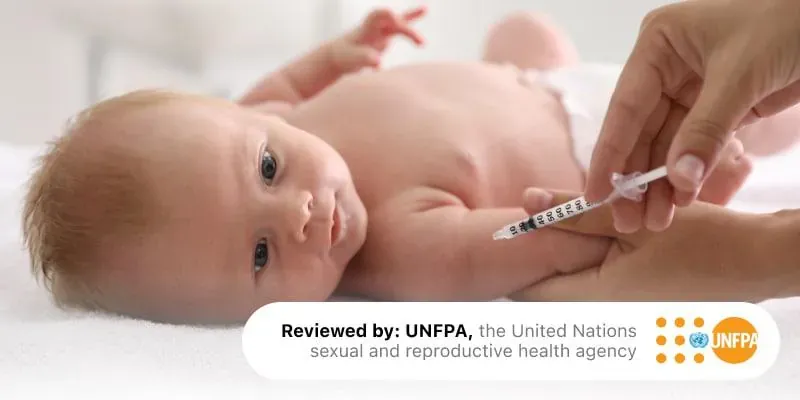

When a baby is born, they are given a series of vaccinations by health professionals to protect them from contracting infections and diseases. This is typically referred to as immunization. Often these vaccinations are administered to the newborn baby straight after birth or within a couple of months of them being born.
Should my newborn baby be vaccinated?
Having vaccinations throughout childhood is essential because they help to provide immunity to children before they are exposed to potentially life-threatening diseases. Worldwide, all vaccines are tested to ensure that they are safe and effective before they are given to children, and children will only receive the required vaccinations at the recommended ages [1].
Some of the vaccines that newborn babies are likely to receive during the first year of their life include:
Hepatitis B vaccination;
Rotavirus vaccination;
Pneumococcal conjugate vaccination;
Diphtheria, pertussis (aka whooping cough), tetanus vaccination;
Polio vaccination;
Measles, rubella, and mumps vaccination.
This is not an extensive list, but it is a list of common vaccinations that are typically administered to babies soon after birth depending on what region in the world you live in. Your child may also be offered other vaccinations to protect against any additional diseases that might be more prevalent.
How effective are vaccines?
Immunization is one of the most effective public health interventions, giving every child the opportunity to grow up healthy and reach their full potential [2]. For over two centuries, vaccines have safely reduced the prevalence of diseases worldwide such as polio, measles, and smallpox.
Do other countries have the same vaccination rules?
There are differences depending on the country. While the USA and the UK do not vaccinate against tuberculosis [3, 4], in other countries where the risk is higher, they do.
In the United States and the United Kingdom, children under one year of age are vaccinated against rotavirus, whereas in other countries they are not. The US also has a flu shot that is given annually usually starting at around six months [3], and the UK has a meningitis and sepsis shot at eight months [4].
One of the best ways you can protect your child is to follow the recommended vaccine schedule in your country. Any time you delay a vaccine, you're increasing your child's vulnerability to disease. You can always find an overview of the recommended vaccines and approximate dates from your local health center, doctor, or your government’s health agencies [5].
Thanks to global immunization efforts worldwide, children can walk, play, dance, and learn [2]. Globally, health advocates and policymakers are working endlessly to make sure that every child, regardless of where they are born, has access to the vaccines they need to not only survive but thrive long-term.
This article was created in association with UNFPA, the United Nations sexual and reproductive health agency.