EN
try amma today
Why does baby kick?
Pregnancy

Why does baby kick?

2 min readWeek 31
Key takeaways
2 min
  • Recognize that baby kicks are normal responses to stimuli like position changes, sounds, lighting, and your hunger levels throughout your healthy pregnancy.
  • Expect stronger movements in the second trimester, especially after 20-24 weeks when baby develops hearing abilities.
  • Monitor increased activity after 9 PM, which is common due to natural changes in your blood sugar levels during pregnancy.
  • Track your baby's movement patterns and consult your doctor if you notice significant changes or extended periods of excessive movement.
  • Contact your healthcare provider immediately if baby pushes unusually hard for extended periods, as this could indicate oxygen concerns.

Babies kick in the womb as natural responses to various stimuli including position changes, sounds, lighting, and maternal hunger. These movements indicate healthy development and become stronger throughout the second trimester, with increased activity often occurring after 9 PM due to blood sugar changes.

amma app

Track your pregnancy in the app

Personalized content for your pregnancy week

Download App

Why does baby kick?

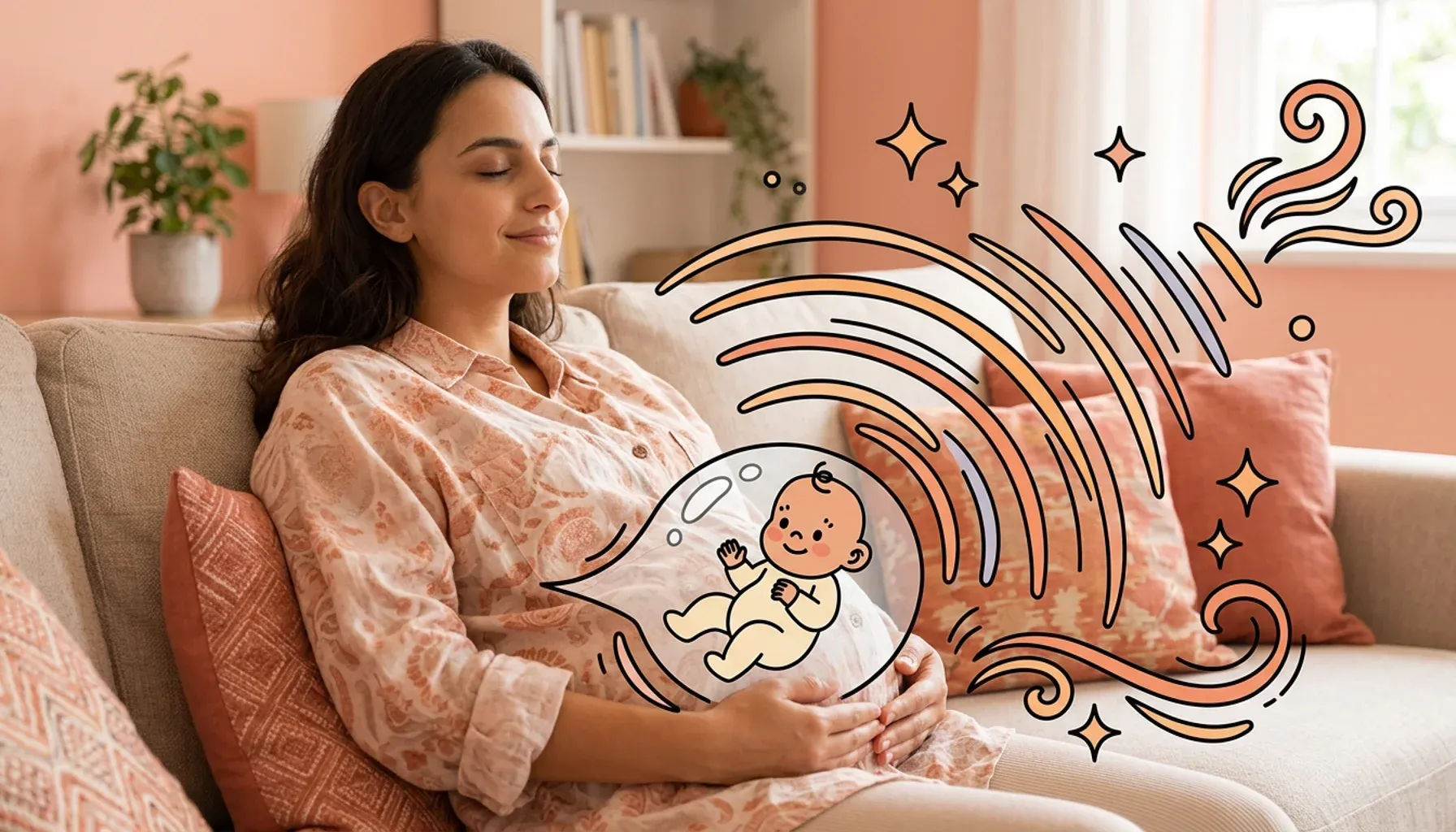
Baby is sensitive to all her stimuli: changing your position, sitting too long in front of the computer, taking a shower or bath, being hungry [1], and even changes in the lighting around you [2] can make baby respond with kicks, jabs, and turns. By the second trimester, baby's movements become stronger, and by 20-24 weeks, when she develops hearing, the muffled sounds can cause baby to throw a punch or two [3]. Babies also often start to move more actively after 9 pm due to changes in mama’s blood sugar [4].

Kicks and punches are no reason for concern. As the weeks progress you will become familiar with her movements. If her movements change in nature and you feel worried, you can consult your doctor. For example, if the baby pushes too hard for an extended period of time it could be a symptom of a lack of oxygen, in which case it is best to see a doctor immediately [5].

Frequently asked questions

Most women feel their first baby kicks between 16-25 weeks of pregnancy. First-time mothers typically feel movements later around 20-25 weeks, while experienced mothers may notice them as early as 16 weeks.

Babies kick in response to various stimuli including position changes, sounds, lighting changes, maternal hunger, and physical activities. After 20-24 weeks, they also respond to muffled sounds as their hearing develops.

Babies often become more active after 9 PM due to natural changes in your blood sugar levels. You may also notice movements more when lying still and focusing on your body.

Contact your doctor if you notice significant changes in movement patterns or if baby pushes excessively hard for extended periods. This could indicate potential oxygen concerns requiring immediate medical attention.

Yes, strong kicks are typically normal and indicate healthy fetal development. Movements naturally become stronger during the second trimester as your baby grows and develops muscle strength.

Medical Disclaimer

This article is for informational purposes only and is not a substitute for professional medical advice, diagnosis, or treatment. Always seek the advice of your physician or qualified health provider with any questions you may have regarding a medical condition.

Meet our medical experts

Medically reviewed content

Reviewed by healthcare professionals · Updated June 7, 2025

Track your pregnancy on the go

Rated 4.8417,594 reviews