EN
try amma today
Why you need to do a glucose tolerance test (and why you shouldn't be afraid of it)
Pregnancy

Why you need to do a glucose tolerance test (and why you shouldn't be afraid of it)

2 min readWeek 25
Key takeaways
2 min
  • Schedule your glucose tolerance test between 24-28 weeks of pregnancy to screen for gestational diabetes.
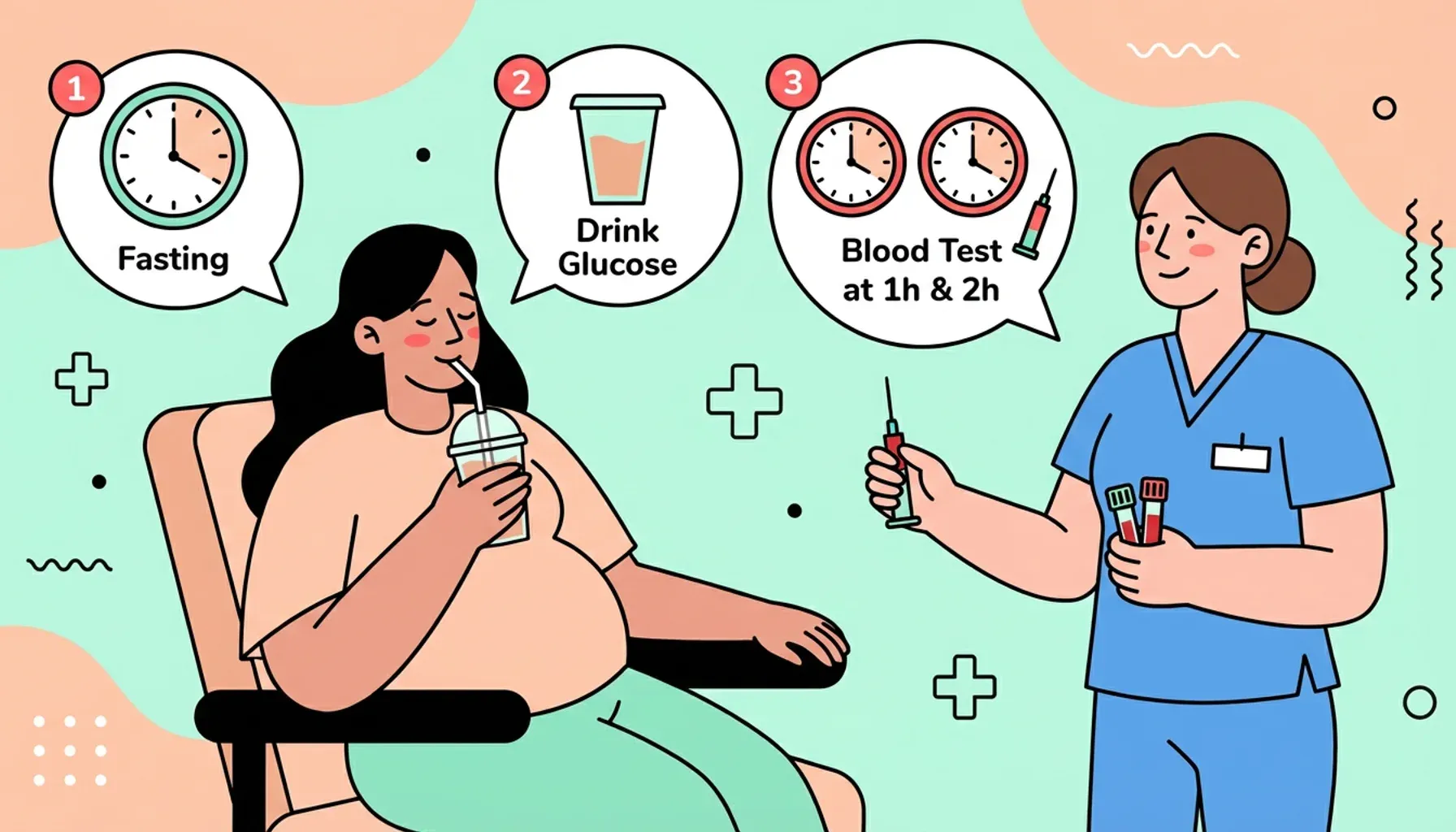
  • Expect a 3-step process: fasting blood draw, glucose drink, and follow-up blood tests at 1 and 2 hours.
  • Understand that this pregnancy test is completely safe for both mother and baby with no health risks.
  • Know that early detection helps prevent complications like excessive baby weight gain and delivery issues.
  • Prepare by fasting overnight and allowing 2-3 hours for the complete testing process.

The glucose tolerance test is a crucial pregnancy test performed between 24-28 weeks to screen for gestational diabetes. It involves drinking a glucose solution and having blood drawn at intervals to measure how your body processes sugar, helping protect both mother and baby from complications.

amma app

Track your pregnancy in the app

Personalized content for your pregnancy week

Download App

Why you need to do a glucose tolerance test (and why you shouldn't be afraid of it)

GKT or glucose tolerance test is included in the list of mandatory tests during pregnancy. It is carried out between 24 to 28 weeks in women who have not been diagnosed with gestational diabetes in earlier stages.

The test is carried out in three stages :

First, on an empty stomach, blood is drawn from a vein and blood sugar levels are measured immediately. If already at this stage an excess of the glucose level (5.1 mmol per liter and higher) is detected, then further steps are not required. If you do need to continue with the test, next, you will be asked to drink a sickly sweet glucose solution (75 g glucose per 250-300 ml of warm water) within a five minute period. An hour later, a blood sample will be taken again. If an excess is detected, the third blood sampling is not done. If not detected, they wait another hour and do another analysis.

This is an important study because it helps to determine how well your body processes glucose, and identify the risks of developing gestational diabetes and anemia.

Why is it important to have a glucose tolerance test?

Placental hormones in the second half of pregnancy cause insulin resistance. That is, cells become less sensitive to insulin. As a result, there is more glucose in the mother's blood. This "extra" sugar passes through the placenta to the baby.

In response to this rise in the mother's blood sugar, her pancreas must increase the production of insulin. If the pancreas is not able to keep up with the demand, the mother's blood glucose level will remain above normal and this can put an extra load on baby’s pancreas and can lead to an increase in baby's weight.

Is a glucose tolerance test dangerous?

The test does not pose any danger to the body of the mother and child [1].


Frequently asked questions

The glucose tolerance test is performed between 24-28 weeks of pregnancy. This timing allows detection of gestational diabetes when placental hormones are at their peak and affecting insulin sensitivity.

Yes, the glucose tolerance test is completely safe for both mother and baby. It poses no danger and is a standard, routine pregnancy test recommended by healthcare providers worldwide.

If your glucose levels are elevated, you'll be diagnosed with gestational diabetes. Your doctor will create a management plan including dietary changes, blood sugar monitoring, and possibly medication to protect you and your baby.

While you can technically refuse any pregnancy test, the glucose tolerance test is strongly recommended. Undiagnosed gestational diabetes can lead to serious complications for both mother and baby, including difficult delivery and health issues.

Medical Disclaimer

This article is for informational purposes only and is not a substitute for professional medical advice, diagnosis, or treatment. Always seek the advice of your physician or qualified health provider with any questions you may have regarding a medical condition.

Meet our medical experts

Medically reviewed content

Reviewed by healthcare professionals · Updated June 4, 2025

This article is based on peer-reviewed research and trusted medical sources.

  1. Glucose tolerance test. Mayo Clinic.

Track your pregnancy on the go

Rated 4.8417,594 reviews