
Your baby is gaining strength
The baby's skin is wrinkled, translucent, and very thin. It looks pink-red because we can see the blood in the capillaries through it [1].
At the same time, the baby's body becomes more rounded. Folds appear on the arms, legs, and buttocks because of the accumulation of subcutaneous fat.

The baby's heart beats at a rate of 120-160 beats per minute, and the doctor can hear it with an obstetric stethoscope or Doppler machine.
At this time, the baby may be considered viable in the event of premature birth. Having your baby at this stage is not optimal and involves great risk, but premature babies can survive thanks to modern obstetric centers. Their lungs are underdeveloped and they cannot breathe on their own but can be successfully stabilized with life-support devices until they mature [2].
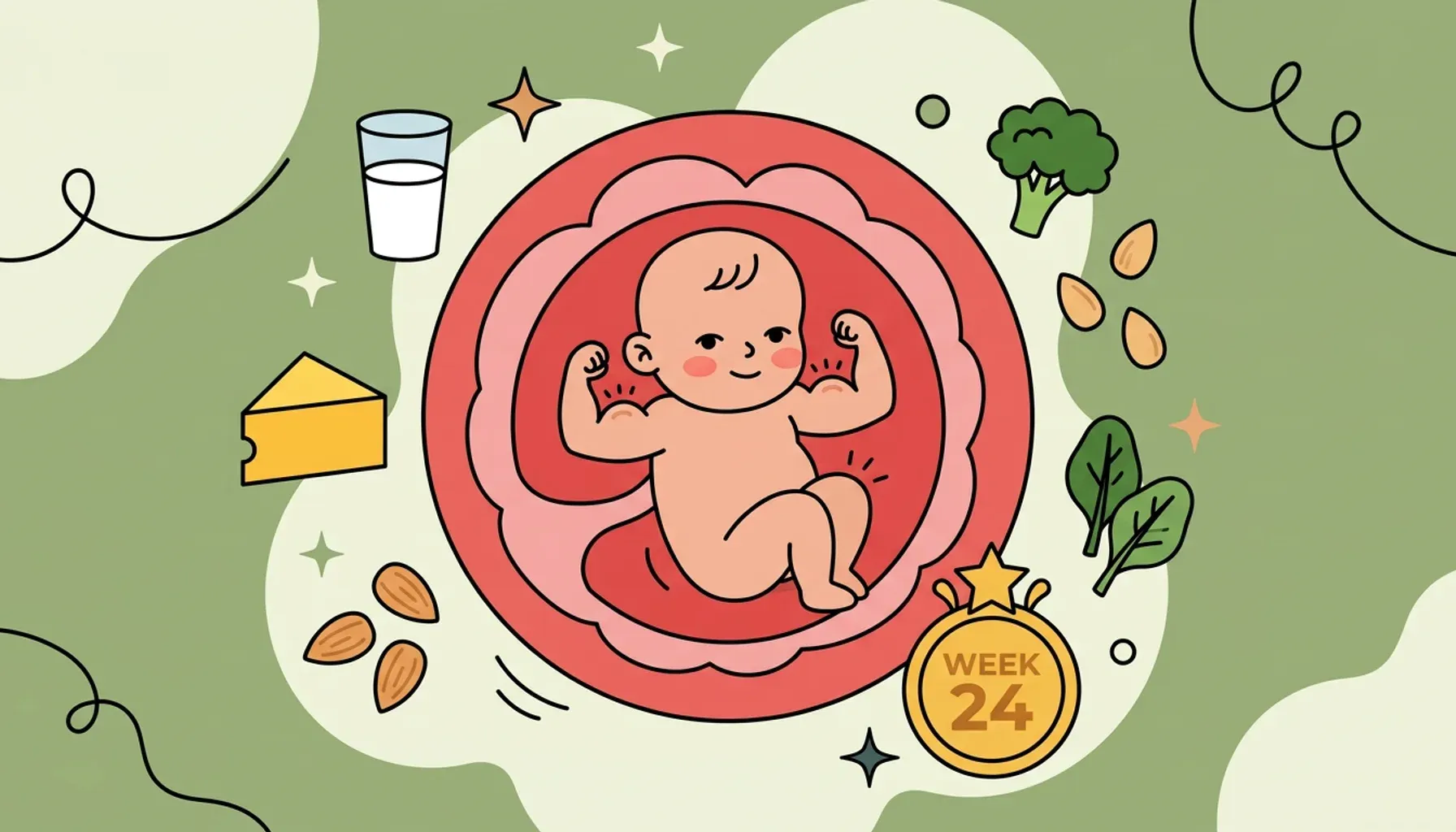
During this week of pregnancy, your body supplies the baby with a considerable amount of calcium, which the baby needs for bone growth; therefore, you need to include foods rich in calcium in your diet. Milk, cheese, almonds, and green vegetables such as broccoli are great sources of calcium. Many moms-to-be need extra calcium [3, 4], so consult your doctor about whether you need calcium supplements.
Your baby needs the weeks between now and when you reach full term to grow and gain strength for later life. Continue eating healthy and varied foods, and get plenty of rest — your body is working at full capacity as a source of nutrients.
If you are expecting twins
The babies are already quite big and strong, like two ears of corn! And now you will be under particularly close supervision by your doctors, because the risk of premature birth in a multiple pregnancy is higher. This week you will likely have an additional ultrasound to make sure that everything is fine with the babies [5].
What can be seen on ultrasound
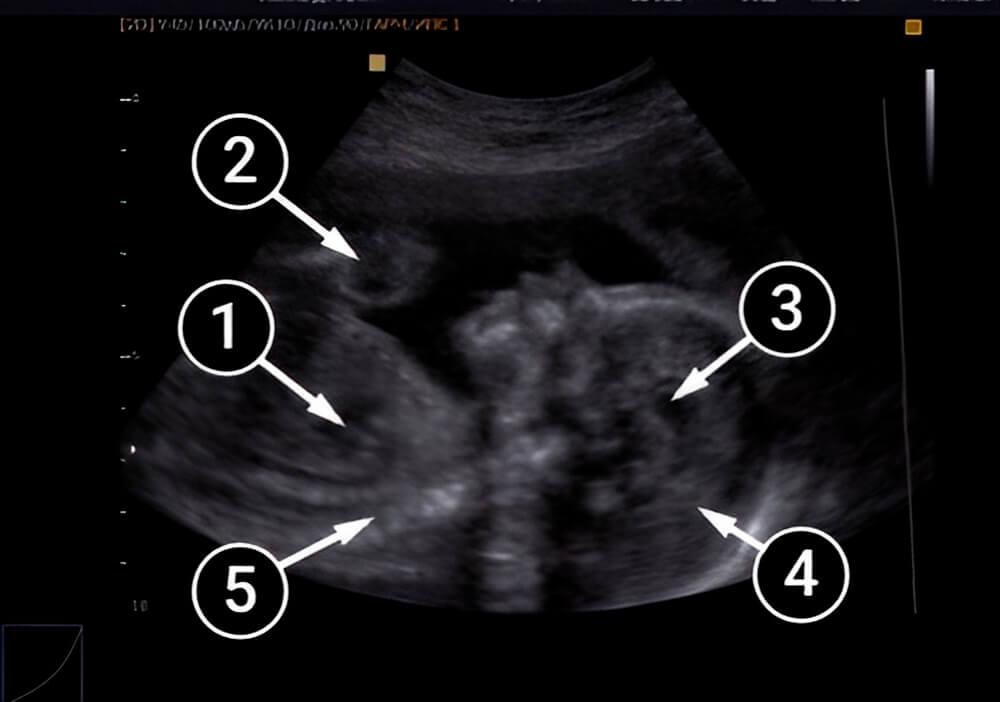
In the image, the baby is lying on one side, the head can be seen on the right side of the picture. The dark area in the center is the corpus callosum, a plexus of nerve fibers that divides the cerebral cortex into the left and right hemispheres.
A hand is visible, which is reaching towards the mouth — most likely, the baby wants to suck on a finger. The hand is clenched into a fist.
The dark spot in the chest area is the heart, and the light arch, located just below, is the bend of the spine.