

Your pelvic floor is essential. It holds your womb, bladder, and bowels. If these muscles become weak, you can leak urine when you cough, sneeze, or do regular everyday activities. Exercising your pelvic floor muscles during pregnancy helps to prevent this.
Pelvic floor muscles — what are those?
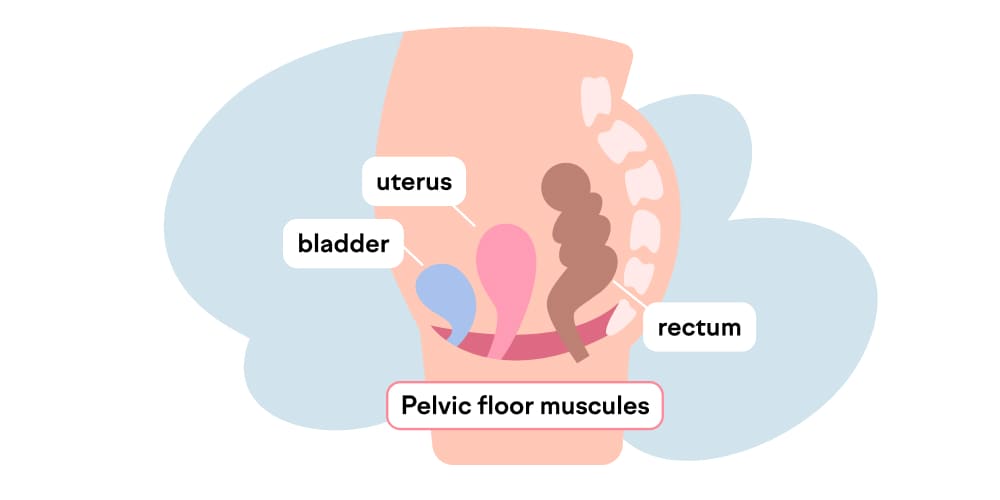
The pelvic floor is a structure made up of layers of muscles that support the organs within the pelvic cavity, including the bladder, bowels, and uterus. This structure helps maintain normal function of the bladder and bowels, preventing unexpected leakage and the passing of gas [1].
What happens to the pelvic floor muscles during pregnancy and labor?
Women naturally gain weight during pregnancy, including that of the growing baby, placenta, and increased blood volume. That extra weight can weaken the muscles in the pelvic floor because of the additional pressure placed on them.
During childbirth, the pelvic floor muscles are stressed and overstretched, especially during the second stage of labor when you start to push. Some women's pelvic floors heal rapidly, while others may have long-term issues. Research shows that vaginal deliveries increase the risk of pelvic floor dysfunction. [2]
How can I tell if I have issues with my pelvic floor muscles?
If your pelvic floor muscles are weak, you may leak urine when you cough, sneeze, or strain. Other typical complaints are [1]:
feeling a bulge or a dragging sensation in the vagina
gas incontinence
low sensitivity or discomfort during sex
feeling as if the vagina has "widened"
constipation
feeling as if you can’t fully empty your bowels
Some women may experience only one or two symptoms, while others may have several at once. Sometimes, dysfunction of the pelvic floor muscles may not be noticeable but can progress with age or after giving birth to another child.
How can I strengthen my pelvic floor muscles?
Just like any other muscle group, the pelvic floor muscles can be trained, contracted, relaxed, and stretched. Regular physical activity such as walking, swimming, and yoga, can improve pelvic floor health. However, there are also specific exercises for this area, known as Kegels. If you practice them during pregnancy, you decrease the risk of urinary and fecal incontinence after childbirth [3].
Sit or lie down with your knees bent.
Squeeze in and tighten the muscles around your back passage as if you were trying to stop yourself from peeing and passing gas.
Breathe in as you squeeze in and tighten the muscles, then breathe out while relaxing them.
At first, try to do this exercise quickly.
You can slow the exercise down as you progress by holding the squeezes for as long as you can before you relax. Try counting to 10.
Do three sets of eight squeezes every day [4].
Note: 40% of people don't perform a Kegel correctly the first time [2]. A physical therapist, a midwife, or an ob-gyn can help you identify the correct muscles.