
The more the belly increases in size, the more the center of gravity shifts forward. This leads to stress on the spine. In some cases, a belly band helps to relieve some of the stress [1].
When might a belly band be needed?
During the second half of pregnancy (after the 20th week), significant physiological and anatomical changes occur. The uterus increases in size, the baby is quickly growing, and under the influence of the hormone relaxin, the ligaments relax and stretch. All of these factors can cause pain in the upper back and lower back [2, 3]. During weeks 20-24, a belly band may offer some support.
How does a belly band help relieve the spine?
The band supports the abdomen and relieves stress from the back and pelvis. By lifting the abdomen, you are able to straighten your posture, reducing pressure on your bladder and lower back.
However, there are very few studies that have been conducted to find out whether a belly band actually relieves pain. And in most cases, they used it in combination with other pain relief efforts. So it’s not yet possible to say unequivocally whether the belly band is effective [1].
Should I try a belly band?
The belly band is not a panacea. Moreover, some women should avoid using them. One of the main reasons not to use one is if your baby is in breech or transverse presentation after the 30th week. Therefore, before buying a belly band, you should consult with your doctor.
Most often, a belly band is suggested for women who:
feel pain in the lumbar spine;
work while standing, for example, as teachers or hairdressers;
carry twins or multiples.
How do I know which belly band I need?
There are several types of maternity brands. Here two most popular types:
a wide and supportive elastic band worn directly over the underwear and secured under the belly. It supports the uterus without unnecessary squeezing, gently and securely secures the abdomen, and stabilizes the pelvic joints by reducing their mobility [1];
prenatal briefs with high elastic waistline with a supportive insert. A dense elastic is sewn into them, which stretches as the size of the abdomen increases [1].
The main criterion in choosing a belly band is convenience and comfort . You should be able to sit and walk comfortably while wearing the brace. The belly band should be worn before a long walk or if you plan to stand for a long time. In addition, you’ll want to consider the weather: in summer it can be very hot to wear elastic prenatal briefs, so a stand-alone band would be the better choice.
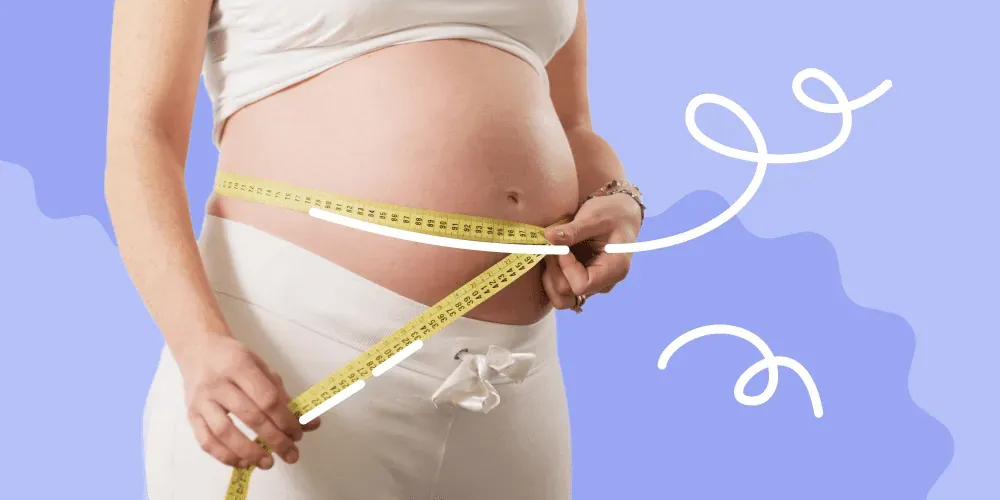
It’s also important to choose the right size. To do this, you’ll want to measure your belly and understand the fitting guidelines of the belly band.
How do I put a belly band on?
It’s easiest to put on a belly band while laying on your back. You should put the band under the abdomen so that it fits snugly against the skin while ensuring there is not excessive pressure.