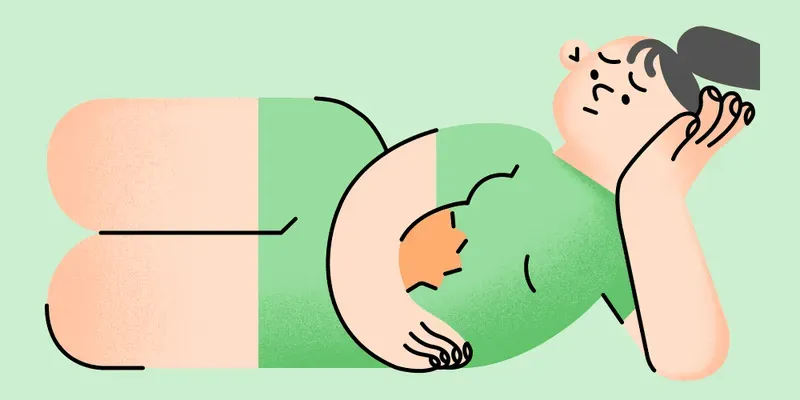

Abdominal pain can be associated with the pregnancy itself or it can be caused by something completely unrelated. Women often choose to ignore it because they fear treatment might harm the baby. In fact, if you do have serious abdominal pain, delaying treatment might make the condition worse.
What kind of pain is normal during pregnancy?
Implantation. Sometimes women feel a subtle sensation during implantation. You most likely mistook it for PMS — until you realized you were pregnant. And, probably, by now you have already forgotten about it.
Second trimester growing pains. The muscles and ligaments stretch to support the growing uterus. This hurts sometimes. Growth pains usually occur in the middle of the second trimester and can manifest as a sharp spasm on one side. They usually pass quickly when changing positions [1].
Constipation and intestinal cramps. Constipation that occurs during the second trimester leads to a full bowel and can cause an aching abdominal pain.
Third trimester growing pains. By now your growing uterus has compressed your adjacent organs — and this can cause pain in the upper abdomen [1]. Normally this pain is not severe and doesn't last more than an hour.
What kind of pain is not normal during pregnancy?
In general, any pain that lasts longer than an hour or is repeated several times a day is a reason to consult a doctor. Unfortunately, pregnancy does not protect you from diseases that could happen to you at any other time.
The most common cause of abdominal pain that is not directly related to pregnancy is appendicitis [2]. Gallstone disease, cystitis and pyelonephritis (inflammation of the kidneys) are more likely to develop during pregnancy [3]. These conditions cannot be left untreated, so the sooner you see your doctor, the better.
When should I call an ambulance?
During the first trimester, if a woman has not yet done an ultrasound scan and she experiences abdominal pain, it is important to make sure it is not caused by ectopic pregnancy [2].
Later in the pregnancy (from the 13th to the 37th week), you should seek immediate help if you experience any of the following:
Pain combined with bleeding: it can be a threat of miscarriage or premature birth or placental abruption.
Severe pain. Placental abruption is usually accompanied by bleeding, but if the placenta is attached to the fundus of the uterus, then the uterus and the baby will block the blood flow and then there is no bleeding [3].
Sharp cramping pains (spasms). Labor may be starting.
Sharp pain in the right upper abdomen. This is a sign of preeclampsia [1, 3].