EN
try amma today
Lack of sleep continues
Pregnancy

Lack of sleep continues

3 min readWeek 9
Key takeaways
3 min
  • Recognize that feeling weak and broken around month two postpartum is normal due to accumulated stress and sleep deprivation from the previous months.
  • Build a strong support network including partners, family, friends, and healthcare professionals to maintain breastfeeding success and overall wellbeing.
  • Delegate non-feeding tasks to others and consider professional help or therapy to manage the emotional challenges of early motherhood.
  • Remember that choosing to stop breastfeeding for self-care is a valid decision with no shame attached, especially when adequate support isn't available.
  • Seek both practical and emotional support, as research shows 100% breastfeeding continuation rates with comprehensive support systems.

Month two postpartum exhaustion occurs due to accumulated stress and sleep deprivation. This challenging period affects most mothers, with only 13% continuing breastfeeding without adequate support, compared to nearly 100% with comprehensive family and professional help.

amma app

Track your pregnancy in the app

Personalized content for your pregnancy week

Download App

Lack of sleep continues

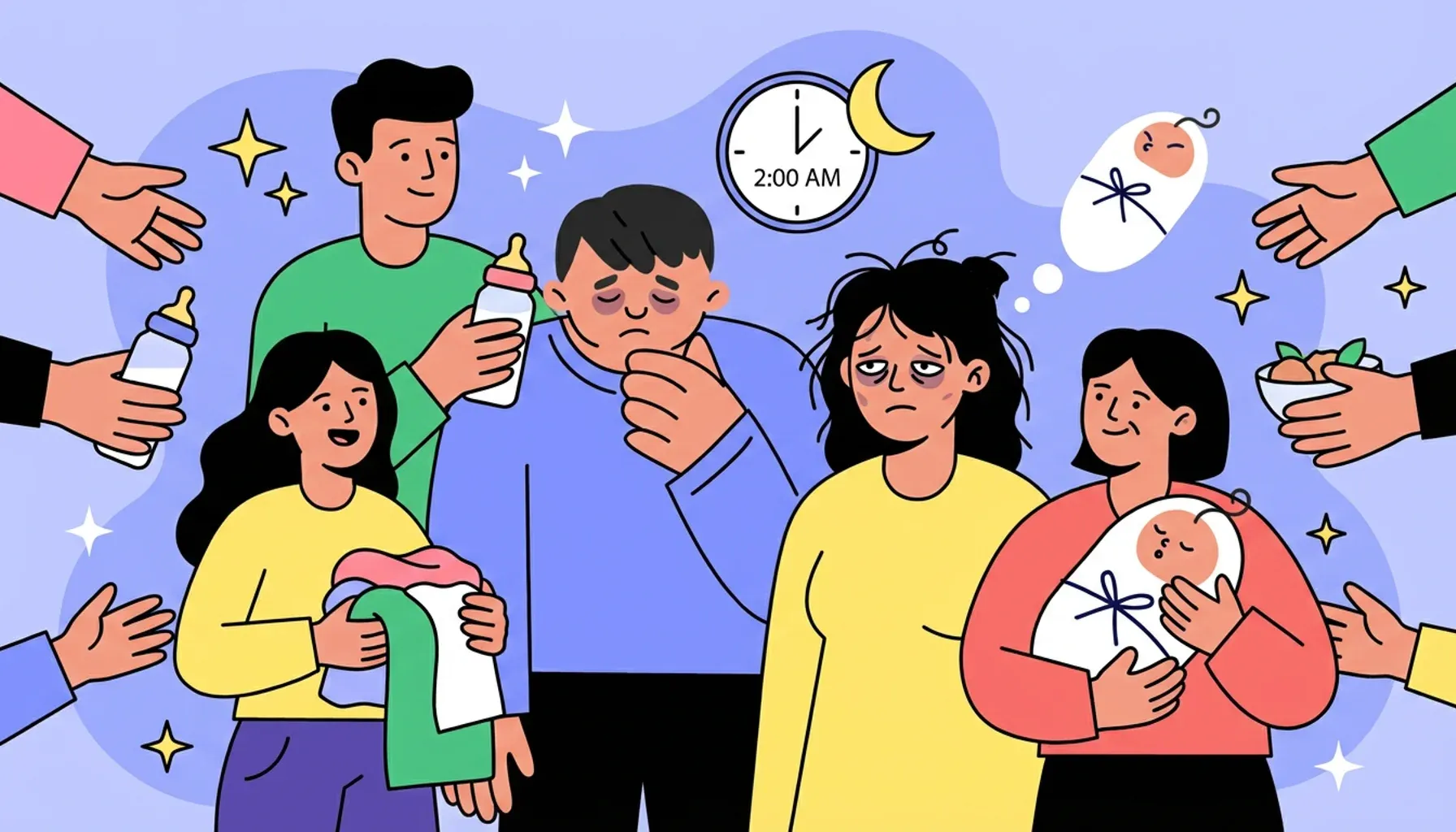
The stitches have healed, the lochia has stopped, you’ve figured out breastfeeding for the most part. So everything is peachy, right? No, even as some things have become more routine, many mothers feel weak and broken around month two. There’s a reason for this: the stress and lack of sleep of the last two months have accumulated.

Many women in developed countries even stop breastfeeding at this time, simply because they no longer have the strength. Research from the UK [1] has shown that almost 100% of women continue to breastfeed their babies if they have extensive support: a partner, grandmothers, friends, and good health care. But only half remain in the ranks if they receive support from family and friends, but cannot count on professional help from doctors, psychologists and breastfeeding consultants. And only 13% of women continue to breastfeed after two months, if they have no one to rely on except a partner or a grandmother (usually on the maternal side) [1, 2].

Many moms choose to stop breastfeeding because they consider it stressful [3], but the transition to bottle feeding can be just as stressful and can lead to the development of postpartum depression [4].

The solution: You don't have to take all the responsibility on yourself. Your abilities now depend on your environment. It’s time to delegate any tasks other than feeding to relatives, friends, colleagues, and if you are able, hired help. Perhaps you need more than just time for yourself, perhaps you need to seek therapy to help sort out your many emotions as you start on your motherhood journey [4].

For moms who can not access support they need, for whatever reason, remember your choices to take care of yourself and your baby are incredibly important. If you need to stop breastfeeding in order to find more time for self-care, there is no shame in that.



  1. Typologies of postnatal support and breastfeeding at two months in the UK. E. H. Emmott, A. E. Page, S. Myers. Soc Sci Med., 2020 Feb.

  2. Does maternal grandmother’s support improve maternal and child nutritional health outcomes? Evidence from Merida, Yucatan, Mexico. Adriana Vázquez-Vázquez, Mary S. Fewtrell, et al. The Royal Society Pub, 03 May 2021.

  3. The differential role of practical and emotional support in infant feeding experience in the UK. S. Myers, A. E. Page, E. H. Emmott. Philos Trans R Soc Lond B Biol Sci., 2021 Jun.

  4. Perinatal psychological interventions to promote breastfeeding: a narrative review. Gómez L., Verd S., et al. International Breastfeeding Journal, 2021.

Frequently asked questions

Feeling exhausted at 2 months postpartum is completely normal due to accumulated stress and sleep deprivation. Your body is still recovering while adapting to new motherhood demands, making this a particularly challenging time.

The decision to stop breastfeeding should be based on your individual circumstances and wellbeing. If you lack adequate support and breastfeeding is causing significant stress, prioritizing your mental health is important for both you and your baby.

New mothers need both practical support (help with household tasks, childcare) and emotional support (understanding partners, healthcare professionals, counseling). Research shows comprehensive support leads to better breastfeeding outcomes and maternal wellbeing.

Studies show that only 13% of women continue breastfeeding after two months without adequate support, compared to nearly 100% with comprehensive support. Professional healthcare guidance significantly improves breastfeeding continuation rates.

Medical Disclaimer

This article is for informational purposes only and is not a substitute for professional medical advice, diagnosis, or treatment. Always seek the advice of your physician or qualified health provider with any questions you may have regarding a medical condition.

Meet our medical experts

Medically reviewed content

Reviewed by healthcare professionals · Updated September 8, 2024

Track your pregnancy on the go

Rated 4.8417,594 reviews