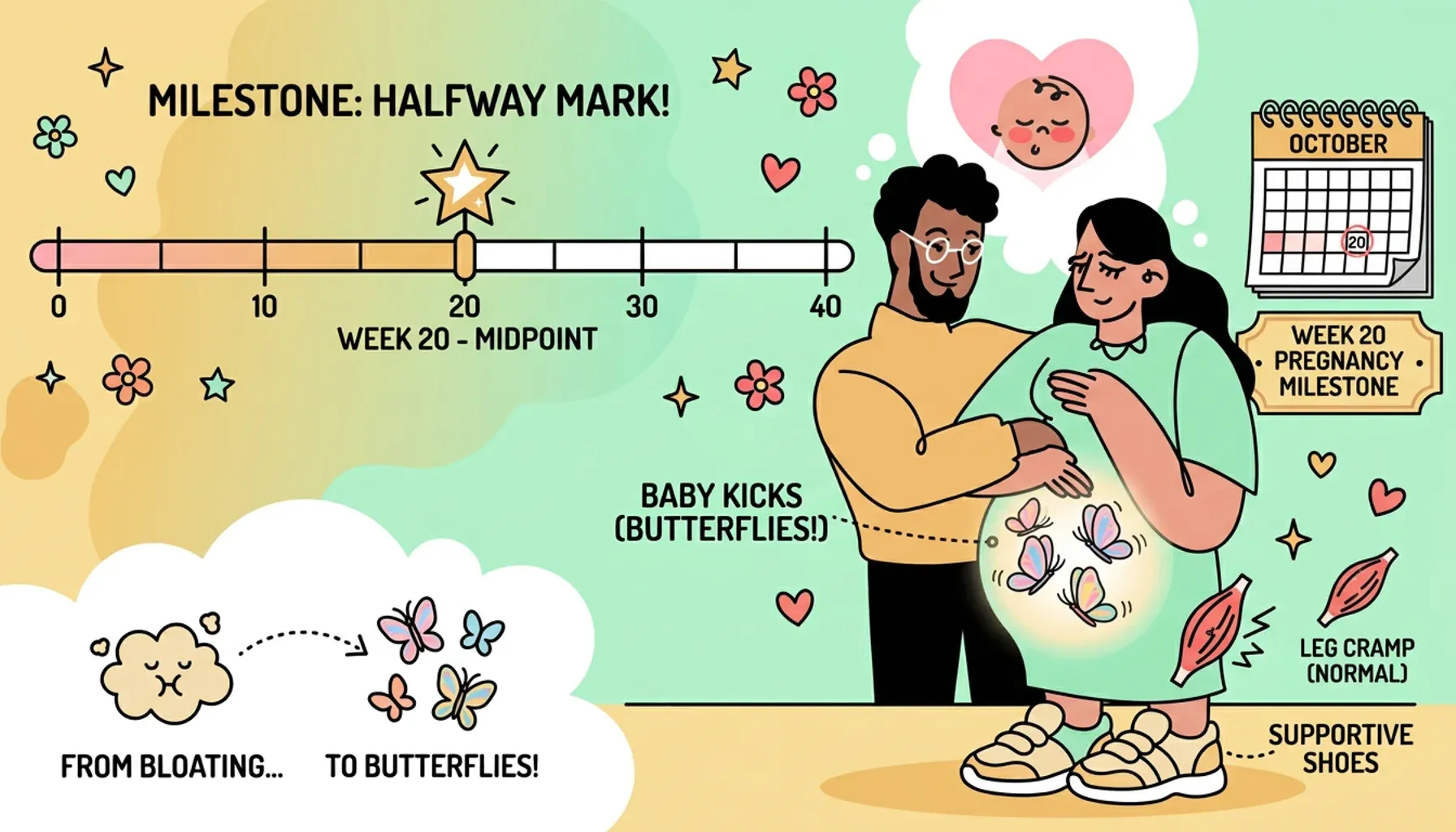

You crossed the midpoint of your pregnancy
The first half of your pregnancy is behind you now. The second half has started, and you can already feel the baby moving and turning over. At this time, the baby is making about 200 movements per day, but a mother will likely only notice about 10 percent of them [1]. Most movements, such as sucking a finger and waving, are not detectable by the expectant mother.
During the pregnancy, a specialist can listen to the baby’s heartbeat. You will most likely not notice it on your own, as very few women can feel the light, rhythmic beating of the vessels of the umbilical cord.
At times you may feel pain in your abdomen. There may be several reasons for this. The most common are associated with constipation, uterine ligament tension, and pelvic enlargement. Try to go to the toilet, drink a glass of water or lie down for a while and rest. If after doing these things the pain does not go away or if it intensifies, you should immediately consult your doctor.
Your nipples might start to secrete colostrum at this stage, which is the first form of breastmilk you will produce. Colostrum is highly nutritious and will feed your baby for the first couple of days before your milk comes down.
Stretch marks may develop on your chest, abdomen, and sides.
If you are expecting twins
Most likely, you will be given a referral for an additional ultrasound, during which your babies will be assigned a number, "first" and "second" or a letter “A” and “B”. That's how they will be known now! You will have a doppler ultrasound (examination of blood flow in the vessels of the placenta), which will allow your doctors to estimate not only the prospects for the development of the babies, but also mom’s probability of developing preeclampsia.
Discharge
Due to the influence of progesterone on the vaginal mucosa, discharge can become more abundant and thinner, and due to changes in the microflora of the genital tract, it can be lighter, whitish-grayish, or milky. It usually has a slightly sour smell, which is produced by factors like bacteria.
The appearance of liquid, light and watery discharge may indicate premature discharge of amniotic fluid. Even if the leaking is sparse, you should call your doctor right away.